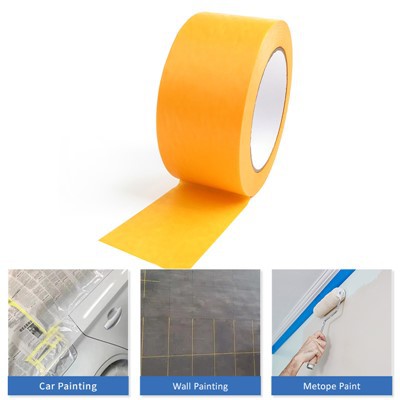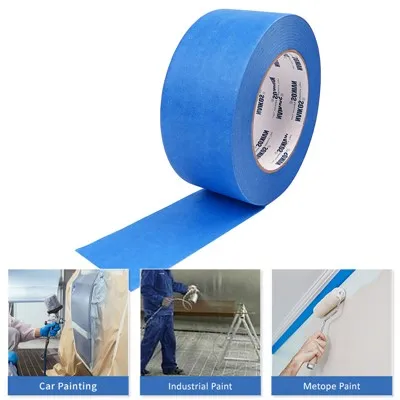
Colored masking tape is a roll of textured paper coated with a pressure-sensitive adhesive and then slit. Its remarkable flexibility (with an elongation of more than 150%) and vivid colors are its most striking characteristics. The unique wrinkling treatment applied to the paper, which significantly enhances the tape's ability to withstand tearing and adhere to curved surfaces, is where the word "masking" originates. It's a multipurpose tool that encourages creativity and boosts productivity, not just a basic masking tool.
Colored masking tape has diverse applications:
Masking for decorative spray painting:
Colored masking tape is used to properly delineate the paint area when painting a wall, piece of furniture, or automobile. To efficiently prevent cross-contamination and ensure clean, distinct boundaries, different colors of tape are used to divide different paint areas.
Innovative Art and Design:
The tape is popular for collages, artwork, and gift wrapping because of its vibrant colors. Its hand-tearability allows artists to give a distinctive touch to their work by creating natural, rough edges.
Electronics Industry and Product Packaging:
To cover and protect sensitive components that don't need soldering during the PCB (circuit board) soldering process, high-temperature-resistant, colorful masking tape is frequently employed. This keeps tin slag out of the product. Additionally, delicate components are protected by its static-dissipative qualities.
Office Marking and Daily Organization:
To improve work productivity and provide clarity, various colored tapes can be rapidly used in offices or warehouses for temporary notes, area demarcation (such as floor markings in 5S management), or document sorting.
How to Choose High-Quality Colored Masking Tape?
There is a mixed bag of products on the market. When purchasing, pay attention to the following points to avoid buying inferior products:
Thickness and Toughness of the Backing Material:
Premium masking tape has a consistent, thick backing material that feels pliable and doesn't break even when stretched. The thin, brittle paper used in inferior products can shred during masking and break with the smallest pull, leaving behind paper scraps.
A high-quality glue is essential for "sticking without leaving residue." Even after being applied to a surface for several hours, good glue leaves no residue after removal, binds solidly, and has a modest initial tack. Do a small-area test or refer to the merchant's adhesive residue test report prior to making a purchase.
Depending on the needs, heat resistance varies. Standard versions are appropriate for general renovations and typically have a temperature resistance of about 60°C. Make sure to choose high-temperature colored masking tape for electronic soldering or automotive painting.
Color saturation and consistency: High-quality tape has vibrant, uniform colors with minimal batch-to-batch color variation. This is crucial for applications requiring color coding.
Slitting process: Whether the edges are smooth and free of burrs directly impacts the user experience and ease of removal.
Industry Trends and Innovation
As market demands diversify, the colored masking tape industry is constantly innovating:
Enhancement of functionality: Specialized features, including ultra-high adhesion, ultra-low temperature compatibility, and unique anti-static properties, have been incorporated into products.
Eco-friendly: Using water-based acrylic glue or natural rubber adhesive lowers emissions of volatile organic compounds (VOCs) and is therefore more environmentally friendly.
Tailored services: To satisfy the specific requirements of brand customers, numerous manufacturers provide custom colors, widths, lengths, and even logos.
Despite its small size, colored masking tape conveys a level of professionalism and accuracy. Selecting the appropriate product will improve your creative output in addition to increasing your efficiency.