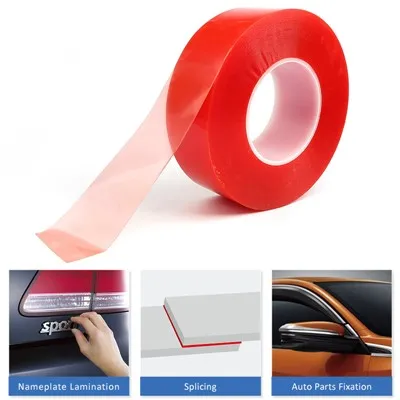
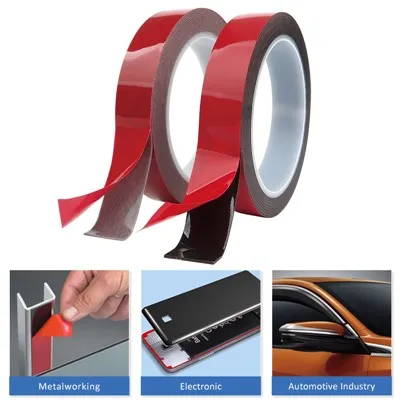
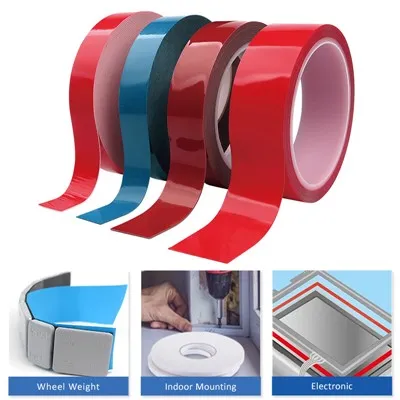
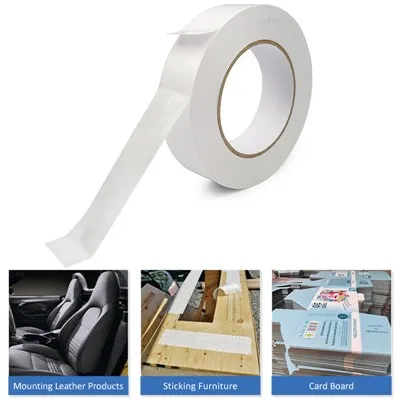
In the fields of industrial manufacturing, electrical and electronic, food processing, and even home repair, a seemingly ordinary but extraordinary material - Teflon tape (also known as PTFE tape, polytetrafluoroethylene tape or Teflon tape) plays an indispensable role. With its unique chemical structure and physical properties, it solves the problems of bonding, sealing, protection, and insulation in many harsh environments.
Excellent properties of Teflon tape
The excellent performance of Teflon tape comes from the molecular structure of PTFE itself, making it stand out among many tapes:
Excellent high temperature resistance: This is one of its most outstanding advantages. The long-term operating temperature range is usually between -70°C and +280°C. This makes it an ideal choice for processes such as high-temperature baking, welding, and heat sealing.
Excellent anti-stick properties: PTFE has the lowest surface tension of known solid materials, and almost no substance can permanently adhere to its surface. This makes Teflon tape extremely effective in applications where materials need to be prevented from sticking (such as heat sealing molds, conveyor belts, and roller coatings).
Excellent chemical stability: It has strong tolerance to strong acids, strong alkalis, organic solvents, and corrosive chemicals, and is almost not corroded. It is suitable for harsh environments such as chemical equipment and electroplating tanks.
Excellent electrical insulation performance: It has high dielectric strength, low and stable dielectric constant, and maintains excellent insulation in a wide range of temperatures and frequencies. It is widely used in wire and cable winding, coil insulation, and electronic component protection.
Low friction coefficient: The surface is extremely smooth, and the friction coefficient is extremely low (close to ice surface). It can be used in certain occasions to reduce friction and wear.
Good weather resistance and aging resistance: It is not affected by ultraviolet rays and ozone, and its performance is stable in long-term outdoor use, and it is not easy to age and become brittle.
Flame retardant: It is self-extinguishing and meets various flame retardant standards (such as UL 94 V-0).
Main application areas of Teflon tape
With the above characteristics, Teflon tape has found wide application in many industries:
Packaging and heat sealing industry:
Anti-stick coating of heat sealing machines (such as sealing strips and sealing pliers) to prevent packaging materials (such as plastic bags and aluminum foil) from sticking to the machine during the heat sealing process.
Anti-stick covering of conveyor belts and rollers to ensure smooth material transportation.
Plastic and rubber industry:
Anti-stick demoulding of injection molds, calender rollers, and laminating machine press plates.
Anti-stick treatment of rubber vulcanization molds.
Electronic and electrical industry:
Wrapping insulation of high-temperature wires and cables (such as transformer coils and motor coils).
Local high temperature protection for soldering operations (such as wave soldering shielding).
Insulation protection of circuit board test points.
Temporary wrapping protection of heating elements (such as soldering iron tips).
Food and pharmaceutical industry:
Food-grade Teflon tape is used for anti-stick protection of food processing equipment (such as baking trays, conveyor belts, and cutting blades). It is easy to clean and meets hygiene requirements.
Parts of pharmaceutical equipment that need to be resistant to chemical cleaning and high-temperature sterilization.
Chemical and electroplating industry:
Corrosion-resistant seals or gaskets for equipment such as reactors, pipe flanges, and valves.
Protection and insulation of the edges of electroplating tanks and pickling tanks.
Machinery and general industry:
Guide rails and slideways that require low-friction surfaces.
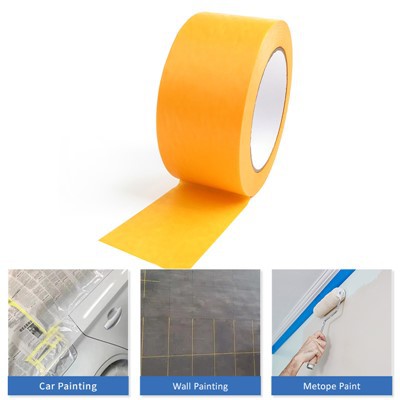
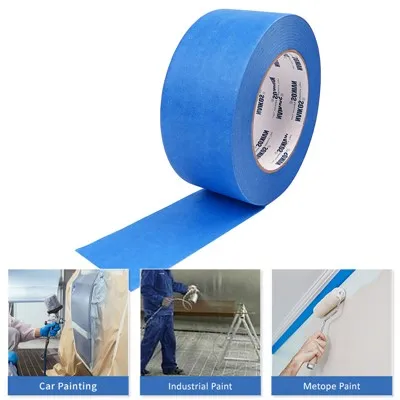
Adhesive fixation and temporary masking in high-temperature environments (such as paint masking).
Anti-stick repair or coating of hot rollers in copiers and printers.
Home DIY and maintenance:
Water pipe thread sealing (Note: not the commonly used white raw tape! Raw tape is unsintered PTFE tape, non-sticky, used for thread filling and sealing. Here is sticky Teflon tape).
Local anti-stick repair of iron soleplates and oven baking trays.
Insulation wrapping of tool handles.
How to choose Teflon tape correctly?
With numerous Teflon tape products available on the market, it is essential to select the right model. Consider the following factors:
Substrate type and thickness:
Sintered PTFE membrane: High strength, good dimensional stability, higher temperature resistance (up to 260°C or higher), more durable. Higher cost.
Skived PTFE membrane: Relatively soft, low cost, slightly lower temperature resistance (usually up to about 200°C). Suitable for curved surface bonding.
Thickness: The commonly used range is from 0.08mm to 0.25mm or even thicker. Thin types are easier to fit complex curved surfaces, and thick types are more wear-resistant and pressure-resistant.
Adhesive type:
Silicone series: Excellent high temperature resistance (usually up to 260°C), good chemical resistance, and initial adhesion may be slightly weaker than acrylic glue. Suitable for high-temperature applications.
Acrylic series: Strong bonding, good adhesion to a variety of substrates, and temperature resistance is usually lower than silicone (about 150°C-180°C). Cost may be lower.
Temperature resistance level: Identify the maximum continuous temperature and instantaneous peak temperature of the application environment, and choose a model that both the tape substrate and the adhesive can withstand.
Adhesive substrate: Consider the surface material to be bonded (metal, plastic, rubber, etc.). Different adhesives have different bonding effects on different materials.
Chemical contact environment: If there is contact with specific chemicals (solvents, acids, alkalis, oils, etc.), it is necessary to confirm the tolerance of the tape (especially the adhesive).
Size specifications: Width (common sizes include 12mm, 19mm, 25mm, 50mm, 100mm, etc.) and length (usually measured in meters). Cut or select the appropriate size according to your actual needs.