In the adhesive products industry, double-sided tissue tape is mainly divided into three categories based on its pressure-sensitive adhesive (PSA) coating process: hot-melt, water-based/acrylic, and solvent-based.
Due to their similar appearance, non-professionals often struggle to distinguish them by sight, but their performance, cost, and application scenarios differ widely.
Core Differences Comparison Table
For quick decision-making, you can refer to the table below:
| Characteristics | Hot-melt | Water-based | Solvent |
| Adhesive Composition | Synthetic rubber/thermoplastic polymer | Acrylic emulsion | Oily acrylic monomer |
| Initial Tack | Extremely high (fast onset) | Medium | High |
| Holding Power | Average (easily slips at high temperatures) | Medium | Extremely high (good stability) |
| Temperature Range | -5℃ to 60℃ | 0℃ to 80℃ | -20℃ to 150℃ |
| Weather Resistance/Aging Resistance | Poor (easily yellows, becomes brittle) | Good | Excellent (UV/solvent resistant) |
| Cost/Price | Most competitive (low) | Medium | High |
In-depth Analysis of Three Types of Adhesive Tape
Hot-melt Adhesive Tape:
A cost-effective "fast-adhesive" tool. Hot-melt adhesives are applied after melting by heating. Its biggest feature is extremely strong, immediate adhesion.
Suitable Scenarios: Paper processing, gift wrapping, poster pasting, carpet fixing.
Limitations: Extremely sensitive to temperature. In high summer temperatures or near heat-generating electronic components, the adhesive easily softens, leading to overflow.
Adhesive tape with a water base:
Water is used as a solvent to emulsify acrylic resin, striking a balance between performance and environmental friendliness. Right now, it's the most eco-friendly choice available.
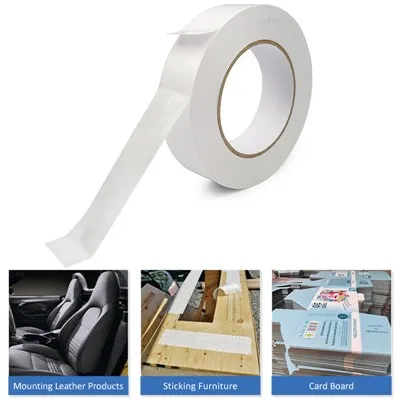
Appropriate Situations: Leather bonding, lightweight material assembly, and general office supplies.
Benefits include satisfying green procurement criteria, having a very low VOC (volatile organic compound) content, and having no offensive odor.
Adhesive tape with a soluble base:
The recommended high-performance industrial option, also referred to as "oil-based adhesive," dissolves acrylic resin using solvents like toluene and ethyl acetate.
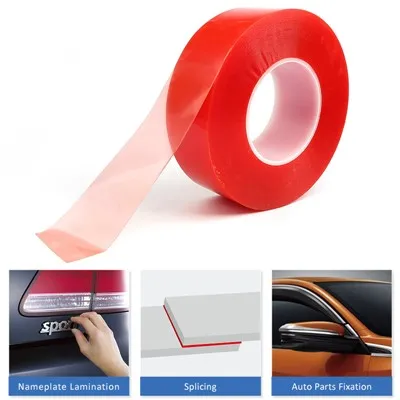
Appropriate scenarios include nameplate pasting, outdoor signs, automobile interiors, and repairing heat sinks for electronic components.
Benefits include outstanding resistance to plasticizers and long-term aging. keeps the structure stable even in challenging outdoor conditions or at temperatures that are consistently higher than 120°C.
How to differentiate them using simple tests?
If you already have samples, you can try the following three methods for initial identification:
Stretch Test:
Slowly stretch the tape. Hot melt adhesives generally have better stretch and a "stringy" feel; solvent-based adhesives are more brittle and stable.
Odor Test:
Hot melt adhesives may have a slight rubber smell, water-based adhesives are nearly odorless, and solvent-based adhesives have a strong chemical solvent scent (like nail polish).
Heat Test:
Put the sample strip on a stainless steel sheet and bake it for two hours at 80°C. Solvent-based adhesive tape will stay firmly in place, but hot melt adhesives will probably weaken and flake off, leaving a lot of residue.
Which one should you choose?
For extremely low budgets and short-term indoor use: Choose hot melt adhesive.
For export to Europe or strict environmental requirements: Choose a water-based adhesive.
For automotive, electronics, or high-value precision assembly, always choose a solvent-based adhesive.
When selecting a double-sided tissue tape, you should not only consider the type of adhesive, but also the basis weight of the cotton paper substrate (usually 12g - 20g/㎡), which will directly affect the tensile strength and die-cutting performance of the tape.