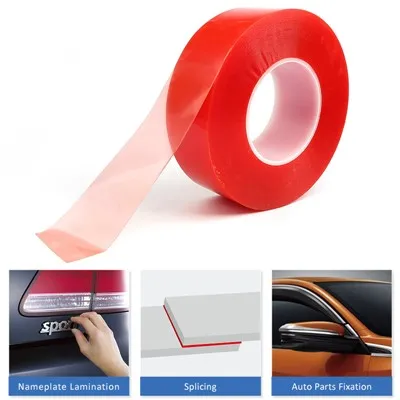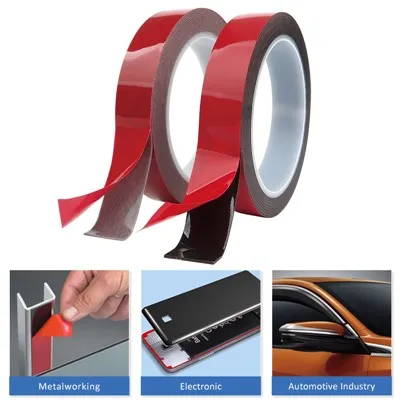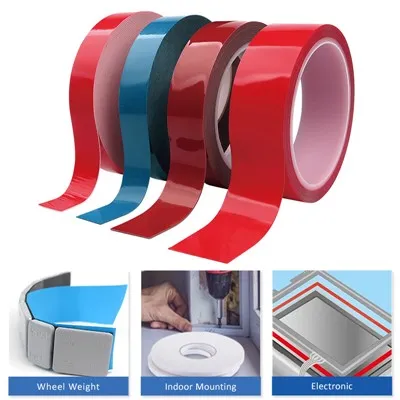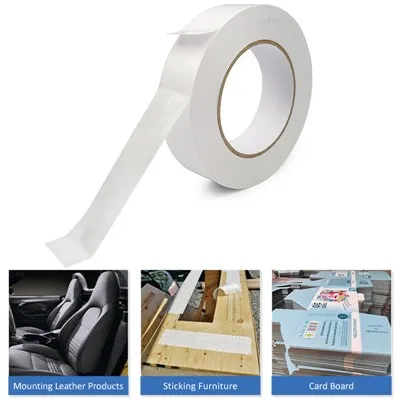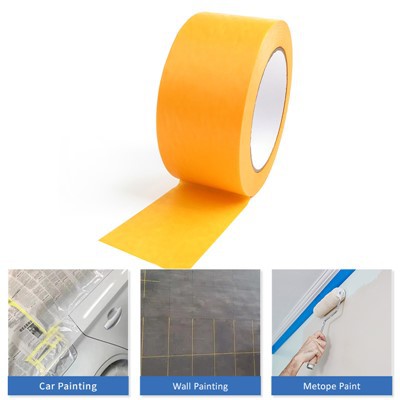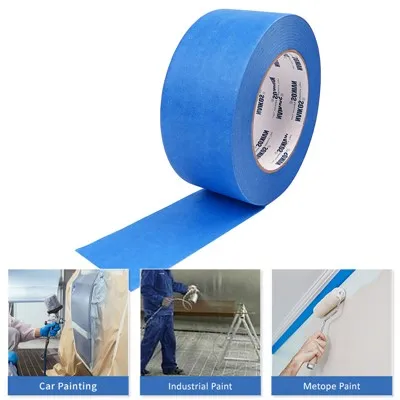
Masking tape, a versatile adhesive product, is widely used in industries such as construction, renovation, automotive manufacturing, and electronics. Its core advantages lie in its easy tearability, controllable stickiness, and the absence of residual adhesive residue after removal, making it an indispensable tool for temporary fixing or masking applications.
Masking tape consists of crepe paper. Crepe paper is primarily made of wood fiber and, after undergoing a specialized processing process, exhibits excellent elasticity and tensile strength, adapting to diverse environments. Adhesives are available in rubber and acrylic bases. Acrylic adhesives, due to their high temperature resistance and environmental friendliness, are becoming increasingly mainstream in the market, particularly suitable for applications such as automotive painting and high-temperature baking.
In terms of industry applications, the specific applications for masking tape are continuously expanding. In architectural renovation, masking tape is a "masking expert" when painting walls and laying tiles, precisely separating different color areas and preventing paint spillage. In the electronics manufacturing industry, thin masking tape can be used to temporarily secure circuit boards, ensuring component safety while ensuring precise operation. In the art world, low-tack masking tape is often used to divide canvases, ensuring that the integrity of the image remains intact after removal.
With increasing market need, the masking tape market is also evolving towards functionalization and personalization. For instance, UV-resistant concealing tape developed for outdoor projects maintains its adherence even under prolonged exposure to sunlight. Solvent-free masking tape designed for food packaging is qualified for food contact protection and meets climate needs. Moreover, leading manufacturers have optimized their manufacturing processes to accurately control tape thickness and viscosity, offering personalized products from large to thin strips to meet customer needs.
For buyers, choosing masking audio requires careful consideration of three key indicators: heat opposition, adherence level, and material strength. Normal-temperature items are suitable for common indoor applications, while high-temperature environments require specific tapes with a heat resistance of 80°C or higher. Regarding adherence, low-tack items are suitable for delicate areas like paper and cheap materials, while high-tack products are ideal for high-strength fixings on steel and rock. However, verifying product quality is crucial by ensuring it has received authentic qualifications, such as SGS and ISO.
The global masking tape market has experienced steady growth over the past few years. Due to its well-developed industrial chain and cost advantages, the Asia-Pacific region, particularly China, has grown to be a major production and export hub. Environmentally friendly masking tapes made from recycled fibers are becoming more popular as a result of the growing adoption of green manufacturing principles. They are anticipated to be a significant contributor to the industry's growth.