Tape residue occurs when the cohesive strength of an adhesive polymer matrix falls below its adhesive bond strength to a substrate, resulting in mechanical cleavage during removal. This technical guide analyzes the chemical, thermal, and environmental variables that cause adhesive failure in industrial manufacturing and provides engineering solutions to eliminate cleanup downtime.
Industrial Adhesive Performance Matrix
The table below correlates tape carrier types with their typical cohesive failure points under non-optimized operational conditions:
| Carrier Type | Adhesive System | Max Clean-Removal Temp | Common Failure Mode | UV Resistance Rating |
| Non-woven Tissue | Solvent-based Acrylic | 80°C (Long-term) / 120°C (Short-term) | Cohesive splitting | Excellent |
| PE / EVA Foam | Hot-melt / Acrylic | 70°C | Adhesive transfer | Moderate |
| PET Film | Cross-linked Acrylic | 150°C | Clean removal | High |
| Crepe Paper | Natural Rubber | 60°C | Oxidation hardening | Poor |
5 Technical Causes of Adhesive Residue
- Photo-Oxidative Degradation via UV Exposure
Solar radiation and UV-A/B wavelengths break down the molecular backbone of natural and synthetic rubber adhesives. The energy photons cause chain scission, turning the polymer matrix into either a highly viscous, tacky fluid or a brittle, cross-linked crystalline crust that permanently fuses to the substrate surface. - Thermal Overload and Cohesive Shearing
When an industrial tape operates above its specified continuous heat rating, the polymer chains experience thermal expansion and structural softening. During high-temperature removal, the shear modulus drops, causing the adhesive layer to split down the middle. Part of the mass stays bonded to the carrier, while the remainder transfers permanently to the workpiece. -
Plasticizer Migration and Chemical Incompatibility
Substrates containing high concentrations of flexible plasticizers-such as flexible PVC, nitrile rubbers, and certain polyurethane foams-frequently interact with pressure-sensitive adhesives (PSAs). Over time, these oily plasticizers migrate across the boundary layer into the tape adhesive, dissolving the cohesive structure and leaving a gummy, liquid residue upon peeling. -
Exceeding the Maximum Safe Dwell Time
Every industrial masking or temporary protection tape has a validated clean-removal lifespan. As time elapses, the initial tack transitions into a permanent mechanical micro-interlocking bond due to wet-out. If a temporary tape remains applied beyond its rated dwell time, the peel adhesion force eventually exceeds the tensile strength of the adhesive layer. -
Substrate Contamination and Inadequate Surface Energy Preparation
Applying tape to surfaces contaminated with residual machine oils, silicone release agents, plasticizer films, or moisture prevents uniform wet-out. The adhesive bonds preferentially to the contaminant layer rather than the substrate, leading to uneven mechanical anchorage and spotty residue transfer during high-speed removal processing.
Engineering Solutions and Industrial Prevention
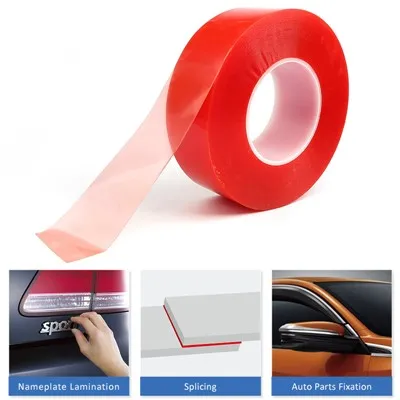
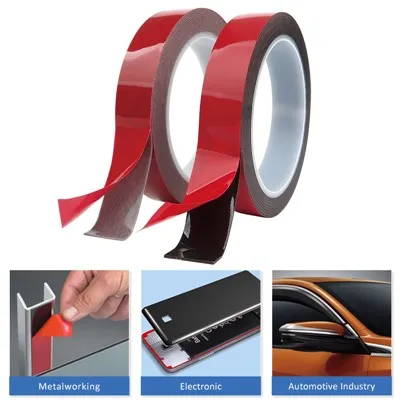
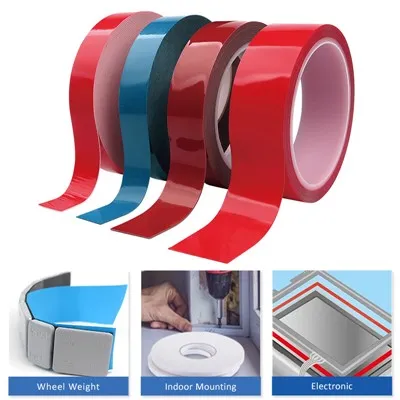
To eliminate residue in high-capacity assembly lines, engineers must match the correct adhesive chemistry to the specific surface energy of the substrate. For high-volume manufacturing, deploying a pre-engineered no-residue double-sided tape or a specialized(industrial foam tape residue-free) prevents material loss.
If residue occurs during processing, mechanical scraping must be avoided to protect workpiece tolerances. Industrial technicians should utilize isopropyl alcohol (IPA) or heptane solvents to break down acrylic matrices or apply heat guns to lower the shear modulus of rubber-based systems before executing a slow, 180° peel angle removal.
Technical Partnership: Sourcing Directly from Naikos
As a direct custom adhesive tape manufacturer, Naikos engineers application-specific adhesive formulations to prevent adhesive transfer and cohesive failure in automated lines. We control coat weight tolerances within ± 2 μm and offer customizable cross-linked acrylic chemistries tailored to resist plasticizer migration and extreme thermal loads.
Industrial procurement managers can lower processing costs by sourcing bulk converted rolls directly from our automated China factory. To establish specification compliance for your production line, you can request a Technical Datasheet or Bulk Pricing Quote directly from our engineering team.
FAQ
Q: Do you provide free sample rolls for industrial laboratory testing?
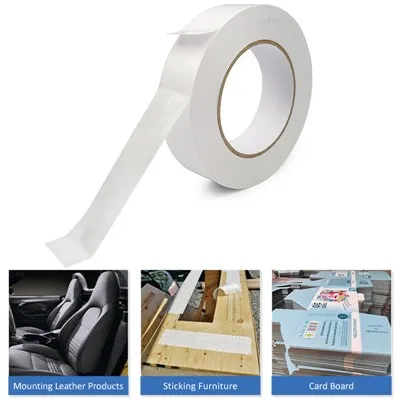
A: Yes. We supply free sample rolls of our standard double-sided tissue and foam tapes to qualified OEM and EMS testing laboratories. Custom die-cut sample prototypes are fabricated upon verification of technical engineering drawings.
Q: What are your precise slitting and die-cutting tolerances?
A: Our automated rotary and flatbed die-cutting machinery operates within strict mechanical tolerances down to± 0.1mm. Log roll slitting widths are customizable from 3mm up to 1200mm to match automated assembly feed specifications.
Q: Are all Naikos adhesive tape shipments RoHS and REACH compliant?
A: Yes. Every tape batch manufactured at our facility undergoes strict material testing and is fully certified under RoHS and REACH directives. Detailed environmental compliance documentation and MSDS sheets are supplied with every bulk factory shipment.