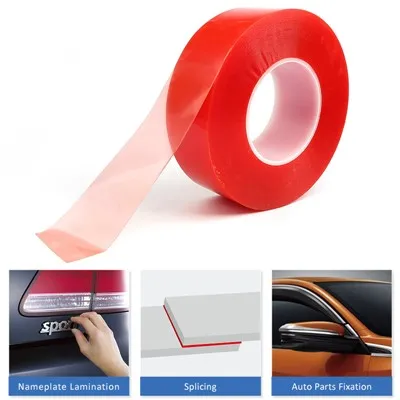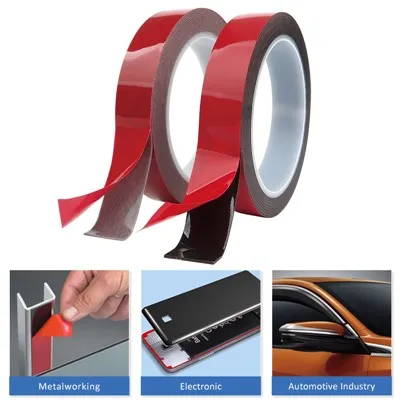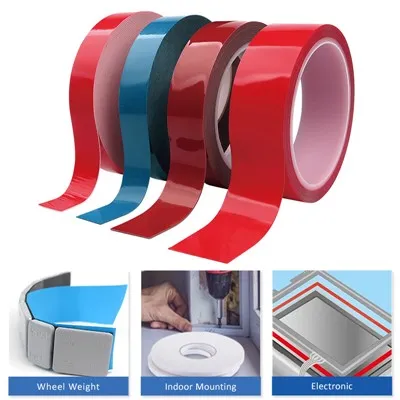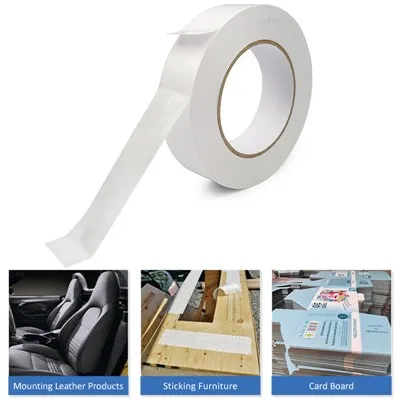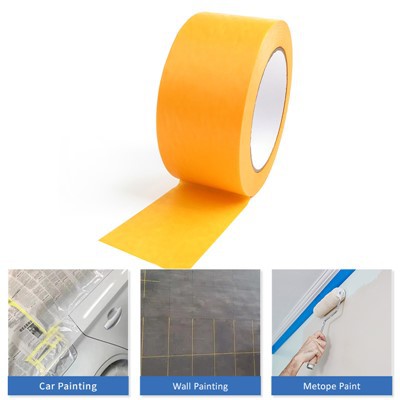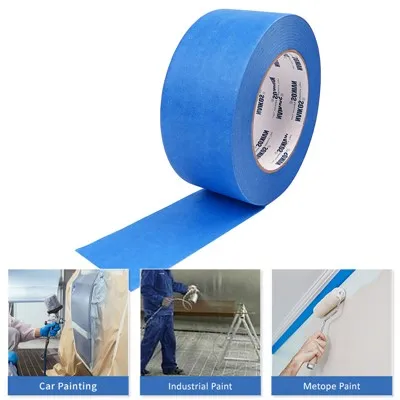
Automotive masking tape is a high-performance masking tape specifically designed for the automotive manufacturing, painting, and repair industries. It uses crepe paper as a base material, coated with a pressure-sensitive adhesive, and features precise edge masking capabilities, excellent solvent resistance, and high-temperature resistance. It can be cleanly removed after painting without leaving any residue. Its core function is to protect areas that do not require painting during the automotive painting process, achieving clear and sharp color separation lines, making it an indispensable industrial consumable for ensuring the quality of automotive appearance.
Core Performance Indicators and Test Standards
Temperature Resistance:
Standard type: Able to tolerate baking temperatures between 60 and 80°C.
Medium-temperature type: Suitable for most refinish paint baking, it can tolerate temperatures between 80 and 120 °C.
High-temperature type: Suitable for automobile original equipment manufacturer (OEM) high-temperature coating lines, it can tolerate temperatures between 120 and 200°C.
Solvent Penetration Time:
The maximum amount of time (e.g., one hour, two hours, or twenty-four hours) that the tape's back can withstand penetration by particular paint solvents without suffering damage is known as the "solvent penetration time," and it is a crucial measure of the tape's endurance.
Peel strength and adhesion:
The adhesion to stainless steel plates (N/10mm or oz/in) is typically used to measure this. It's important to strike a balance since too little adhesion might cause edges to lift, while too much can harm the surface of the previous paint or make removal challenging.
Tensile Strength and Elongation:
Reflects the tape's ability to resist tearing and adapt to curved surfaces during application.
Ultimate Residue-Free Removal:
After application at the specified temperature and time, the adhesive must completely transfer upon removal, leaving no residue on the car paint or glass.
Detailed Application Scenarios in the Automotive Industry
Automotive Manufacturing (OEM) Field
Body Painting Line: Used to mask window frames, door handle mounting holes, emblem positions, etc., to achieve two-tone paint or protect specific areas.
Final Assembly Stage: Protects sensitive components (such as interior leather, instrument panels) from scratches during transportation and installation.
Automotive Refinish and Modification Field
Local Panel Painting: Precisely masks adjacent panels, lamp covers, and chrome strips for seamless repair. Custom Painting and Decals: Used for creating complex patterns, stripes, and racing decals; provides sharp edges upon removal.
Polishing Operations: Protects rubber and plastic parts from polishing compound contamination.
Details and Special Applications
Plastic Parts and Substrates: For low surface energy plastics such as PP, specialized adhesive tapes may be required.
Headlight Masking: Use low-tack versions to prevent damage to headlight plastics or special coatings.
Sheet Metal Seam Sealing: Used to temporarily seal sheet metal seams before painting to prevent paint penetration.
Market Trends and Technological Innovations
Environmental Friendliness:
Developing water-based adhesives and using renewable raw material-based paper to reduce VOC emissions.
Functional Integration:
"Tape + film" combination rolls are integrated with masking film to improve masking efficiency for large areas.
Intelligent Applications:
Developing roll products with specific sizes, unwinding force, and tack for automated painting robot production lines.
Deepening Market Segmentation:
Developing specialized products for specific scenarios such as new energy vehicles (battery pack painting protection), trucks and buses, and racing cars.
Performance Optimization:
Pursuing longer chemical penetration resistance time and higher resistance to instantaneous temperature shock.
Professional Application Advice and Best Practices
Surface Cleaning is the First Step: Ensure the masking area is free of dust, moisture, wax, or oil.
"Press, Don't Rub": Use your fingers or a squeegee to press the tape firmly, ensuring secure adhesion and avoiding forceful rubbing that can deform the tape or cause adhesive to ooze from the edges.
Follow the "Wet Edge" Application: When applying a base coat or clear coat, apply it within the specified recoating window of the previous paint film. This helps with paint film fusion and reduces edge steps.
Remove Promptly: Strictly adhere to the paint manufacturer's recommended tape removal time; this is crucial for achieving perfect edges.
As a professional tape manufacturer, we are deeply rooted in the automotive industry, providing a full range of automotive masking tape solutions from general repairs to OEM high-temperature painting lines. Our products undergo rigorous testing for solvent resistance, temperature resistance, and residue-free performance, and we are committed to providing reliable and efficient masking protection for global automotive manufacturing and repair customers. Samples and technical data are available upon request.