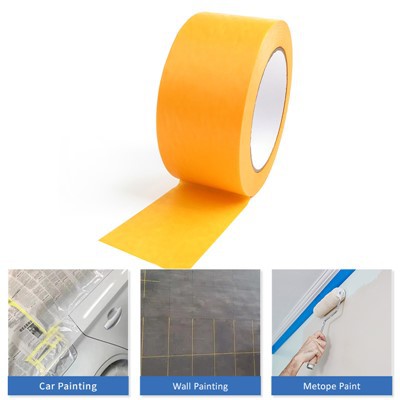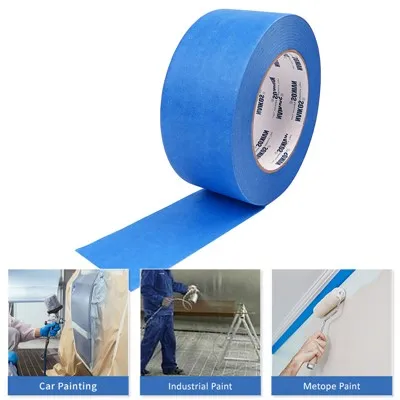
Automotive masking tape is a high-temperature masking tape specifically designed for automotive painting, repair, and masking applications. Made with crepe paper as the base material and coated with a special pressure-sensitive adhesive, it features high temperature resistance, easy tear-off, and no residue, making it an indispensable precision masking material in the automotive manufacturing, repair, and modification industries.
Essential Uses for Automotive Masking Tape
Painting and repair masking for automobiles
In order to ensure clean and sharp paint lines and avoid color cross-contamination, masking tape is used during car body painting to accurately cover areas that do not need painting, such as window frames, the area surrounding lights, and trim strips.
Precise Pattern and Line Creation
Masking tape allows for the high-precision masking of straight lines and intricate curves in professional car painting, racing stripes, and custom coatings, assisting technicians in producing sharp and clean pattern edges.
Protection against Multi-Color Spray Painting Layer
Masking tape offers dependable inter-layer protection during multi-stage or multi-color spray painting processes, preventing further spraying from damaging the previously finished paint surface.
Protection of Automotive Parts
It shields delicate electronic components, glass, chrome pieces, etc., from dust, solvents, and mechanical damage during repair or assembly procedures.
Professional-Grade Automotive Masking Tape's Benefits
Outstanding Resistance to Temperature
Superior automobile masking tape is resistant to the high temperatures seen in paint booths (usually between 80°C and 150°C), allowing it to function steadily throughout the drying process without deforming or leaking adhesive.
Accurate Edge Sealing
Paint penetration is efficiently prevented, and a "razor-sharp" clean dividing line is achieved thanks to the unique adhesive technique that guarantees strong attachment of the tape edges.
Safe Elimination with No Residue
High-quality masking tape can be easily removed without leaving adhesive residue on the paint or glass, minimizing cleaning effort even after exposure to high temperatures.
Surface Conformity and Flexibility
Effective masking of irregular sections is ensured by the tape's ability to adhere to the car's intricate curves and edges. Time Marking Function
Some professional masking tapes offer a surface writing function, making it easy to mark masking dates and areas, improving workshop operation management efficiency.
How to Choose Professional Automotive Masking Tape
Temperature Resistance Matching
Select a tape with the appropriate temperature resistance level based on the workshop's paint baking temperature. For general repairs, choose 80-100°C, while high-temperature baking requires products above 120°C.
Moderate Adhesion
The adhesive strength should be sufficient to ensure that the tape does not lift during masking, but also not damage the primer or delicate surfaces when removed. Low-adhesion versions should be used on new car paint surfaces.
Substrate Thickness and Strength
Better leak-proof performance is offered by thicker substrates, although flexibility must be balanced. Because high-strength masking tape is less likely to break when removed, it increases productivity.
Full Range of Width Requirements
To accommodate various masking requirements, expert manufacturers should provide a range of widths from 3mm to 50mm.
Safety and Certification
Give top priority to goods that meet international environmental standards like REACH and ROHS to guarantee there is no chance of hazardous material transmission.
Expert Methods for Automotive Masking: The Importance of Tape Surface Cleaning
To guarantee appropriate tape adherence, make sure to use a professional cleaner to remove dust, silicone, and surface oil before applying.
Correct Application Method
Use a "center outwards" application method to avoid air bubbles; for complex curved surfaces, apply in overlapping sections.
Edge Compaction Treatment
Use a plastic squeegee or professional compaction tool to ensure the tape edges are completely sealed to prevent paint penetration.
Timing of Removal
For conventional painting, remove the tape promptly after the paint surface is dry; for baking, wait until the temperature drops below 40°C before removal.
Use in Conjunction with Masking Film
Use in conjunction with professional masking film to improve the efficiency of large-area masking, with the tape acting as an edge fixing and sealing material.
Industry Development Trends and Technological Innovation
Development of Environmentally Friendly Adhesives
The application of water-based adhesives and bio-based materials reduces VOC emissions, meeting green workshop standards.
Smart Tape Technology
Smart products, such as temperature- and time-sensitive tapes, help standardize operating procedures.
Special Substrate Innovation
Nano-coated substrates and composite fiber substrates improve tape performance and meet the masking needs of new materials in electric vehicles.
Customized Solutions
Customized masking tape products that are made to fit the unique paint properties of various automobile types and repair shop processes are growing in popularity.
Despite being a tiny substance, automobile masking tape is essential to the caliber of car painting. Paint quality and job efficiency can be greatly increased by selecting professional-grade supplies and learning the proper usage techniques. As a professional tape manufacturer, we recommend that automotive repair companies establish standard specifications for selecting masking materials and treat them as an important part of quality control, rather than just auxiliary consumables.