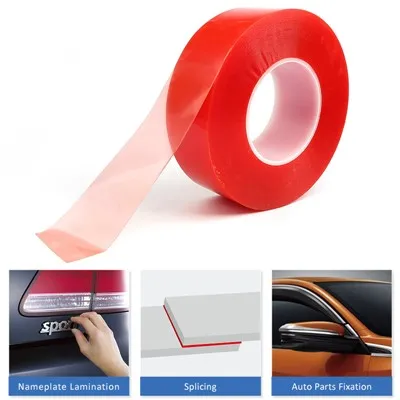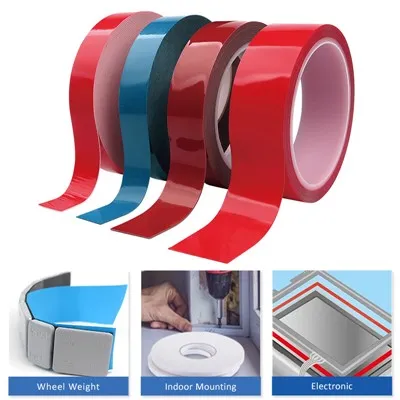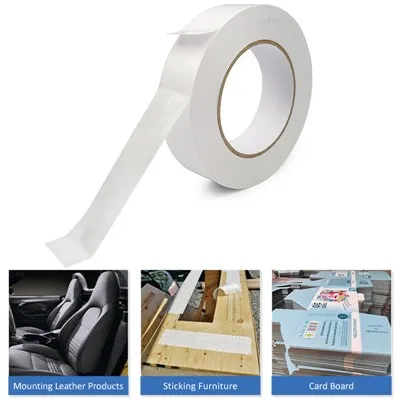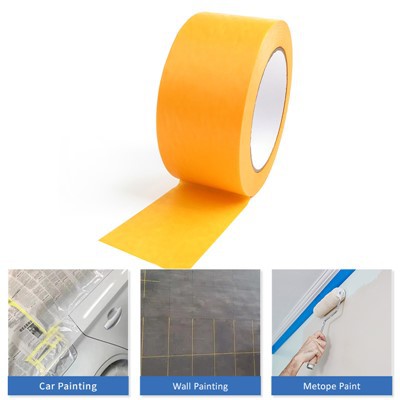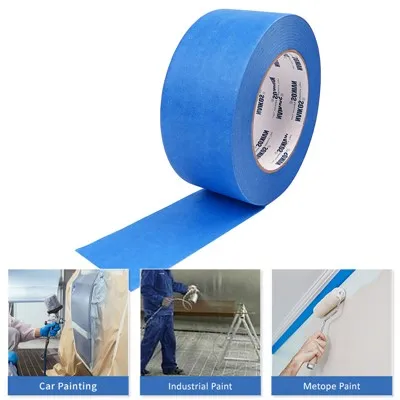
Double coated tissue tape is a double-sided tape with acrylic adhesive on a tissue carrier that provides dimensional stability, improved handling, and ease of die-cutting and laminating. The adhesive provides excellent peel strength and adhesion, with good holding power to a variety of surfaces.
Among many adhesive products, double-sided tissue tape has an irreplaceable position in packaging, printing, hand-made, electronic assembly, and other fields due to its unique material and excellent performance.
Significant features and advantages of double-sided tissue tape
Easy to tear and punch:
The cotton paper substrate is very easy to tear by hand, without scissors, and is easy to operate. It is also very suitable for high-speed automatic punching into various shapes (such as dots, squares, and special shapes), and is widely used in automated labeling and assembly.
Flexible and compliant:
Cotton paper is soft and can fit slightly uneven surfaces well, especially suitable for bonding flexible materials such as paper, cardboard, and cloth.
Moderate to high initial viscosity:
Depending on the adhesive formula, cotton paper double-sided tape can provide moderate to high initial adhesion, which can quickly fix the adherend.
Environmental protection:
Cotton paper substrates are derived from natural fibers and are easier to biodegrade or recycle than plastic substrates (such as PET), which is in line with modern environmental protection trends.
Cost-effective:
The relatively low cost of cotton paper raw materials makes cotton paper double-sided tape a cost-effective choice for double-sided bonding.
Core application areas of double-sided tissue tape
Packaging and printing industry:
Box forming/sealing: Fixing the corners, bottoms, and lids of paper boxes and gift boxes.
Instruction/card fixing: Pasting instructions, warranty cards, tags, etc., inside the product or packaging.
Labeling: The adhesive backing of labels, especially important when manual labeling or special-shaped labels are required.
Paste/laminate: Local bonding and laminating of paper and cardboard.
Office and stationery:
Paste and fix posters, photos, and other items.
Bonding of handmade and DIY projects.
Paste of temporary documents and notes.
Electronics industry (medium and low viscosity requirements):
Fix lighter electronic components and wiring harnesses.
Paste insulation sheets, foams, and shockproof materials.
Mask solder joints or specific areas.
Light manufacturing and handicrafts:
Toy assembly.
Crafts and model making.
Bonding of leather, cloth, felt, and other materials.
Temporary fixing and positioning.
How to choose double-sided tape correctly?
The following key factors need to be considered when choosing a suitable cotton paper double-sided tape:
Adhesive strength:
Demand matching: Choose low-viscosity, medium-viscosity, or high-viscosity models according to the surface properties (smooth, rough, high/low surface energy) and weight of the bonded material. The higher the viscosity, the better. Too high viscosity may make it difficult to tear off or damage the substrate.
Adhesive system selection: Acrylic glue usually provides longer-lasting adhesion, better weather resistance, and aging resistance; rubber glue may have higher initial adhesion, but relatively weaker long-term weather resistance.
Substrate thickness:
Thin cotton paper (such as 0.05mm-0.08mm) is more docile and suitable for fine pasting and curved surface lamination.
Thick cotton paper (such as 0.1mm or more) provides better filling and cushioning, but slightly less flexibility.
Release material:
Release paper: Common, low-cost, suitable for most applications.
Release film (such as PET): Smoother, tougher, not easy to tear, suitable for high-speed automatic labeling machines.
Single-sided release vs. double-sided release: Choose according to usage and equipment requirements.
Color and masking:
Standard colors are white, beige, or natural.
When the bottom layer needs to be masked (such as dark labels on light-colored items), choose a dark (such as black, gray) masking cotton paper tape.
Heat resistance and weather resistance:
The temperature resistance range of ordinary cotton paper double-sided tape is usually around 60°C to 80°C. If the application environment temperature is higher or outdoor use is required, a specially formulated high-temperature-resistant or weather-resistant product must be selected.
Width and length:
Choose the appropriate roll width and length according to the actual pasting area and efficiency requirements. Common widths are 12mm, 18mm, 24mm, 36mm, 48mm, etc.
Environmental requirements:
If there are strict requirements for environmental protection, confirm whether the substrate is made of renewable resources and whether the adhesive complies with relevant environmental regulations (such as REACH, RoHS).