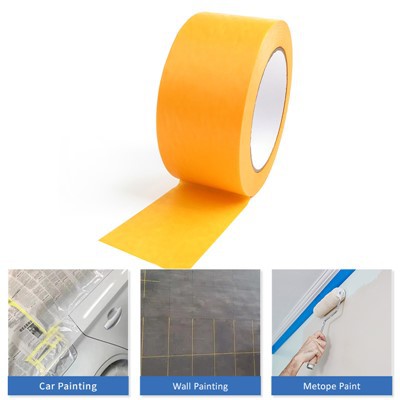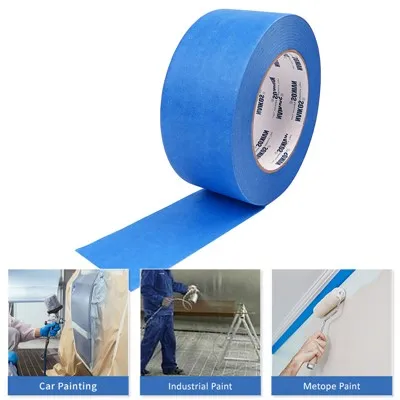
In the industrial tape industry, polyester tape (PET tape) is renowned for its excellent temperature resistance and insulation properties. However, many purchasing managers and engineers often have a question when selecting tapes: "Why are there so many colors of polyester tape? Are the colors merely for aesthetics, or do they represent different physical properties?"
Common Colors of Polyester Tape and Their Typical Applications
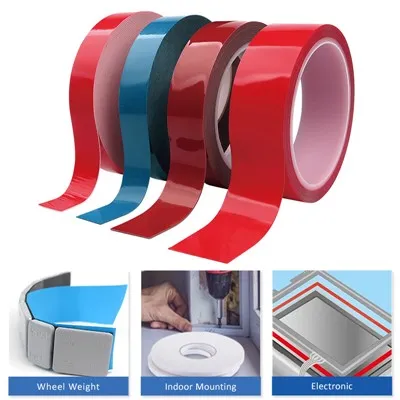
Although the PET substrate itself is transparent, tapes of various colors can be produced by adding pigments to the adhesive or backing.
| Color | Common Name | Typical Application Scenarios |
| Green | Green Masking | Powder coating, electroplating, and masking (most common) |
| Blue | Blue Glue/Release Tape | Electronic component fixing, PCB assembly, and temporary protection |
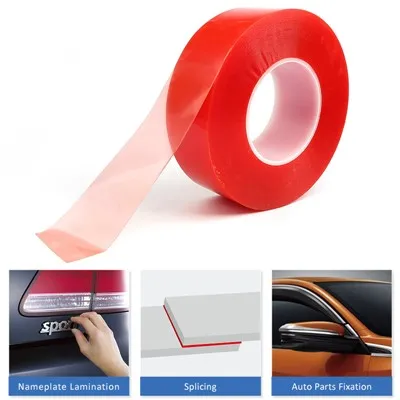
| Clear | Clear PET | Label protection, insulation layer, and seals requiring visual inspection |
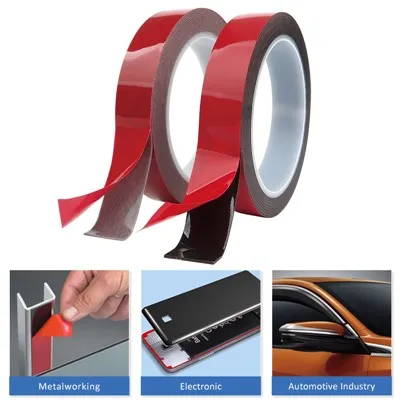
| Red | Splicing Tape | Roll joints in the paper/film industry (high visibility) |
| Yellow/Black | Mylar Tape | Insulation wrapping for motors and transformer coils |
Does a different color result in different performance?
Color itself does not determine performance, but color is often a "label" for specific performance formulations.
Main Function of Color: Visual Identification
In high-speed production lines or complex spraying processes, the most important role of color is to provide contrast.
Green Glue: Green is highly visible on metal surfaces (such as aluminum and steel), making it easy for workers to quickly locate the application position and check for residue upon removal.
Red Glue Joints: During the high-speed operation of a paper machine, the red joints allow photoelectric sensors or the naked eye to instantly identify the break point.
Performance Differences Stem from "Adhesive Formulation"
Users often believe that "green glue is more heat-resistant than transparent glue," which is a misconception. Performance differences depend on the type of adhesive used:
Green is usually paired with silicone: This combination typically withstands high temperatures of 180°C - 220°C and leaves no residue after removal.
Transparent/yellow may be paired with acrylic: This combination focuses more on long-term UV resistance and insulation strength, but the temperature limit is usually lower (approximately 130°C - 150°C).
How to Choose?
When deciding which color of polyester tape to purchase, please refer to the following technical specifications, not just the color:
Temperature Resistance:
Confirm whether it refers to short-term peak temperature (e.g., 30 minutes in a spray oven) or long-term operating temperature.
Adhesion to Steel:
Select the appropriate adhesion based on surface roughness (typically between 25-35 oz/in).
Electrical Performance:
If used in circuits, check its dielectric breakdown voltage. Generally, a 1 mil thick PET tape should withstand over 4,000V.
Chemical Compatibility:
Ensure the tape does not fade or peel when in contact with electroplating solutions or chemical solvents.
How to Choose the Right Polyester Tape?
Color is your "visual aid," but the Technical Specification Sheet (TDS) is your decision guide.
If you are in powder coating, green silicone PET is the industry standard.
If you are in transformer manufacturing, yellow Mylar tape (with flame-retardant certification) is preferred.
If you need temporary protection and have a limited budget, blue or clear acrylic PET is more advantageous.