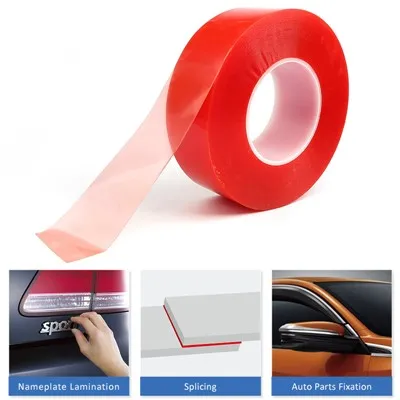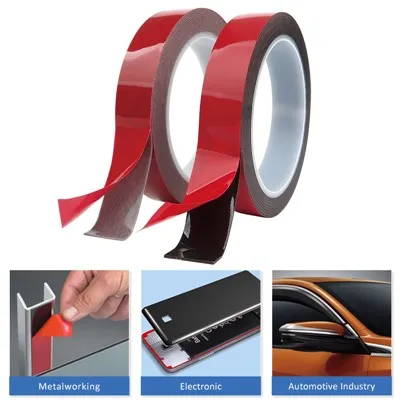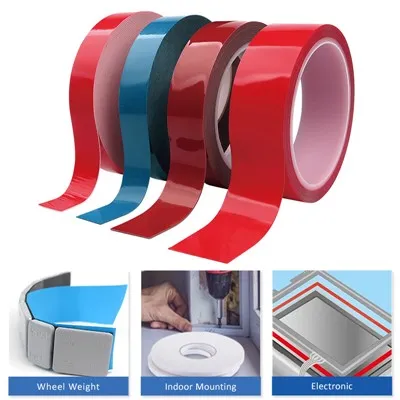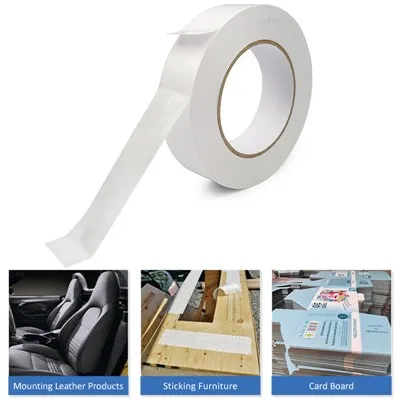
In the fields of industrial bonding and material securing, Double-sided PET tape has become an indispensable key material due to its superior performance and wide applicability. Its PET backing provides it with unique advantages over traditional foam or cloth-based tapes.
Exceptional Characteristics and Advantages of Double-Sided PET Tape
Excellent Temperature Resistance:
PET film inherently offers a wide temperature resistance range. When combined with high-performance acrylic or silicone adhesives, it can meet the demands of a wide range of environments, from low-temperature refrigeration to high-temperature baking.
Excellent Weather and Aging Resistance:
PET film offers strong resistance to UV, ozone, and moisture, resisting yellowing, brittleness, and loss of adhesion after long-term outdoor use, ensuring durable and reliable bonding.
High Strength and Dimensional Stability:
PET film is strong and resists stretching and deformation, effectively resisting shear and peel forces, maintaining the precise positioning of bonded parts, and making it particularly suitable for precision assembly.
Excellent Chemical Solvent Resistance:
PET film offers excellent resistance to grease, solvents, and detergents, making it suitable for environments subject to cleaning or chemical contact.
Ultra-thin and Flat:
PET substrates can be made very thin, enabling virtually invisible bonding without affecting product appearance or dimensional design.
Excellent Electrical Insulation:
PET is an excellent insulating material, making this tape suitable for insulation and fixing in the electrical and electronic industries.
Wide Applications of Double-Sided PET Tape
Thanks to its unique properties, PET double-sided tape has penetrated nearly every corner of modern industry:
Electronic and Electrical Industry:
Fixing and assembling screens, batteries, FPCs/PCBs, lens modules, graphite heat sinks, metal shields, buttons, nameplates, etc., in mobile phones, tablets, and computers.
Automotive Manufacturing and Interiors:
Fixing interior trim, headlight assembly, wiring harness, sensor installation, sound insulation material application, nameplate application, etc.
Signs and Advertising Panels:
Fixing and installing reflective signs, acrylic/metal lettering, display graphics, and POP displays.
Home Appliances:
Fixing control panels, glass panels, metal decorative strips, and internal components.
Architecture and Home Furnishings:
Temporary fixing of glass curtain walls, mirror installation, anti-slip strip application, and fixing of home decorative pieces. New Energy: Photovoltaic panels, lithium batteries.
How to choose the right double-sided PET tape?
Faced with a wide variety of PET double-sided tapes, selection is crucial. Key factors to consider include:
Bonded Materials:
Bonding surface material (plastic? metal? glass? rubber?), surface energy (high? low? PP/PE requires a special adhesive system?), surface condition (smooth? rough? cleanliness?).
Application Environment:
Operating temperature range (ambient? high? low?), exposure to chemicals/solvents/oils, outdoor exposure (UV/ozone/moisture), and stress conditions (static? dynamic? shear? peel?).
Adhesion Requirements:
Required bond strength (permanent? removable?), tape thickness restrictions, requirements for special features such as electrical/thermal conductivity/flame retardancy, and appearance requirements (transparent?).
Processing Technology:
Is die-cutting required? Die-cutting shape complexity? Assembly method (manual? automatic?).
Double-Sided PET Tape Industry Trends and Development
High Performance:
Demand for higher/lower temperature resistance, stronger adhesion, and longer durability continues to grow.
Functionalization:
Demand for specialty tapes such as conductive tape, thermally conductive tape, electromagnetic shielding tape, and optically clear adhesive tape (OCA) is strong, particularly in the consumer and automotive electronics sectors.
Environmental Protection:
Environmental requirements such as solvent-free coating, recyclable materials, bio-based materials, and low VOC emissions are becoming increasingly stringent.
Automation and Intelligence:
Demand for tapes better suited to automated high-speed placement equipment (e.g., stable release force and die-cutting accuracy) is increasing.
Thinness:
The continued pursuit of thinness and lightness in electronic products is driving demand for ultra-thin PET tapes (<0.05mm).