In the world of precision bonding, double-sided transfer tape is like a low-key "hidden champion". With its unique structure and excellent performance, it has become the core bonding material in high-end fields such as electronic manufacturing, automobile assembly.
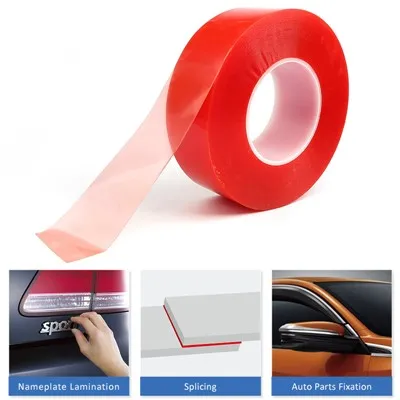
Naikos double-sided transfer tape, consisting of a transparent acrylic adhesive, coated with a release linerIt is a popular choice for graphic attachment and general industrial joining applications. It provides outstanding adhesion to metal and high surface energy plastics. This adhesive provides some initial repositionability for placement accuracy when bonding plastics.
Double Sided Transfer Tape Core features:
Ultra-thinness:
The thickness is extremely thin (commonly 0.03mm - 0.25mm), which hardly increases the volume of the bonded parts, meeting the needs of modern products for thinness and lightness.
No substrate:
It avoids deformation, stress, thickness restrictions, or optical effects caused by substrates.
High bonding strength and precision:
The adhesive layer is pure, providing more direct and efficient bonding, especially good at bonding smooth surfaces.
Excellent uniformity and flatness:
The transfer coating process ensures that the thickness and performance of the adhesive layer are highly consistent.
Good weather resistance:
High-quality adhesives can withstand high and low temperatures, ultraviolet rays, humidity, and chemical solvents.
Excellent die-cutting processability:
The substrate-free feature makes it perform better in high-speed precision die-cutting, with clearer edges.
Core application areas of double-sided transfer tape
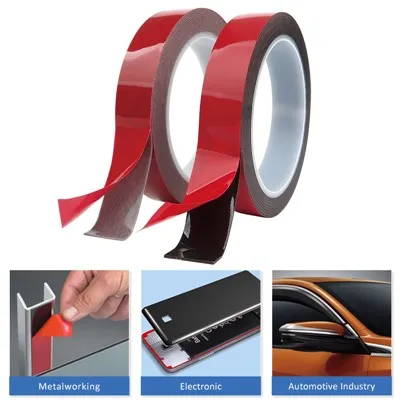
Electronic and electrical industry:
Display screen assembly: Fixing of screens (LCD/OLED) and frames and touch screens of smartphones, tablets, and TVs (requires ultra-thin, high transparency, and anti-warping).
FPC/PCB fixation: Reinforcement of flexible circuit boards and printed circuit boards, bonding of shield covers, and temporary fixation of components.
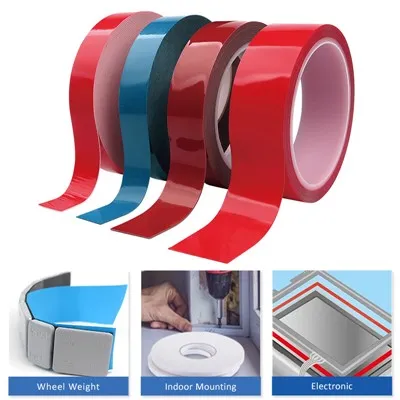
Bonding of thermal/conductive interface materials: Fixing of thermal conductive silicone sheets, graphite sheets, conductive foam, etc.
Battery assembly: Fixing of battery cells, pasting of insulating sheets/labels, and bonding of internal structures of battery packs.
Acoustic devices: Sealing and fixing of components such as speakers and microphones.
Automobile manufacturing industry:
Installation of interior parts: Bonding of decorative strips, signs, door panel trims, control panels, rearview mirror bases, etc. (requires high and low temperature resistance, aging resistance, and low VOC).
Automobile light assembly: Sealing and bonding of lampshades and lamp bodies.
Fixation of electronic components: Bonding and shock absorption of components such as sensors and ECU modules.
Lightweight material bonding: Connection of carbon fiber and composite components.
Industrial manufacturing and consumer products:
Nameplate and label pasting: Provide long-lasting and strong bonding.
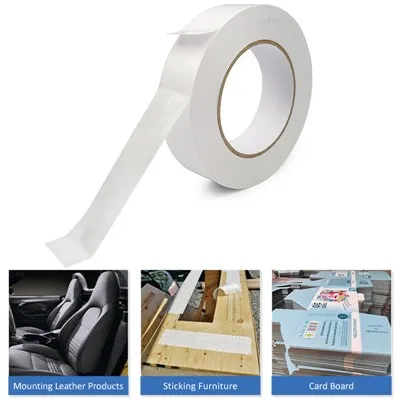
Glass and acrylic bonding: Display racks, furniture, bathroom products.
Precision instrument assembly: Fixing of optical components and tiny parts.
Key selection considerations:
Bonding substrate:
The surface material of the adherend (metal, plastic type, glass, coating, etc.) is the primary factor and directly affects the choice of adhesive.
Bonding strength requirements:
Initial adhesion, holding force, peel force requirements (static or dynamic load).
Use environment:
Temperature range (high temperature, low temperature cycle), humidity, ultraviolet radiation, chemical solvent contact, whether insulation/thermal conductivity/conductivity is required.
Thickness requirements:
Space limitations determine the choice of tape thickness.
Processing method:
Is die cutting required? Die cutting shape complexity? Attachment method (manual/automatic)?
Special requirements:
transparency, color, flame retardancy, biocompatibility, and environmental regulations (RoHS, REACH, etc.).
Industry trends and development directions
Performance extremes:
Ultra-thinness: Pursuing thinner (<0.02mm) to meet the needs of folding screens and micro wearable devices.
Higher temperature resistance: Electric vehicles and 5G devices have higher requirements for heat dissipation and high temperature stability.
Multifunctional integration: The demand for thermal conductive, conductive, electromagnetic shielding, and optically transparent (OCA) double-sided transfer tapes is rising.
Better weather resistance and reliability: Adapt to harsher and long-term use environments.
Material and process innovation:
Development of new adhesives: Such as high-performance acrylic modified adhesives, low precipitation and low odor adhesives, and bio-based adhesives.
Precision coating technology: Improve coating uniformity, edge control capabilities, and reduce adhesive waste.
Release technology optimization: More stable release force control, adapt to high-speed automated placement.
Intelligent and green:
Intelligent manufacturing: The automation and digitalization of tape production and die-cutting processes are improved.
Environmentally friendly and sustainable: The application of water-based adhesives and solvent-free UV curing adhesives is increasing; research on recyclable release materials and biodegradable materials is in-depth; energy consumption and emissions in the production process are reduced.