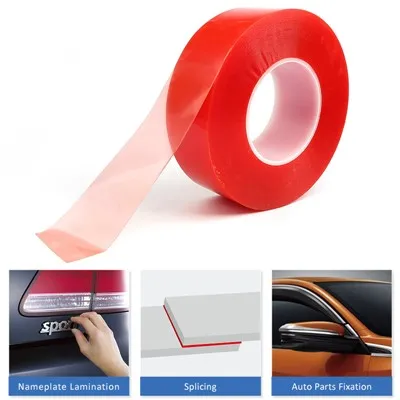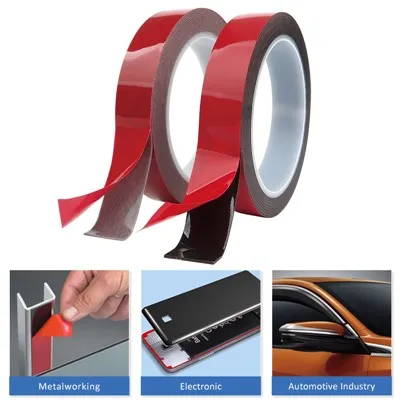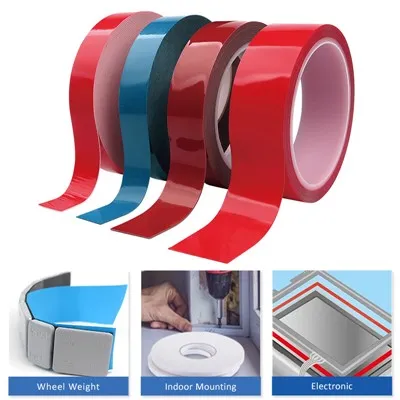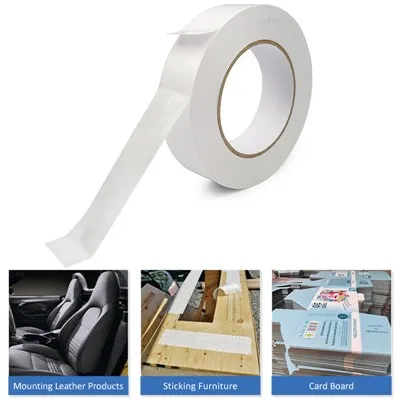
In industrial manufacturing, electronic assembly, automotive interiors, advertising signs, and even in daily life, an excellent bonding solution is playing an increasingly critical role: acrylic foam tape. This double-sided tape, featuring acrylic pressure-sensitive adhesive as its core and closed-cell foam substrate, is gradually replacing traditional mechanical fixings and liquid adhesives due to its excellent comprehensive performance.
Acrylic foam tape is a double-sided tape made of closed-cell foam as the substrate and coated with high-performance acrylic pressure-sensitive adhesive on both sides.
Outstanding characteristics and advantages of acrylic foam tape
Excellent bonding strength and durability: Acrylic adhesive has extremely strong cohesion and adhesion to a variety of materials (metal, plastic, glass, coating surface, etc.), can form a long-lasting structural or semi-structural bond, and has excellent anti-aging performance.
Excellent weather resistance and UV resistance: It can withstand high and low temperatures (usually -40°C to 150°C, special formulas can reach higher), ultraviolet radiation, and humid environments for a long time, and is not easy to yellow, become brittle or fall off, which is very suitable for outdoor applications.
Good chemical solvent resistance: It has strong resistance to grease, solvents, detergents, etc., ensuring the reliability of bonding.
Excellent cushioning and stress dispersion: The foam substrate can effectively absorb impact energy, disperse the stress caused by thermal expansion and contraction or vibration at the bonding site, protect the adherend, and reduce the risk of debonding.
Excellent sealing and filling performance: Foam can fill uneven surfaces to form an effective dust-proof and moisture-proof sealing layer.
Convenient and efficient construction: Tear and stick, no mixing and curing, no solvent volatilization, clean and environmentally friendly, greatly improving production efficiency.
Weight reduction and beauty: Compared with mechanical fasteners (screws, rivets), the use of acrylic foam tape can significantly reduce weight, and there are no holes on the surface, and the appearance is neater and more beautiful.
3. Main application areas of acrylic foam tape
Automotive industry: widely used for fixing interior and exterior trims (trimmings, signs, door panels, ceilings, sound insulation pads, sealing strips, pedals, wiring harnesses), rearview mirror installation, taillight fixing, new energy battery pack assembly bonding, etc.
Electronic appliances: fixing internal structural parts of mobile phones/tablets (screens, batteries, FPC), heat sink bonding, PCB fixing, display frame bonding, nameplate/label pasting, household appliance panels, and component assembly.
Construction and building materials: fixing curtain wall metal panels/composite panels, installing elevator car decorative panels, sun room structure bonding, fixing bathroom accessories, fixing insulation materials, and installing advertising logos (words, signs).
Transportation: fixing high-speed rail/subway interior panels, luggage racks, and handrails; bonding ship interiors; fixing lightweight components inside aircraft.
Home appliance manufacturing: bonding and shock absorption of control panels, glass door panels, plastic shells, and internal structural parts.
Advertising exhibition: Pasting and installation of large-format posters, display boards, KT boards, and acrylic signboards.
General industry: Fixing of mechanical equipment nameplates and signs; bonding of instrument panels; splicing of lightweight materials (honeycomb panels, composite materials); packaging, sealing, etc.
Precautions for using acrylic foam tape
Surface treatment: The surface to be bonded must be clean, dry, oil-free, and dust-free. Wipe with solvents such as isopropyl alcohol (IPA) if necessary. Some low-surface-energy plastics may require primer treatment.
Pressure: Apply sufficient uniform pressure (such as roller rolling) after bonding to ensure that the tape is in full contact with the bonded surface, which is crucial to achieving optimal bonding strength.
Bonding time: It takes a certain amount of time (usually 24-72 hours) for acrylic glue to reach its final strength. Avoid applying excessive loads or stress during this period.
Ambient temperature: The optimal bonding temperature is usually between 15°C-35°C. Too low a temperature may reduce the wettability of the glue, and too high a temperature may make the tape too soft and difficult to operate.
Storage: Store in a cool and dry place (recommended 10°C-25°C), away from direct sunlight and heavy pressure.