High-temperature Washi masking tape stands as a quintessential tool in various industries, offering unparalleled adherence, flexibility, and resilience under extreme thermal conditions. This article delves into the intricate fabric of this indispensable tape, exploring its manufacturing process, diverse applications across industries, and emerging trends shaping its future trajectory.
Manufacturing Process
The production of high-temperature Washi masking tape involves a meticulous blend of traditional craftsmanship and modern technology. Derived from the long-standing Japanese art of Washi paper-making, this tape undergoes a specialized manufacturing process to imbue it with heat-resistant properties.
Applications Across Industries
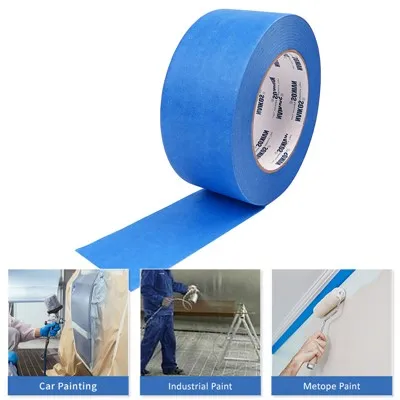
High-temperature Washi masking tape finds widespread utility across a myriad of industries, owing to its unique blend of attributes. In automotive manufacturing, it serves as a crucial tool for masking delicate components during painting and powder coating processes, withstanding the high temperatures encountered in curing ovens without leaving residue or causing damage. Similarly, in electronics assembly, this tape facilitates precise masking of circuit boards and sensitive electronic components during soldering or conformal coating operations, safeguarding against heat damage while ensuring clean and uniform finishes. Moreover, its applications extend to aerospace, construction, and industrial maintenance, where it is prized for its reliability, versatility, and ease of use in challenging environments.
Emerging Trends and Future Outlook
As industries continue to evolve and embrace advanced manufacturing techniques, the demand for high-temperature Washi masking tape is poised for steady growth. Emerging trends such as the rise of electric vehicles, lightweight composites, and 3D printing are driving the need for specialized masking solutions capable of withstanding higher temperatures and adhering to unconventional surfaces. Consequently, manufacturers are innovating with novel materials, adhesive formulations, and application-specific designs to meet the evolving demands of modern industry. Additionally, the growing emphasis on sustainability and eco-friendliness is prompting the development of biodegradable Washi tapes derived from renewable sources, catering to environmentally conscious consumers and industries alike.
In conclusion, high-temperature Washi masking tape stands as a testament to the enduring legacy of traditional craftsmanship fused with modern innovation. Its indispensable role across diverse industries underscores its significance as a versatile and reliable solution for thermal masking applications. As industries forge ahead into an era of technological advancement and sustainability, the evolution of Washi masking tape continues to unfold, promising new possibilities and applications yet to be discovered.