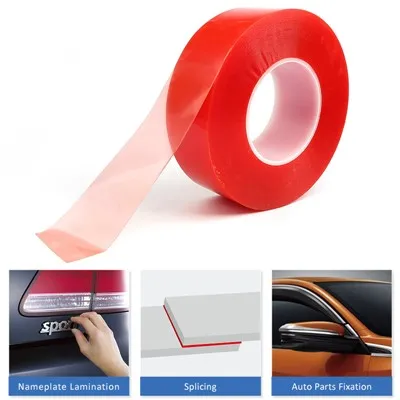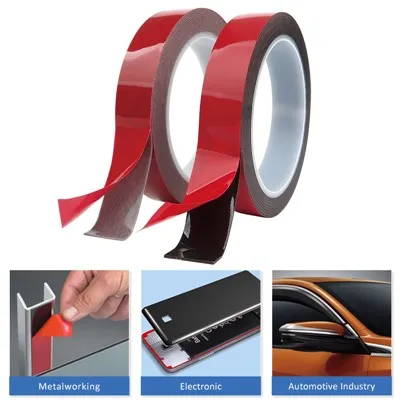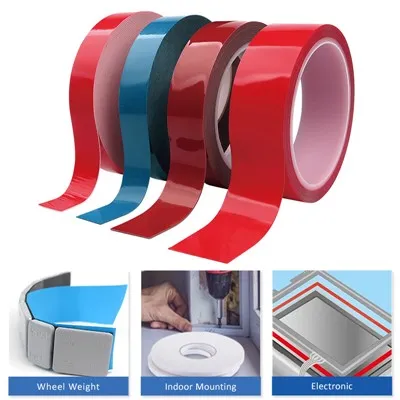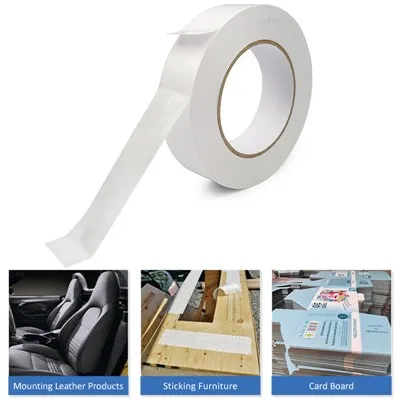
An apparently unimportant yet essential substance, known as the "all-rounder of industry"-Teflon tape-is used in various industries, including food processing, electronics, electrical equipment, and industrial manufacturing.
Many people immediately think of the coating on their nonstick cookware when they hear the term Teflon tape. In fact, polytetrafluoroethylene (PTFE), a polymer with remarkable qualities, serves as its main ingredient.
Technically speaking, Teflon tape is an industrial tape made by applying a high-performance silicone adhesive to a polytetrafluoroethylene film substrate and then vulcanizing it at high temperatures. In difficult and demanding environments, its many features-not just its anti-stick properties-make it invaluable.
Core Properties of Teflon Tape
Why is Teflon tape so popular? It stems from its inherently superior properties:
Extreme Non-Stick
Because PTFE has the lowest surface tension of any solid material, things rarely stick to its surface.
Outstanding Resistance to High and Low Temperatures
It can tolerate short-term temperatures up to 300°C and has an incredibly broad operating temperature range, usually sustaining steady performance between -70°C and +260°C for prolonged periods of time.
Excellent Chemical Inertness
It is insoluble in aqua regia and resistant to corrosion from almost all strong acids, bases, organic solvents, and chemicals.
Excellent Electrical Insulation
It is insensitive to temperature and humidity and has a very low dielectric constant and dielectric loss at high and ultra-high frequencies.
Extremely Low Coefficient of Friction
It is incredibly smooth, self-lubricating, and has the lowest coefficient of friction of any plastic.
How Can I Pick a Teflon Tape?
Teflon tape comes in a wide range of quality. Think about more than just pricing when making a purchase:
Coating uniformity and background thickness: High-quality tapes contain a fine, particle-free silicone covering and a consistent PTFE film thickness. Performance and longevity are impacted by low-quality tapes' propensity for crystals and uneven thickness.
Problems with Glue Type and Residue: Make sure to always use silicone adhesive for high temperatures. High temperatures can cause low-quality acrylic adhesives to carbonize and turn yellow, leaving behind tough, challenging-to-remove adhesive residues that can severely discolor tools and workpieces.
Actual temperature resistance rating: Ask suppliers for specific temperature test reports on their products, rather than relying solely on advertised figures. Some products can quickly age and fail at 260°C.
Slitting process and unwinding force: Are the cut edges smooth and burr-free? Is unwinding easy and smooth? This directly impacts application efficiency and user experience.