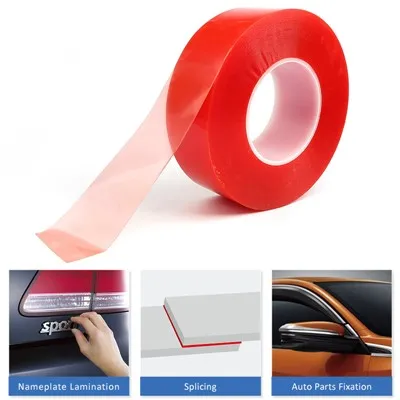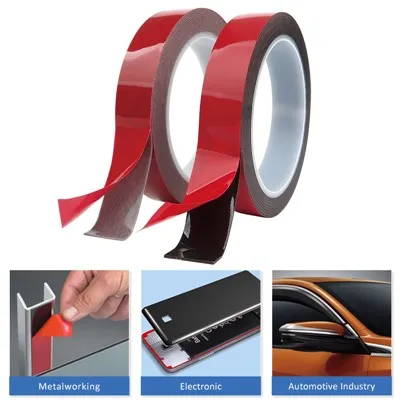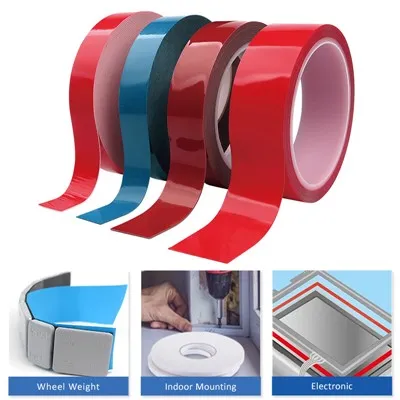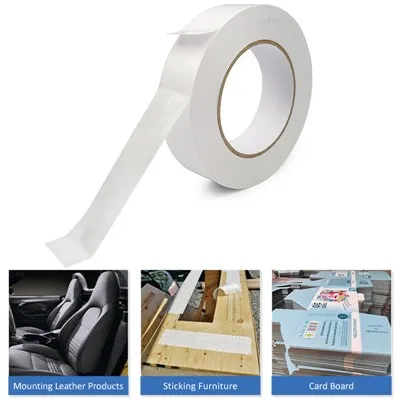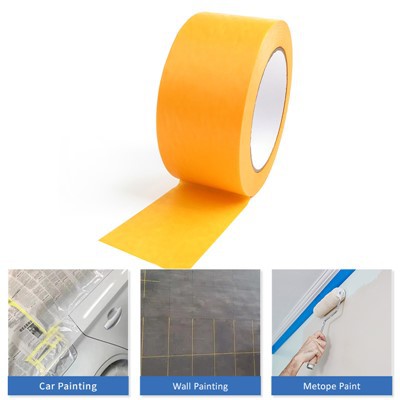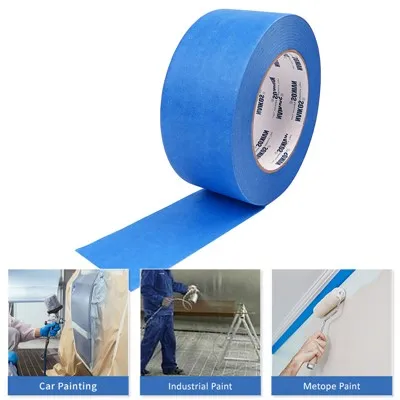
Double-sided tissue tape is a double-sided adhesive product with a tissue paper backing, pressure-sensitive adhesive evenly coated on both sides, and a release paper protective adhesive layer.
Double-Sided Tissue Tape Core Categories: Classification by Adhesive Type and Application Scenario
Double-Sided Tissue Tape's performance requirements vary significantly across industries. Currently, the industry primarily categorizes double-sided tissue tape by adhesive type and application scenario to help buyers quickly match their needs:
1. Classification by Adhesive Type
The most common kind is acrylic adhesive double-sided tissue tape, which has outstanding resistance to water, age, and temperature (-20°C to 80°C). It is appropriate for applications needing long-term, stable bonding, like mounting electrical components, decorating furniture, and sealing packages, and it resists debonding after prolonged bonding.
Adhesive Rubber Strong initial adherence and quick bonding after application are characteristics of double-sided tissue tape. However, it suffers from lesser temperature and age resistance, making it more ideal for short-term, temporary bonding applications, such as paper label application and present wrapping.
Hot Melt Adhesive Double-Sided Tissue Tape has a high bonding strength and is ideal for attaching thick materials (like metal and wood sheets) because it needs to be heated to activate the adhesive layer. Its use is restricted to industries like furniture production, though, because it necessitates heating equipment.
Double-Sided Tissue Tape's Current Industry Applications: Demand Analysis in Three Core Sectors
With the increasing sophistication of manufacturing and personalized consumer demand, the application scope of double-sided tissue tape continues to expand. The electronics, packaging, and home furnishing sectors contribute over 70% of market demand. Specific application characteristics are as follows:
1. Electronics Industry: Precision Bonding Becomes a Core Demand
In consumer electronics, such as smartphones, tablets, and smart wearables, double-sided tissue tape has become an essential part of "screwless assembly" solutions. For example, to attach the screen of a mobile phone to its mid-frame, ultra-thin (≤80μm) acrylic glue is required. Double-sided tissue tape must have a sufficient bonding strength to withstand frequent drops and impacts without having an excessively thick adhesive, which could compromise the device's thin and lightweight design.
2. Packaging Industry: Replacing Traditional Carton Sealing Methods is a Trend
Traditional carton sealing often relies on transparent tape or strapping tape. However, double-sided tissue tape, with its advantages of "concealed adhesion" and "clean appearance," is becoming the preferred choice for high-end packaging.
3. Home Decoration Industry: Environmental Protection and Convenience Drive Demand
Due to increased consumer preferences for "punch-free decoration" and "nail-free installation," double-sided tissue tape is becoming more and more common in home furnishings. For instance, double-sided tissue tape with water-resistant acrylic adhesive can be used to mount bathroom shelves without drilling holes in tiled walls. Double-sided tissue tape with a rubber coating enables "apply and remove" capability when installing window decorations and wall stickers, protecting the wall from any remaining adhesive residue.
How to Choose Double-Sided Tissue Tape?
Faced with the wide variety of double-sided tissue tape products on the market, blindly selecting a product can lead to adhesive failure, cost waste, and even product quality issues. 1. Identify the bonding substrate and environment.
First, determine the types of substrates being bonded, the ambient temperature and humidity, and any potential exposure to water or chemicals. For example, if bonding glass to metal in a humid environment (such as a bathroom), choose a water-resistant acrylic double-sided tissue tape. If bonding paper labels for short-term use, a rubber-type adhesive offers better value.
2. Pay attention to adhesion and temperature resistance parameters.
Adhesion strength: Adhesion strength is typically measured in 180° peel strength (unit: N/25mm). A higher value indicates stronger adhesion. Precision bonding in the electronics industry requires a peel strength of ≥5N/25mm, while general sealing in the packaging industry requires a strength of ≥3N/25mm.
Temperature resistance: The working temperature affects the adhesive selection. Use a rubber-type adhesive for temperatures between 0°C and 40°C. Select an acrylic glue with a temperature resistance of ≥80°C for high-temperature settings (such as computer equipment heat dissipation zones and automobile interiors).
3. Confirm Environmental and Safety Certifications
If the product is used for food packaging, children's products, or interior decoration, it is necessary to confirm that it has passed relevant environmental certifications, such as:
EU ROHS certification (Restriction of Hazardous Substances);
FDA food contact certification (for food packaging);
China GB 18583-2008 standard (Environmental Requirements for Adhesives for Interior Decoration).
4. Consider Customization
Specifications for double-sided tissue tape (width, length, thickness), color (transparent, white, or colored), and release paper type (single silicone, double silicone) vary by industry.
For example:
The electronics industry requires narrow width (5mm-10mm) and ultra-thin (50μm-80μm) products.
The home decoration industry may require colored tissue paper substrates to match the decor style.
Automated production lines require roll-to-roll (100m-500m length) products for use with labeling machines.