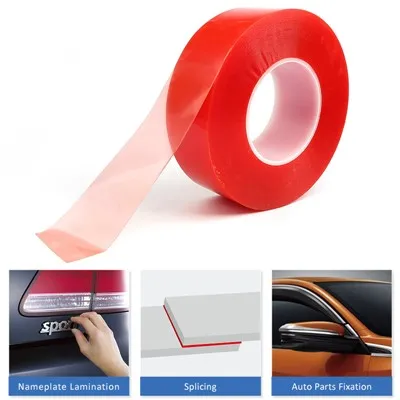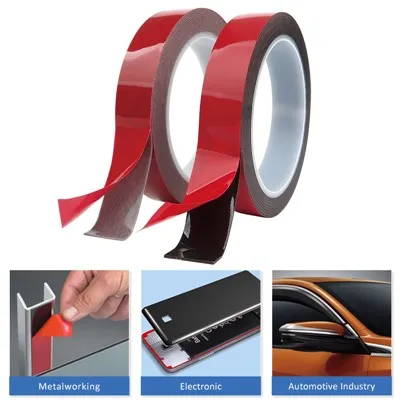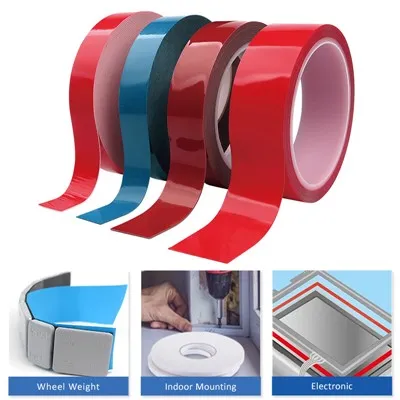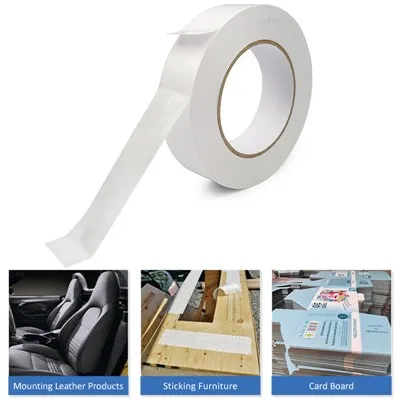
Double-sided transfer tape is a pressure-sensitive, backingless, double-sided adhesive tape. Its unique structure and superior performance have made it an indispensable high-performance bonding solution for precision manufacturing, electronics assembly, the automotive industry, and numerous innovative product applications. It transcends the limitations of traditional double-sided tapes, offering designers and engineers a thinner, more uniform, and more reliable bonding option.
Key Advantages and Features of Double-Sided Transfer Tape
The backingless design provides double-sided transfer tape with a series of unique performance advantages, making it exceptionally effective in specific applications:
Ultra-thin:
The bond line thickness is typically between 0.01 mm and 0.2 mm, significantly thinner than that of backing tape. This makes it an ideal choice for applications where space is limited, lightweight construction is required, or a significant bond line thickness is desired.
Excellent Bond Smoothness and Uniformity:
The lack of a backing eliminates the inherent issues of thickness variations and compression deformation that can occur with backing materials. The pure adhesive layer provides an extremely uniform and smooth bond surface, ensuring full contact and even stress distribution.
High Adhesive and Cohesive Strength:
The high-performance adhesive provides exceptionally high initial tack, peel strength, and shear strength, while also exhibiting excellent cohesive strength.
Excellent Conformability and Curved Surface Adaptability:
The ultra-thin and flexible adhesive layer perfectly conforms to complex curves, irregular surfaces, and even tiny concave and convex structures, achieving a comprehensive, close contact bond.
Excellent Heat and Weather Resistance:
Acrylic double-sided transfer tapes typically offer excellent resistance to high temperatures, UV aging, solvents, and chemicals, making them suitable for use in harsh environments.
Rubber-based tapes typically offer high initial tack and excellent low-temperature performance, but are relatively weak in heat and weather resistance.
Key Applications of Double-Sided Transfer Tape
Due to its core advantages, double-sided transfer tape is widely used in applications requiring high bonding performance, thickness, and reliability:
Consumer Electronics and Smart Devices:
Mobile Phones/Tablets/Computers: Attaching display modules (LCMs), batteries, camera modules, FPC/PCB boards, internal brackets, and attaching decorative housing parts (nameplates, logos).
Wearable Devices: Attaching components to smartwatches/bracelets.
Display Devices: Attaching touch screens (TP) to cover glass or LCD/OLED displays.
Automotive Industry:
Interior and Exterior Trim Fixing: Attaching door panels, instrument panel trim, center console, logos, grilles, scuff strips, window moldings, and weather strips (replacing clips or welding for a more aesthetically pleasing finish).
Electronic Component Fixing: Attaching ECU boxes, sensors, and wiring harnesses.
Lightweight Material Bonding: Assisting in the bonding of carbon fiber and composite components. Home Appliance Manufacturing:
Control panels, glass panels, metal/plastic decorative parts, logos, internal wiring harnesses, and component fastening.
Printing, Packaging, and Signage:
High-demand self-adhesive labels (such as anti-counterfeiting labels and RFID tags), and adhesive backing and lamination for metal/plastic/acrylic signs.
Industrial Manufacturing and Assembly:
Securing precision instrument components, attaching sound-absorbing/insulating materials, assembling membrane switches, and structural bonding or auxiliary fastening between plastics/metals/glass/composites.
Double-sided transfer tape has set a new benchmark in precision bonding with its unparalleled ultra-thinness, excellent bond flatness and strength, outstanding environmental resistance, and superior surface adaptability. With continuous advancements in materials technology, the performance boundaries of double-sided transfer tape continue to be pushed, providing strong bonding support for the lighter, thinner, and smarter products of the future.