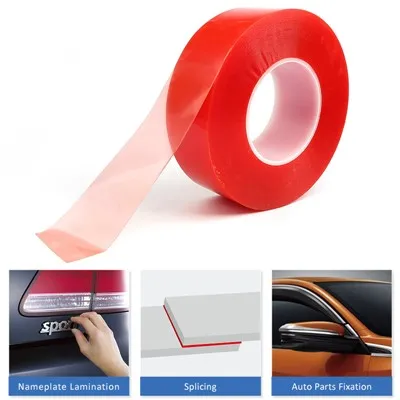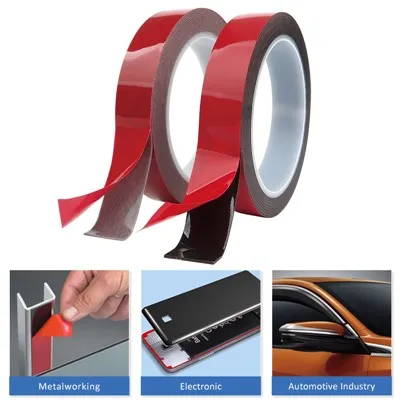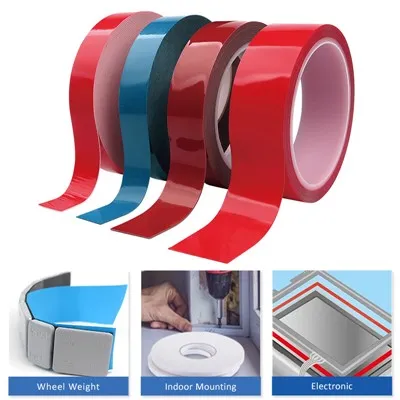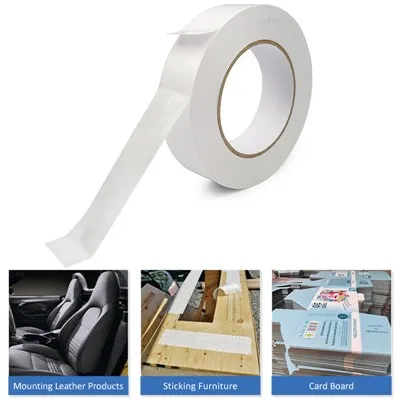
Polyethylene foam tape is a functional tape made of cross-linked closed-cell polyethylene foam as the base material and coated with acrylic glue. Its closed-cell structure gives the product excellent moisture resistance, chemical corrosion resistance and cushioning performance, and is widely used in sealing, shock absorption, sound insulation, and precision parts pasting.
Core characteristics and technical advantages
Excellent cushioning and shock absorption: The soft elasticity of polyethylene foam can effectively absorb impact energy, protect precision parts, and reduce vibration damage during transportation or use. This is its core value that distinguishes it from ordinary tapes.
Good sealing performance: The closed-cell structure enables it to have excellent dustproof, moisture-proof, splash-proof and even airtight capabilities, and is often used to seal door and window gaps, chassis housings, electronic components, etc.
Excellent filling and fit: The foam base material is soft and has a certain compression resilience, which can well fill uneven surfaces or gaps, achieve close fit, and compensate for tolerances.
Heat insulation and sound insulation effect: The air bubbles inside the foam are poor conductors of heat and sound, giving it certain thermal insulation and sound absorption and noise reduction functions.
Lightweight and easy to process: Polyethylene foam itself has low density and light weight. It is easy to cut, die-cut, and punch into various complex shapes, which is suitable for automated production.
Weather resistance and chemical stability: High-quality polyethylene foam tape has good UV resistance, ozone resistance, aging resistance and certain chemical solvent resistance.
Diverse viscosity options: Different viscosity levels (from low viscosity to ultra-high viscosity) and types of adhesives (such as standard, high temperature resistant, removable, etc.) can be selected according to application requirements.
Main application areas of polyethylene foam tape
Due to its versatility, polyethylene foam tape is widely used in many industries:
Construction and decoration:
Sealing of door and window installation gaps (windproof, waterproof, soundproof).
Sealing of curtain walls and skylights.
Fixation and shock absorption of interior decorative lines, skirtings, and ceilings.
Electronic and electrical industry:
Adhesion, fixation, and shock absorption of display frames and panels.
Fixation and buffering of batteries.
Shock absorption and dustproof sealing of electronic components (such as PCB boards).
Bonding and sealing of home appliance housings and internal components (such as air conditioners, refrigerators, washing machines).
Automobile manufacturing and transportation:
Bonding and fixing of automobile interior and exterior trims (decorative strips, signs, water retaining strips, sealing strips).
Fixing and shock absorption of wiring harnesses and pipes.
Bonding and sealing of lamps and glass.
Shock absorption, noise reduction and bonding of internal components of high-speed rail and ships.
Advertising signs and exhibition displays:
Bonding and installation of PVC letters, acrylic letters, and metal signs.
Quick and traceless pasting of exhibition boards and posters.
Fixing and shock absorption of signs and signs.
Industrial manufacturing and packaging:
Packaging, lining, and cushioning of precision instruments and equipment.
Shock-absorbing gaskets for mechanical parts.
Bonding and sealing of panels and covers.
Pipe wrapping and sealing.
How to choose polyethylene foam tape correctly?
Choosing the right polyethylene foam tape is crucial to the success of the application. The following factors should be considered:
Substrate parameters:
Thickness: Affects cushioning, filling capacity, and final bonding thickness. Common thicknesses range from 0.5mm to 10mm or even thicker.
Density: Affects hardness, compressibility, and strength. The higher the density, the stiffer it is, the lower the compressibility and the higher the strength.
Color: Commonly used white, black, and gray, and can be customized for special needs.
Cell structure: Closed-cell type is the mainstream, emphasizing waterproof sealing.
Adhesive properties:
Adhesive type and strength: initial adhesion (quick adhesion), holding force (anti-creep), peel strength (anti-pull). Choose according to the surface material of the adherend (high surface energy, such as metal/glass, or low surface energy, such as PP/PE plastic) and the required strength.
Temperature resistance: Adhesives and foams have a temperature resistance range (such as -20℃ to 120℃). The highest and lowest temperatures of the application environment need to be considered.
Weather resistance: For outdoor applications, you need to choose adhesives and foams that are UV-resistant and aging-resistant.
Special properties: If necessary, removable (no residual adhesive), solvent-resistant, flame-retardant, and other properties.
Application environment:
Indoor/outdoor?
Static load/dynamic vibration?
Contact with water, oil, chemicals?
Temperature range?
Surface condition: Is the surface of the adherend clean, dry, and flat? Is there oil, dust, paint, or low surface energy coating?
As a high-performance multifunctional bonding and sealing material, polyethylene foam tape has excellent cushioning and shock absorption, sealing protection, filling and bonding, and easy processing properties, making it shine in many fields such as construction, electronics, automobiles, advertising, and industry. Whether it is to solve complex industrial bonding problems or meet daily sealing and fixing needs, choosing the right polyethylene foam tape can provide efficient, reliable, and economical solutions.