In the vast world of adhesive products, double-sided tissue tape occupies an important position with its unique structure and excellent performance. It is not only a frequent visitor to packaging and handicrafts, but also an indispensable precision bonding material in many industrial fields.
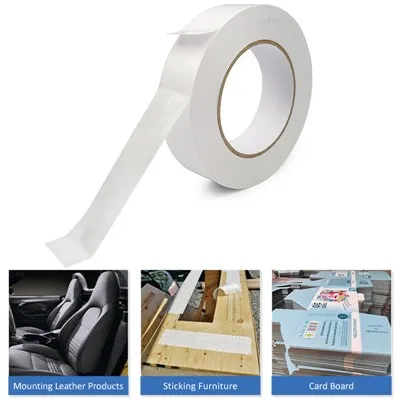
Double-sided tissue tape is a tape with pressure-sensitive adhesive coated on both sides of the tissue substrate. The "cotton paper" here does not refer to paper made of cotton, but a special paper-based material that is light, soft, strong, and easy to tear. It usually has excellent flexibility and tensile strength, and can withstand a certain amount of tension even if it is very thin.
The reason why double-sided tissue tape is widely used is due to the unique advantages brought by its substrate:
Ultra-thinness: The tissue substrate itself is very thin, making the overall tape thickness extremely small (usually below 0.1mm), which is very suitable for occasions that require hidden bonding or have strict requirements on thickness.
Excellent flexibility and conformability: Tissue is soft and can easily fit various curved surfaces (including slightly uneven surfaces), and is not easy to rebound or warp.
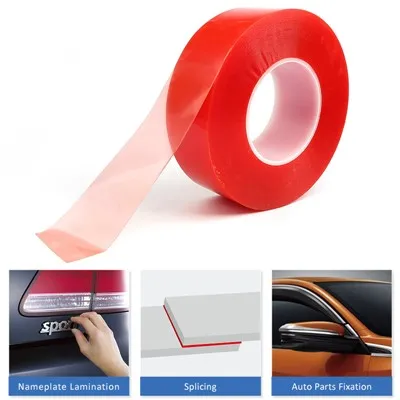
Easy to punch and die-cut: Tissue substrates are easy to accurately punch into various complex shapes (such as dots and special shapes), and are widely used in electronics, automotive interiors, nameplate pasting, and other fields that require precise positioning.
Easy to tear by hand: Compared with double-sided tapes with PET or foam substrates, double-sided tissue tapes are usually easier to tear directly by hand, and are convenient to use.
Good initial adhesion and lasting adhesion: It can quickly adhere to the adhered object and maintain stable adhesion during long-term use.
Buffering and stress dispersion: Tissue has a certain degree of micro-compression and ductility, which can absorb part of the stress and reduce the risk of damage to the adhered material.
Cost-effectiveness: Compared with substrates such as foam, cotton paper has a lower cost and is economical on the premise of meeting performance requirements.
Core application areas of double-sided tissue tape
Double-sided tissue tape has a wide range of applicability. The following are some of the main application scenarios:
Packaging industry:
Sealing and fixing the lining of high-end gift boxes, cosmetic boxes, and electronic product packaging boxes.
Pasting instructions, warranty cards, etc.
Fix products on display cards (Blister Card / Carded Packaging).
Printing and advertising signs:
Paste posters, posters, and display boards.
Fix light box pieces and advertising signs.
Paste self-adhesive labels (as transfer tape).
Electronic and electrical industry (precision die-cutting applications):
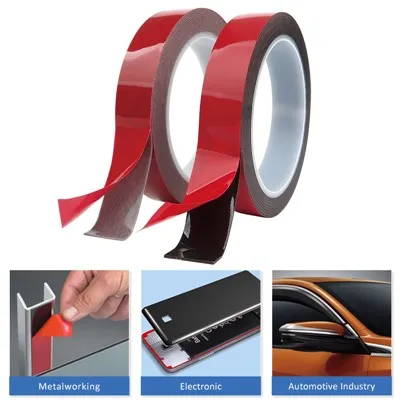
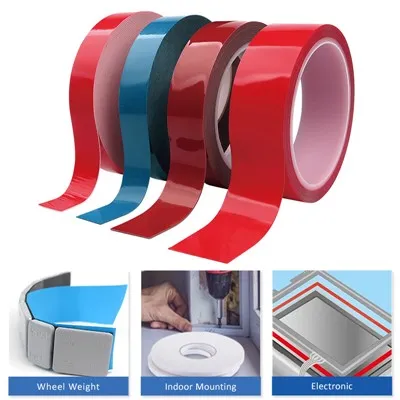
Fix FPC (flexible circuit board), screen components, batteries, shielding covers, insulation sheets, dust screens, etc., inside mobile phones, tablets, and laptops.
Paste various electronic components and sensors.
Requires ultra-thin, precise positioning and high-reliability bonding points.
Automotive interiors and parts:
Paste interior panel skins (fabric, leather, PVC), decorative strips, and sealing strips.
Fix car logos and nameplates.
Paste sun visors, shading mats, and sound insulation materials.
Office stationery and household daily necessities:
Album making, handicrafts, DIY projects.
Temporarily fix paper and photos.
Paste hooks, mirrors (lightweight), decorations, etc.
How to choose the right double-sided tissue tape?
When choosing double-sided tissue tape, the following key parameters need to be considered:
Substrate thickness and weight: Affects the overall tape thickness and flexibility. The thinner the better, but the tensile strength may be slightly lower.
Adhesive type:
Rubber series: Good initial adhesion and low cost, but relatively poor temperature resistance (generally ≤80°C), weather resistance, and solvent resistance, and may yellow over time.
Acrylic series: Better temperature resistance (up to 100-150°C), excellent weather resistance, UV resistance, and solvent resistance, high transparency, good long-term stability, and not easy to yellow, but the cost is usually higher, and the initial adhesion may be slightly lower than the rubber series.
Viscosity level: Choose low-viscosity, medium-viscosity, or high-viscosity models according to the surface of the adherend and the required strength.
Temperature resistance: Clarify the maximum and minimum operating temperatures of the application environment and choose an adhesive that meets the requirements.
Release paper type: Common glassine release paper or plastic-coated release paper (white/yellow). Choose a type that is easy to peel and does not leave residual glue.
Die-cutting performance: For applications that require precision die-cutting, choose products with good die-cutting performance and less prone to paper scraps or glue overflow.
Certification requirements: Certain industries (such as electronics, automotive, and medical) may need to comply with RoHS, REACH, UL, ISO, and other certifications. Be sure to confirm whether the product meets relevant regulatory standards.