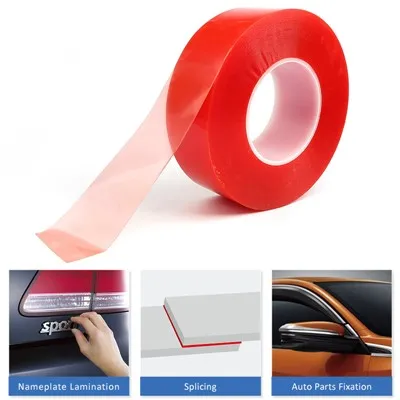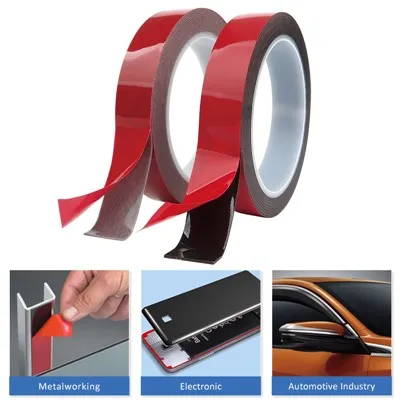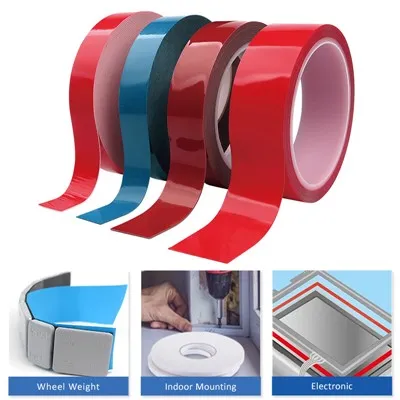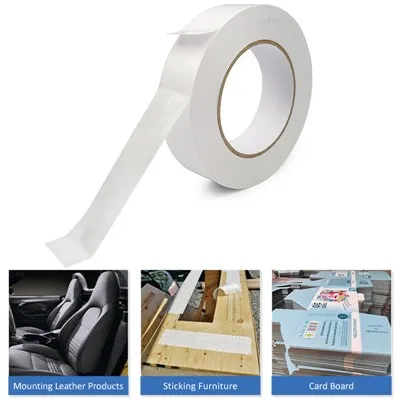
In today's business landscape, which strives for light-weight, precision, and effective production, conventional mechanical fastening methods usually seem cumbersome and outdated. Double-sided transfer tape, as an advanced adhesive remedy, is becoming the preferred choice of designers and engineers across several industries due to its invaluable advantages.
Double-sided transfer tape is a double-sided tape without an intermediate carrier( such as tissue paper, PET, or foam). It is made by covering a high-purity plastic epoxy directly onto a release paper. This unique structure offers many advantages over conventional double-sided tape. Simply put, it can be thought of as "Double-sided transfer tape made solely of glue", enabling it to reach extremely thin and consistent interaction.
Core Features and Advantages of Double-Sided Transfer Tape
Why is backingless double-sided audio so popular? It stems from its extraordinary physical and chemical properties:
Ultra-thinness and conformability
Because it lacks a backing, it can be extremely thin (typically 0.03mm to 0.15mm). This allows it to nearly eliminate gaps between components during bonding, completely conforming to unusual curved surfaces and successfully avoiding stress issues caused by thickness, making it important for bonding precision digital components.
High Initial and Permanent Tack
Double-sided transfer tape typically has extremely high initial tack, allowing it to adhere securely upon application, preventing component shifting. After proper pressure and curing, it forms a strong, permanent bond, even exceeding the strength of some backing tapes.
Excellent weather resistance and heat
Double-sided transfer tape, which is primarily made of acrylic adhesive, can withstand temperatures as high as 80-120 degrees Celsius and is resistant to UV rays, moisture, and chemical solvents, ensuring stable bonding even in harsh environments.
Silent Unwinding and No Adhesive Residue
Rework and cleanup are made simpler with high-quality double-sided transfer tape because it leaves little residue after peeling. Additionally, it quietly unwinds, increasing production line productivity and user experience.
Uniform Distribution of Stress
The adhesive layer is evenly stressed because it lacks a backing material, effectively reducing localized stress concentrations. This makes it particularly suitable for bonding materials like glass and metal, plastic and ceramic, which have varying thermal expansion coefficients.
Main Applications of Double-Sided Transfer Tape
Its unique qualities make it particularly appropriate for high-tech and challenging applications:
Consumer Electronics Industry: Smartphones (screen, battery, internal FPC), tablets, wearable devices, and camera modules. This is where backingless double-sided audio is most widely used.
Automotive Industry: Interior trim bonding( decorative strips, signage), sensor mounting, wiring harness mounting, and display assembly require high-temperature resistance and long-term durability.
Home Appliances and Smart Home: Everlasting mounting of control panels, crystal door panels, and brands.
How to Choose the Right Double-Sided Transfer Tape?
Choosing the right double-sided transfer tape is essential to a successful program. Please follow these steps:
Determine the material being bonded: Is it plastic, steel, glass, or a hybrid? Different materials have different surface forces, requiring an appropriate adhesive.
Assess the area condition: Is the surface smooth, tough, smooth, or curved? double-sided transfer tape bonds best to smooth materials with high surface energy.
Define performance requirements: What bond strength is required? What is the operating temperature range? Is UV or chemical resistance required?
Consider the application process: Will it be applied manually or with automated equipment? This will influence the choice of release liner and tape packaging.
Double-sided transfer tape may appear simple, but the materials science and process technology behind it are profound. It is not only the unsung hero behind thinner and smarter products, but also a key material for improving production efficiency and product reliability.