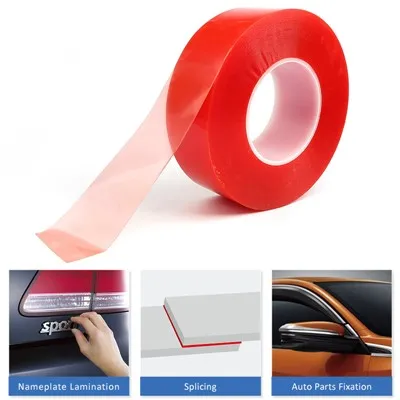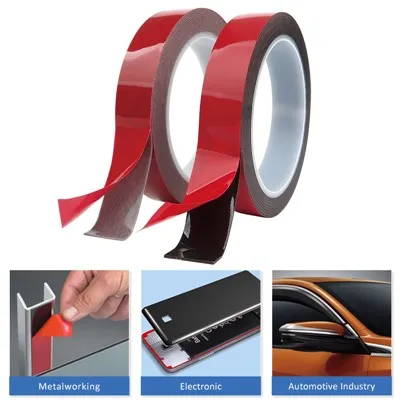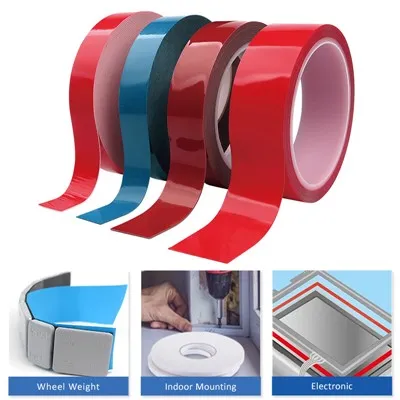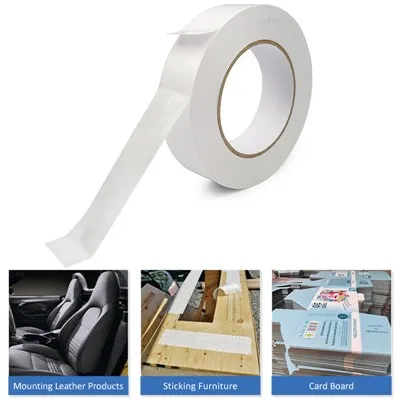
Pressure-sensitive adhesive is applied to both sides of ultra-thin, high-strength cotton paper to create double-sided tissue tape. In the industry, it is often referred to as thin double-sided tape.
Important traits:
Extremely thin and flat: After application, there is hardly any thickness, the product's appearance is unaffected, and it is particularly well suited for precise assembly.
Simple to rip and apply: It is simple to tear by hand without the need for additional instruments, increasing productivity. High initial tack and holding power: Promotes quick bonding and sustains durable adherence.
Good temperature resistance: High-quality double-sided acrylic tape can tolerate brief exposure to high temperatures.
Silent unwinding: It is quieter while unwinding than OPP tape, making it ideal for the electronics sector, where quiet operation is essential.
Application Areas of Double-Sided Tissue Tape: The Ubiquitous "Invisible Bonding Expert"
Double-sided adhesive tape is essential to numerous sectors due to its special qualities.
Appliances and Electronics Sector
In order to create a small and light design, mobile phone/tablet assemblies are used to secure screen modules, batteries, internal FPCs (flexible printed circuit boards), etc.
LCD Modules: Used to affix optical elements such as brightness enhancement films, light shields, and polarizers.
Speakers/Microphones: Dampens vibrations, fixes, and closes sound cavity components.
Interior Design and Automobile Manufacturing
Interior Panel Installation: Secures decorative strips, logos, flocked fabric, etc., on door panels and control panels.
Wiring Harness Fixing: Replaces clips for securing wiring harnesses inside the vehicle, resulting in a neat and shock-absorbing finish.
Installation of Sealing Strips: Helps install sealing strips for some window or door frames.
Packaging Printing, Display, and Advertising
Installation of Posters and Display Boards: This technique temporarily fastens posters, KT boards, and foam boards in shopping centers and exhibitions without causing any damage to walls when removed.
Making albums and do-it-yourself crafts: Because of its smooth application and ease of tearing, this product is highly favored by craft aficionados.
Gift box and premium packaging: For a lovely and durable finish, linings, ribbons, etc., are secured.
Building and Interior Design
Door and Window Sealing: Fastens door and window sealing strips temporarily.
Fixing carpet and floor mats: Prevents carpet slippage without causing floor damage.
Hook and Decoration Installation: Attaching lightweight objects to smooth surfaces like painted walls, glass, and tiles.
How Can I Pick the Best Double-Sided Adhesive Tape?
The secret to a successful bond is selecting the appropriate double-sided sticky tape. Please take into account the following factors:
Basis Weight and Substrate Thickness
Thin (e.g., 0.06mm): Suitable in situations with stringent thickness requirements for bonding incredibly tiny electronic components.
Standard (e.g., 0.13mm): Extremely adaptable, balancing thickness and strength, appropriate for the majority of daily and industrial uses.
Basis Weight: This is the adhesive tape's weight per square meter. A thicker substrate and improved tensile strength are typically indicated by a higher basis weight.
Type of Adhesive
The best option is acrylic adhesive. Outstanding resilience to UV rays, high temperatures, and chemical solvents. usually whitish or semi-transparent.
Rubber glue has a strong initial tack and quick bonding speed, but it is not very resistant to age and high temperatures. Over time, it may turn yellow or release greasy particles.
Adhesion (Holding Power and Initial Tack)
Low Tack: Suitable for temporary fixing or bonding of surface-sensitive materials (such as wallpaper); leaves no residue upon removal.
Medium Tack: General purpose, meeting the bonding needs of most materials, such as paper, plastics, and metals.
High Tack: Used for bonding difficult-to-bond materials (such as PP and PE plastics) or in scenarios requiring the support of a certain weight.
Release Paper (Film) Types
White Monosilicone Release Paper: Most common, cost-effective.
Glassing Release Paper: Transparent and smooth, easy to die-cut, commonly used in automated production lines.
PET Release Film: High strength, not easily deformed, suitable for high-precision die-cutting.
With the increasing thinness and lightness of electronic products, the lightweighting of automobiles, and the development of intelligent manufacturing, higher requirements are placed on the performance of double-sided tissue tape. In the future, double-sided tissue tape with higher temperature resistance, stronger adhesion, more environmentally friendly and biodegradable properties, and suitability for automated robotic applications will become mainstream in the market.