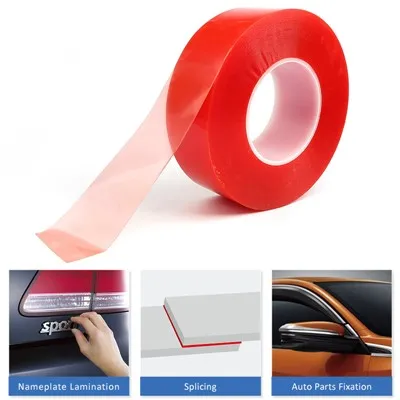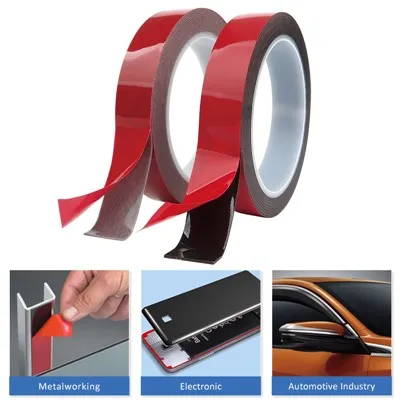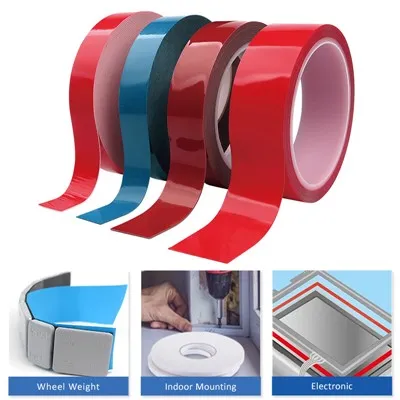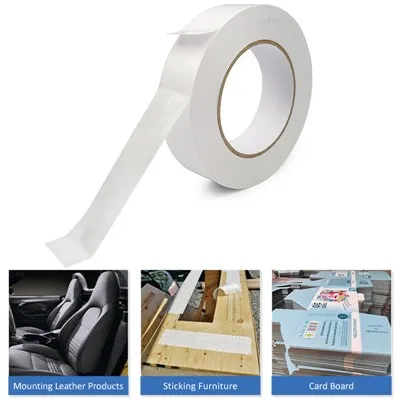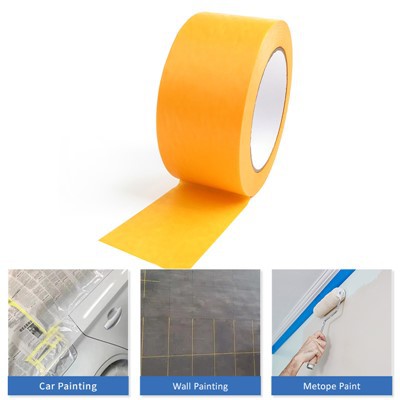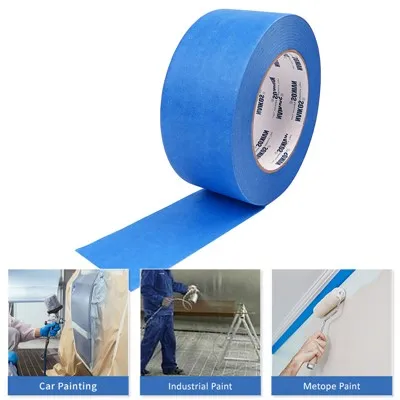
Nanotape refers to adhesive tape whose adhesive layer uses nanotechnology or has nanoscale structural properties, not tape with nanoscale dimensions. To achieve performance improvements not possible with conventional tapes, true nanotape integrates nanomaterials (such as nanoparticles, nanofibers, or nanostructured layers) into its adhesive formulation, surface structure, or material matrix.
Nanotape is a fundamental transition from macroscopic to microscopic, from mechanical adherence to molecular-level interactions, rather than just an improvement over adhesive techniques.
Advantages of Nanotape:
Exceptional Adhesive Strength
The actual adhesive strength of nanotape can be 3 to 8 times that of traditional double-sided tape. Laboratory data shows that high-quality nanotape can have a shear strength exceeding 100 N/25mm, capable of replacing some mechanical fasteners.
Excellent Temperature Adaptability
The working temperature range is typically 120℃, far exceeding most traditional tapes (-20℃ to +80℃).
Ultra-thin Design Without Compromising Performance
Thickness can be as thin as 0.05mm while maintaining high strength, providing crucial support for the miniaturization and lightweight design of electronic products.
Environmental Aging Resistance
Nanoscale structures fill microscopic pores on the surface, effectively blocking the penetration of water vapor and oxygen, significantly improving weather resistance and chemical resistance.
Traceless and Removable Properties
Specifically designed nanotape can be cleanly removed even after bearing weight for several months, without damaging the surface, making it particularly suitable for displays, temporary fixation, and other applications.
Applications of Nanotape
Advances in Consumer Electronics Tablets and Smartphones: Ultra-thin nanotape contributes to the waterproofing and small design of devices by being utilized for screen fastening, battery sealing, and internal component bonding.
Wearable Technology: Heart rate sensors and smartwatch components are securely attached to the skin thanks to flexible nanotape's ability to conform to curved surfaces.
Display Technology: To achieve smooth bonding without compromising display performance, optically transparent nanotape is employed in OLED screen construction.
Novel Uses in the Automotive Sector
Lightweight Buildings: By reducing riveting and welding sites, bonding dissimilar materials like carbon fiber and aluminum alloys lowers weight and increases fuel efficiency.
Interior Integration: By seamlessly attaching ornamental panels and displays in place of conventional clip designs, interior quality and tranquility are improved.
Battery Assembly: High thermal conductivity, high shear strength, and flame retardancy are necessary for fixing battery cells and bonding thermal management materials in electric car battery packs.
New Opportunities in Home Furnishings and Construction
Installation of Building Materials: Hollowing and detachment issues can be resolved by installing large-format tiles and stone on walls without the use of conventional cement mortar.
Energy-Saving Windows: By sealing the edges of vacuum glass with nanotape, the vacuum layer's lifespan is increased to more than 20 years.
Trace-Free Home Decor: To satisfy the demands of rental housing and variable layouts, secure bonding and trace-free removal are used for hanging artwork and repairing decorations.
How to Choose the Right Nanotape?
Substrate Matching: Depending on the bonding surface material (metal, plastic, glass, or wood), choose the optimal formula.
Environmental Considerations: Take into account the usage environment's temperature, humidity, UV exposure, and any chemical contact.
Determine the primary stress types (shear, peel, and tensile) and the necessary strength.
Removal Requirements: Ascertain if detachable features or permanent fixing are required.
As a top producer of adhesive tape, we have seen and taken part in the development of nanotape from its invention in the lab to its widespread industrial use. Nanotape not only solves many limitations of traditional bonding solutions but also opens up new thinking in material connection-from forced mechanical fixation to intelligent molecular-level interaction, from permanent bonding to controllable interface management.
Nanotape symbolizes the future of bonding technology, whether you are a product designer searching for creative assembly solutions, an engineer struggling to connect unusual materials, or a regular consumer looking for more practical life solutions. Nanoscale bonding will further obscure the conventional concept of "adhesive tape," becoming an essential enabling technology for innovation across numerous industries as materials science advances.