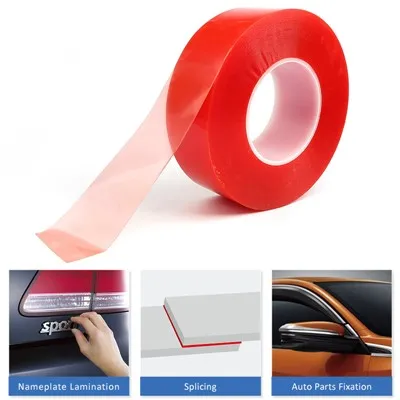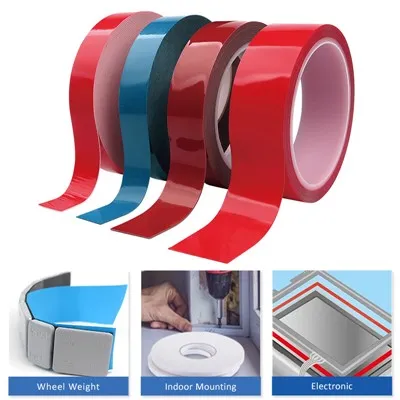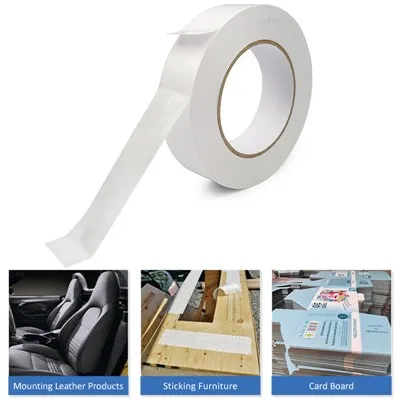
In the vast world of bonding solutions, double-sided tissue tape (also known as double-sided adhesive paper tape or tissue double-sided tape) has become an indispensable choice in many industrial and manual applications due to its unique structure and excellent performance. It is far from an ordinary tape, but an ideal partner for precision bonding, traceless fixing, and buffer protection.
Double-sided tissue tape is an adhesive material composed of ultra-thin cotton paper as the base material and coated with high-performance pressure-sensitive adhesive (typically acrylic or rubber adhesive) on both sides. Its core features are:
Ultra-thin base material: The cotton paper base material is very thin and soft, giving the tape excellent flexibility and conformability, and can easily adapt to curved and irregular surfaces.
Double-sided adhesiveness: Both sides are adhesive and are used to provide hidden bonding between two surfaces.
Easy to tear: The fiber structure of tissue makes it easy to tear by hand, without scissors, and it is convenient and quick to use.
Cushioning and shock absorption: tissue itself has a certain elasticity and shock absorption capacity, which enables it to absorb some stress and vibration when bonding hard materials, providing cushioning protection.
Balance of initial adhesion and lasting adhesion: Depending on the adhesive formula, different performance combinations can be provided, ranging from quick positioning (high initial adhesion) to long-term firmness (high lasting adhesion).
Core characteristics and advantages of double-sided tissue tape
Hidden and traceless: The ultra-thin characteristics make it almost invisible after bonding, especially suitable for occasions that require beauty.
Easy to process: It can be used by hand tearing, which is easy to operate and improves work efficiency. The tissue substrate is also easy to die-cut into various shapes.
Excellent surface adhesion: The soft substrate can perfectly fit various curved surfaces, solving the problem that hard tape is difficult to bend.
Good anti-warping: The thin and soft characteristics reduce the risk of edge warping caused by thermal expansion and contraction or material stress.
Gentle removal (some models): Some double-sided tissue tapes designed for sensitive surfaces have a low risk of residual adhesive when removed, and can even be removed without a trace (need to be confirmed according to the specific product instructions).
Environmental protection: tissue substrates are usually recyclable or biodegradable (depending on the specific material and coating), which is more environmentally friendly than some plastic substrates.
Main application scenarios of double-sided tissue tape
Double-sided cotton paper tapes are extremely widely used, almost penetrating every field that requires precise, hidden bonding or buffering:
Packaging and printing industry:
Hidden fixation of the bottom/lid of high-end gift boxes, cosmetic boxes, and tobacco and alcohol boxes.
Paste of paper accessories such as manuals, warranty cards, and tags.
Lamination positioning, temporary or permanent fixation in mounting processes.
Envelope and document bag sealing.
Electronic and electrical industry:
Fixation and shielding of internal components of mobile phones, tablets, and laptops (such as screen modules, batteries, FPC flexible circuit boards, foam, labels, insulation sheets, dustproof nets, etc.).
Positioning and bundling of wire harnesses.
Paste nameplates and labels.
Provide buffering and shock absorption between components.
Automotive manufacturing and interior:
Bonding and fixing of interior parts (such as decorative strips, panels, fabrics, carpets, and ceilings).
Pasting of sound insulation cotton and shock-absorbing materials.
Pasting of car logos and model identification.
Architecture and home decoration:
Temporary or permanent fixing of wallpaper, decorative paintings, and hooks (select models with appropriate viscosity).
Fixing the edges of carpets and floor mats.
Installing mirrors and concealed fixing of picture frame backboards.
Preliminary positioning or bonding of skirtings and decorative lines.
Handmade DIY and creative production:
Bonding of various lightweight materials (paper, cardboard, cloth, thin wood chips, plastic sheets) in handicrafts, model making, and greeting card making.
Album and scrapbook making.
Temporary fixing of design drafts.
How to Select a Suitable Double-Sided Tissue Tape?
Faced with numerous double-sided tissue tape products on the market, the following key factors should be considered when choosing:
Viscosity requirements:
Initial adhesion: Viscosity at the moment of contact. Choose high initial adhesion if you need to quickly position.
Sustaining adhesion: The ability to resist persistent shear force. Choose high-sustaining adhesion for long-term load or stress.
Peeling force: The force required for tearing. Choose a high peeling force if you need firm adhesion; choose a low peeling force if you need removable or temporary fixation.
Substrate thickness: The thinner and more concealed, the better the fit, but the tensile strength is relatively low. Choose according to needs (common thickness ranges from 0.05mm to 0.2mm).
Adhesive type:
Acrylic glue: High transparency, good weather resistance (UV resistance, temperature resistance), strong aging resistance, low odor, and relatively low risk of residual glue (especially water-based acrylic). The most widely used.
Rubber: Usually has high initial adhesion, good low-temperature performance, and low cost, but poor heat and weather resistance, may age, turn yellow, and harden, and the risk of residual glue is slightly higher.
Temperature resistance: Select according to the highest and lowest temperatures of the application environment. Electronic and automotive applications need to pay special attention to high temperature resistance (such as 80°C, 100°C, or even higher).
Solvent/chemical resistance: If there are oil stains, detergents, etc. in the application environment, the tape's tolerance needs to be considered.
Color: Mainly the color of the substrate, commonly white, beige/natural color (natural color), and black. Black is often used for light shielding in the electronics industry.
Release paper/film: Material that protects the adhesive surface. Release paper (silicone oil paper) is more commonly used and has a low cost; release film (PET or PP) is smoother and suitable for high-speed automated labeling.
Removable/traceless: It is crucial for applications that require repeated sticking or protection of the adherend surface. Choose special models that are marked as "removable" or "traceless removal".
Double-sided tissue tape plays a key role in many fields that require precise, beautiful, and easy-to-operate bonding due to its unique advantages, such as ultra-thinness, flexibility, easy tearing, concealment, and cushioning. Understanding its characteristics, application scenarios, and key points for purchase will help you select and apply this versatile bonding material more efficiently and accurately in product design, manufacturing, or daily use. Whether it is fixing tiny electronic components or completing a beautiful handicraft, choosing the right double-sided tissue tape is often a key step to success.