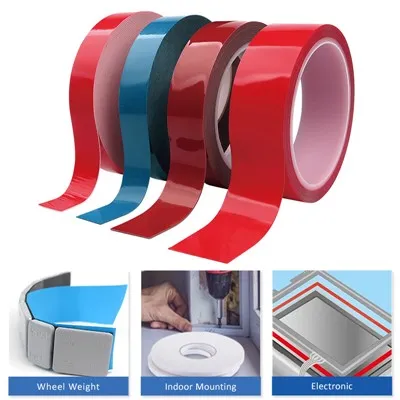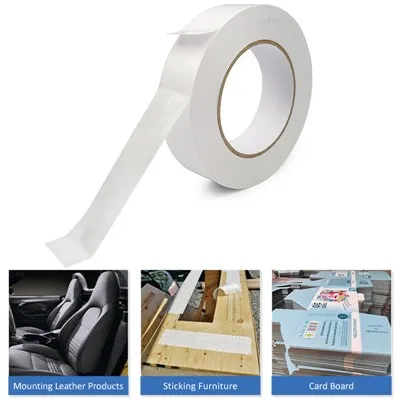
In the field of industrial bonding, the color of Acrylic Foam Tape serves a purpose far beyond mere aesthetics. Different colors typically signify variations in the tape's density, temperature resistance, viscoelastic properties, and visual compensation capabilities.
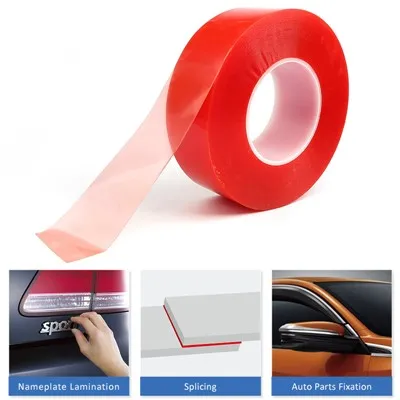
Transparent Acrylic Foam Tape (Clear)
Essential Features:
Made entirely of pure acrylic adhesive, it provides unmatched transparency and visual invisibility.
Relevant Situations: Glass curtain walls and clear materials: bonding for transparent acrylic panels, glass furniture, and lit signs (light boxes).
Backlit Displays: Securing bezels for electronic screens and mounting LED light strips.
Benefits:
Visual Invisibility: The bond line is almost undetectable, maintaining the design's original visual integrity.
Sealing Effectiveness: Excellent water and airtightness are provided by the pure adhesive construction.
Advice: Generally speaking, the transparent version is "softer" than its colored equivalents; although it is excellent at absorbing shear pressures, it has a somewhat lower creep resistance under very high loads than the grey type.
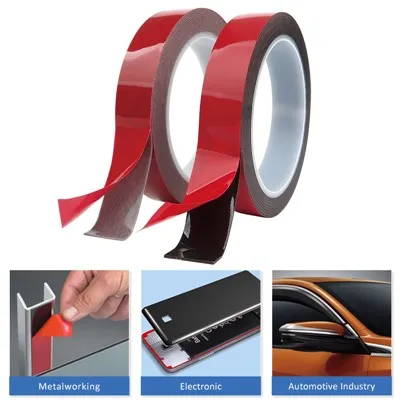
Grey Acrylic Foam Tape (Grey)
Core Characteristics:
An industrial-grade all-rounder that achieves a balance between strength and toughness through the incorporation of special pigments and additives.
Applicable Scenarios:
Automotive Industry: Mounting of side moldings, spoilers, and wheel covers (offering performance comparable to the popular 3M 5952 series).
Metal Panel Bonding: Attaching reinforcement ribs in elevators, air conditioner panels, and signage/nameplates.
Benefits:
High Load-Bearing Capacity: The closed-cell structure of the grey variety guarantees strong performance under ongoing mechanical load.
Effectively distributes stress resulting from the varying thermal expansion and contraction of different materials (such as plastic and aluminum).
Physical Performance Reference:
Dynamic Shear Strength: Typically exceeds 500–700 kPa.
Black Acrylic Foam Tape (Black)
Core Characteristics:
An enhanced variant specifically engineered for light-blocking, heat absorption, and superior weather resistance.
Relevant Situations:
Consumer electronics: securing interior parts of tablets and cell phones (particularly to stop light leaks). Solar modules and outdoor security cameras are examples of photovoltaic systems in outdoor settings.
Benefits:
UV shielding: The black substrate's inherent high UV protection keeps the adhesive from turning yellow or cracking when exposed to the light for extended periods of time.
Visual Integration: Creates a smooth, integrated look by perfectly matching dark-colored plastics or black-coated metal surfaces.
Environmental Adaptability: Black models are usually designed to sustain strong adhesion even in the face of periodic temperature changes between -40°C and 120°C.
How to Choose the Right Color for Your Needs?
| Feature | Clear | Grey | Black |
| Key Benefits | Visual transparency, strong sealing | High structural strength, broad versatility | UV resistance, light-blocking, matches dark surfaces |
| Weather Resistance | Excellent | Superior | Outstanding (Highest UV resistance) |
| Initial Adhesion | High | Moderate (Requires pressure activation) | High |
| Typical Thickness | 0.25mm - 2.0mm | 0.4mm - 3.0mm | 0.2mm - 2.0mm |
| Preferred Industries | Advertising, Glass | Engineering Vehicles, Heavy Industry, Elevators | Electronic Devices, Outdoor Power Systems |
Three Key Factors Influencing Bonding Performance
The following industry-standard practices must be followed to guarantee that the tape of your choice operates as efficiently as possible:
Surface Energy Matching:
Primers (adhesion promoters) are usually needed for low-surface-energy plastics like PP and PE, regardless of the tape's color.
Pressure Activation:
Acrylic foam tapes are "pressure-sensitive." After application, a pressure of approximately 20 N/cm² must be applied to ensure the adhesive fully wets and bonds with the surface.
Effective Curing:
Within the first 20 minutes following application, around 50% of the final bond strength is reached, and after 72 hours, the final strength is 100%. During this curative phase, heavy loads or extreme stress should be avoided.
Choose Clear for aesthetics; choose Grey for structural strength; choose Black for outdoor weather resistance and light-blocking capabilities.