Engineering Guide | PE Foam Tape
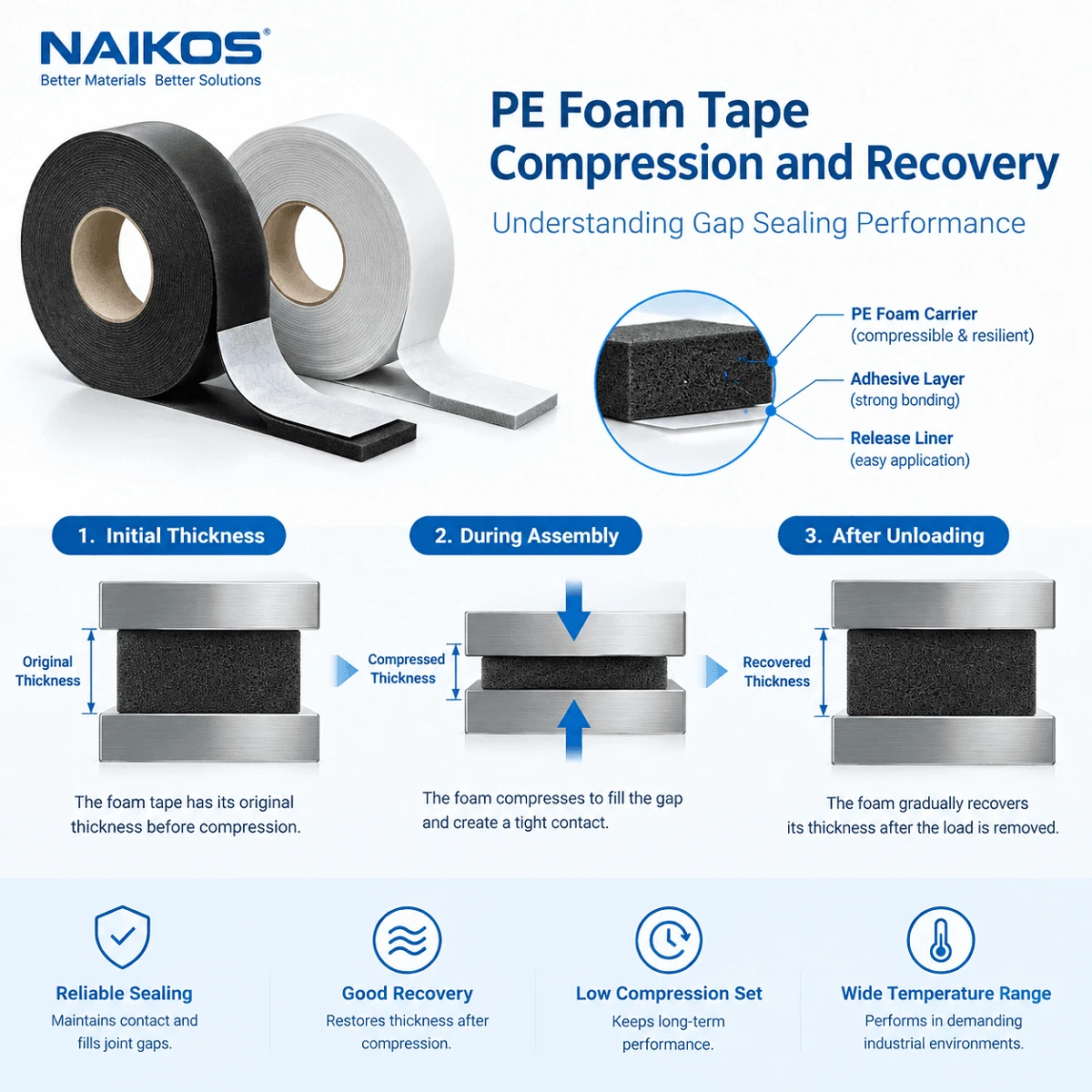
PE foam tape gap sealing performance depends on how the foam compresses during assembly, how it responds when the load changes, and how much permanent deformation remains after compression. Nominal thickness alone cannot determine whether a tape will maintain contact throughout the service life of a joint.
For OEM manufacturers, project engineers, purchasing managers, and industrial distributors, selection should consider the actual gap range, foam behavior, adhesive compatibility, operating temperature, and the sealing requirements of the finished assembly.
Key Takeaway
Select PE foam tape by matching its compression behavior to the minimum and maximum joint gaps, then verify recovery, compression set, adhesive bonding, and assembly-level sealing performance where required.
A thicker or softer foam is not automatically a better sealing material. The appropriate construction must accommodate the actual joint geometry without insufficient contact or excessive compression.
In This Guide
- How Compression Affects Gap Sealing
- Recovery and Compression Set Explained
- Selecting Tape for Different Gap Conditions
- Naikos PE Foam Tape Specifications
- Engineering Selection Workflow
- Technical Data and Validation
- Frequently Asked Questions
How Compression Affects PE Foam Tape Gap Sealing
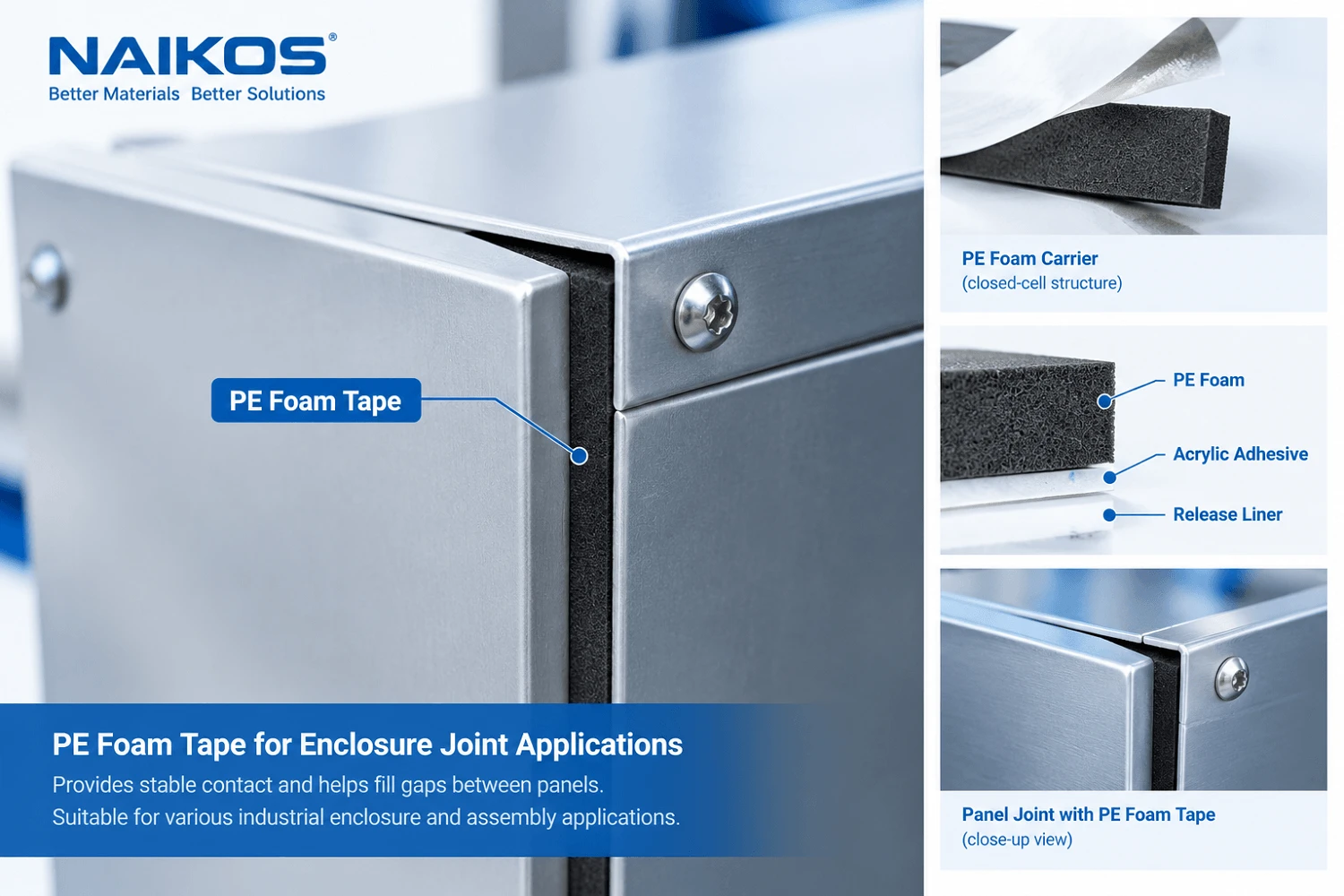
PE foam tape consists of a polyethylene foam carrier and an adhesive layer. When installed between two components, the foam deforms to accommodate part of the gap while the adhesive bonds the tape to the substrates.
Compression reduces the foam's thickness and allows it to conform to the joint geometry. The resulting seal depends on whether the installed tape maintains suitable contact across the joint, including sections affected by dimensional tolerances and surface irregularities.
| Compression Condition | Potential Effect | Engineering Response |
|---|---|---|
| Insufficient compression | Incomplete contact may leave gaps in the joint. | Review the maximum gap and available foam thickness. |
| Suitable compression | The foam may maintain contact under intended conditions. | Confirm the permitted compression range for the selected grade. |
| Excessive compression | Assembly force may increase, and foam deformation may become excessive. | Check minimum gap, compression response, and assembly design. |
These are general engineering considerations, not universal pass/fail limits. The acceptable compression range depends on the foam construction, adhesive system, joint geometry, and service conditions.
For background on dimensional selection, read how to choose foam tape thickness and density. This related guide covers basic material selection, while this article focuses on compression behavior and gap sealing.
Recovery and Compression Set: What Is the Difference?
Compression
Compression is the reduction in foam thickness under an applied load. It can be expressed as a percentage of the original thickness.
Compression Ratio Formula
Compression Ratio (%) = [(Initial Thickness − Compressed Thickness) ÷ Initial Thickness] × 100
For example, reducing a 2.0 mm tape to an installed thickness of 1.5 mm represents a 25% thickness reduction. This is a calculation example, not a recommended compression target for Naikos PE foam tape.
Recovery
Recovery describes the foam's ability to regain thickness after the compressive load is reduced or removed. It can be relevant when a joint experiences repeated opening and closing, vibration, dimensional changes, or other variations in compression.
Compression Set
Compression set describes residual deformation after a material has been compressed and allowed to recover according to a specified procedure. A lower compression set generally indicates less permanent thickness loss under that particular test, but does not by itself guarantee sealing performance.
| Property | What It Describes | Why It Matters |
|---|---|---|
| Compression | Thickness reduction under load | Evaluates tape against the actual gap range. |
| Recovery | Thickness regained after unloading | Assesses response to changing compression. |
| Compression set | Residual deformation after a defined test | Assesses permanent thickness loss under specified conditions. |
For product dimensions and customization options, see custom PE foam tape specifications and application guidance.
Selecting Tape for Different Gap Conditions
Start with the minimum, nominal, and maximum gap dimensions. A nominal gap alone may not represent the actual compression conditions after manufacturing tolerances and component movement are considered.
| Application Condition | Key Concern | Recommended Evaluation |
|---|---|---|
| Narrow gap | Excessive compression and closing force | Minimum gap, installed thickness, assembly force |
| Wide or variable gap | Insufficient contact at the widest section | Maximum gap, available thickness, tolerance stack-up |
| Continuous compression | Long-term deformation | Compression set and sustained-load data where available |
| Repeated movement | Changing contact and adhesive stress | Recovery behavior and bond durability |
| Moisture exposure | Water ingress through the completed joint | Joint design and application-specific ingress testing |
Confirm suitability against product-specific data and the requirements of the actual assembly.
Explore the Naikos PE foam tape product page for product details, or contact the team to discuss a custom construction.
Naikos PE Foam Tape Specifications
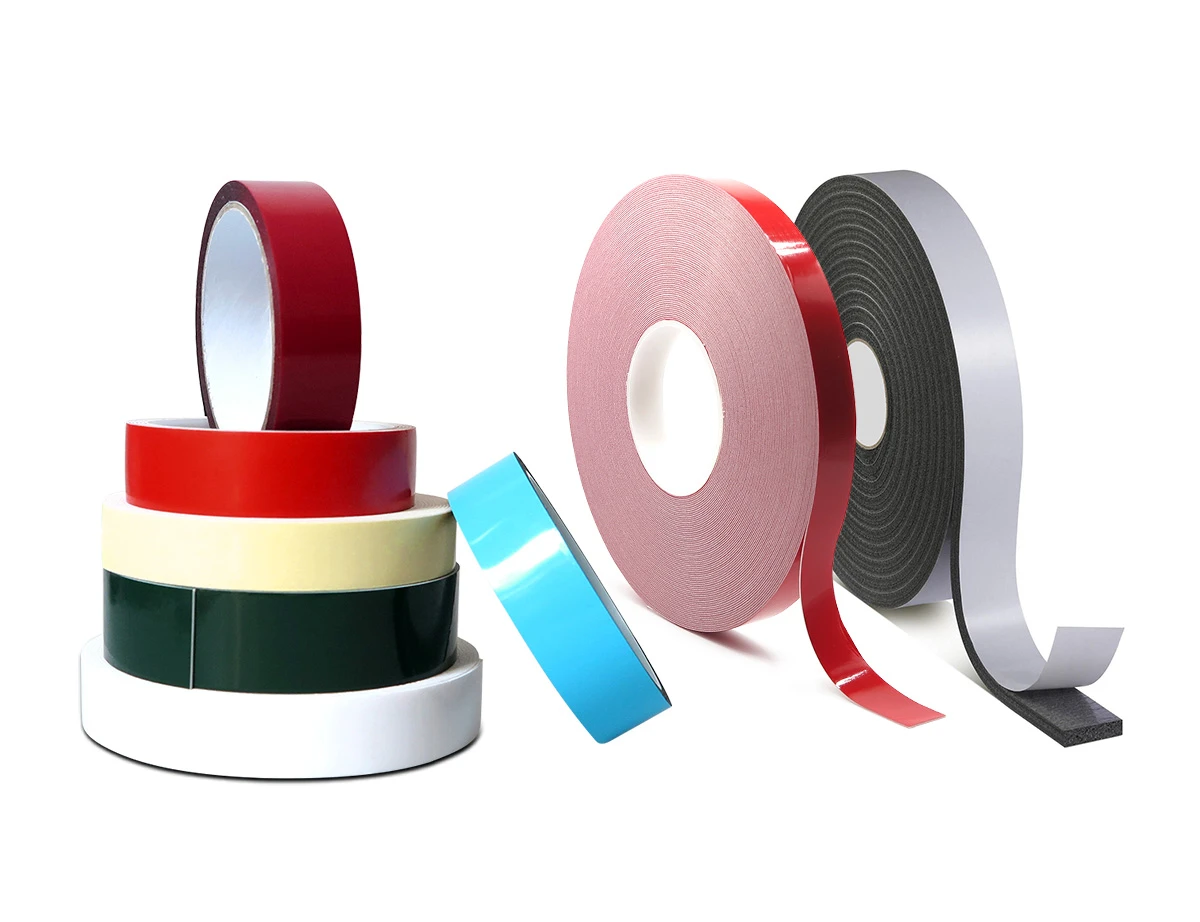
Naikos NKS-####P PE foam tape uses a polyethylene foam carrier with acrylic adhesive. The listed range includes white and black options, thicknesses from 0.2 to 3.0 mm, and customized roll dimensions for industrial bonding and assembly requirements.
| Item | Specification |
|---|---|
| Product Code | NKS-####P |
| Color | White / Black |
| Carrier | PE Foam |
| Adhesive | Acrylic Adhesive |
| Total Thickness | 0.2–3.0 mm (8–120 mil) |
| Adhesion to Stainless Steel | ≥15 N/25 mm (≥53 oz/in) |
| Holding Power | >24 h |
| Temperature Resistance | -20 to +120°C (-4 to +248°F) |
| Width | 4–1030 mm (customized width available) |
| Length | 33 / 50 / 200 / 300 m (customized length available) |
Important Technical Note
These specifications do not establish a specific compression ratio, recovery percentage, compression-set value, or environmental sealing rating. Request product-specific test results where available, and validate the completed joint for critical sealing applications.
Engineering Selection Workflow
- Define the gap range. Record minimum, nominal, and maximum gaps, including component tolerances and expected movement.
- Calculate compression. Use initial and installed thickness to calculate the compression ratio at relevant gap conditions.
- Evaluate recovery and compression set. Request relevant data where available, including test conditions and recovery interval.
- Check adhesive compatibility. Confirm substrates, coatings, surface preparation, application temperature, and bonding procedure.
- Review service conditions. Consider temperature, moisture, UV exposure where relevant, vibration, and expected service life.
- Validate the assembly. Test representative samples against the required sealing or ingress criteria before production approval.
What Technical Data Should Buyers Request?
| Data | What to Confirm |
|---|---|
| Thickness and tolerance | Measurement method and applicable tolerance |
| Compression response | Applied load or pressure, specimen dimensions, and test conditions |
| Recovery | Initial thickness, temperature, and recovery interval |
| Compression set | Method, compression level, exposure time, and recovery conditions |
| Adhesion | Substrate, test angle, dwell time, and method |
| Sealing validation | Required ingress or leakage criteria and assembly-level test method |
Do not compare figures from different test procedures without confirming that the conditions are comparable. If a result is unavailable, identify it as unverified rather than estimating a value.
Common PE Foam Tape Selection Mistakes
Selecting Tape by Thickness Alone
Nominal thickness does not indicate how foam behaves at the minimum and maximum gaps. Review the full tolerance range and expected installed thickness.
Assuming Softer Foam Always Seals Better
Softness alone does not establish recovery, compression set, or long-term sealing capability. Compare relevant test data and validate the intended assembly.
Using Initial Adhesion as the Only Acceptance Criterion
Initial adhesion does not independently prove that a joint will maintain contact after prolonged compression, movement, or environmental exposure.
Assuming Dust Protection Guarantees Waterproofing
Dust sealing and water-ingress resistance are different requirements. Define the required protection level and verify the finished joint using applicable criteria.
Related PE Foam Tape Resources
- How to Choose Foam Tape Thickness and Density - basic material selection and dimensional considerations.
- Custom PE Foam Tape Specifications Should Match the Application First - specification planning and application requirements.
- Naikos PE Foam Tape Product Details - product specifications and customization options.
Frequently Asked Questions
Custom Industrial Adhesive Tape Solutions
Looking for PE Foam Tape for Your Gap Sealing Application?
Share your gap dimensions, substrate materials, temperature range, and sealing requirements with Naikos. The team can review the requested specifications and discuss product options and sample evaluation.