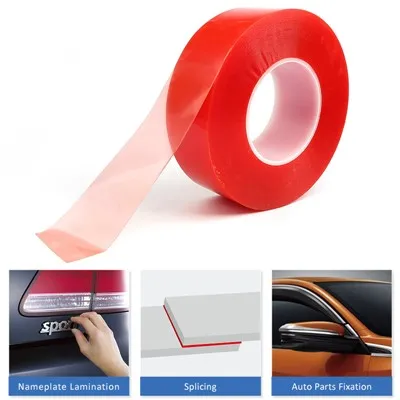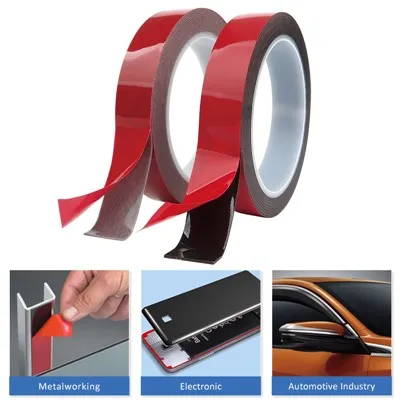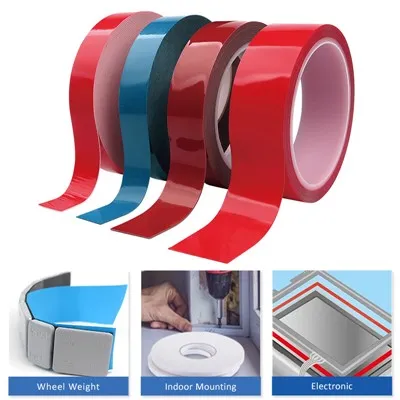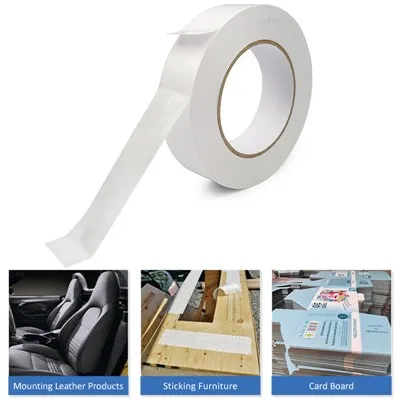
Traditional liquid glues or double-sided tapes typically don't work well in complex applications with uneven surfaces, vibrations, or cushioning and sealing, like in electronics, industrial manufacturing, and building rehabilitation. For engineers and practitioners in this scenario, high-performance adhesive PE foam tape-also referred to as polyethylene foam tape-is an excellent option.
A polyethylene (PE) foam backing, a release paper (film) covering, and a high-performance pressure-sensitive adhesive (often acrylic adhesive) applied to one or both sides make up PE foam tape, a roll-type adhesive tape.
Usually, it has three levels, each of which is essential:
foundational layer: The tape's core is made of PE foam. Physical foaming of the polyethylene creates a flexible, elastic structure with separate, closed-cell bubbles. Excellent resilience, sealing, stress absorption, and cushioning are all provided by this construction.
Functional layer: Pressure-sensitive adhesive. Usually an acrylic adhesive, this type of glue has a high adherence rate and is resistant to age and weather. It allows for quick adherence by making the tape sticky with little pressure.
Layer of protection: Release paper. Ensures a clean, stable adhesive surface by shielding the glue from contamination and adhering before application.
Outstanding Features and Advantages of PE Foam Tape
Why is PE foam tape so widely used in so many industries? This is due to the comprehensive advantages offered by its unique material combination:
Excellent sealing and cushioning properties: PE foam's closed-cell structure effectively absorbs impact energy, makes up for tolerances, and keeps dust, moisture, and air out.
Excellent adhesion: It effectively addresses the issue of bonding rigid materials to various irregular, curved, and rough surfaces( such as frosted plastics, metal spray coatings, and brick walls).
Strong initial tack and long-lasting adhesion: It has excellent initial adhesion and is resistant to shifting after application. The adhesive gradually fully penetrates the substrate, creating a strong, long-lasting bond.
Excellent weather resistance and chemical stability: PE foam tape is made of high-quality acrylic adhesive, which is resistant to UV rays, temperature fluctuations, humidity, and various chemical solvents, giving a long service life.
Available in thicknesses ranging from a few tenths of a millimeter to several millimeters, it meets the filling, gap, and decorative requirements of various scenarios.
Principal Applications for PE Foam Tape
PE foam tape has a wide range of applications, covering virtually all areas requiring lightweight, traceless, and high-strength bonding.
Electronic and Electrical Industry: Attaching internal structural components (such as batteries and speakers) in mobile phones and tablets, bonding LCD frames, attaching nameplates and decorative strips, and dustproof sealing. Its flexibility does not stress delicate components.
Automobile& Transportation: protecting weather pieces and interior sections, securing side skirts, soundproofing felt, waterproof membranes, attractive strips, and car emblems, and enduring vibrations from cars as well as higher humidity and temperatures.
Installing reflections, photo frames, skirting boards, window and door weather pieces, and shielding panels without the use of nails, drills, or other products is an example of building and home development.
Advertising& Signage: Putting along acrylic writing, vertical signs, and billboards while keeping a nice appearance and completing installation quickly.
How Do I Choose the Best Foam Tape for Dau?
Because there are many varieties of PE foam audio, choosing the right one is essential. Consider the following elements:
The substrate's thickness and density: Choose thicker foam if you need additional padding or are filling in huge areas. For more pleasant adhesive areas, go for a medium thickness. Tensile power and smoothness are influenced by density.
It is the best option for most applications because it has the best overall performance, is age-resistant, and can withstand temperatures ranging from -20°C to 120°C.
When applying the adhesive, take into account whether it will work with glass, metal, painted surfaces, and plastics (especially low-surface-energy polymers like PE and PP) or not.
Choose an acrylic PE foam tape that can withstand a wide range of temperatures and UV resistance for prolonged outdoor use.
Application performance and unwinding force: The user experience and application efficiency may be impacted by how simple it is to cut the tape and peel the release liner.
The Best Ways to Use PE Foam Tape
Make sure the surface to be adhered to is free of all traces of dirt, grease, and dust. Alcohol use significantly enhances stickiness and durability.
Apply enough pressure: Apply pressure to the surface after applying the tape, paying particular attention to the edges.
Set aside time to connect, depending on temperature and humidity, for the glue to reach its maximum strength in 24 to 72 hours. Avoid moving large objects during this time.