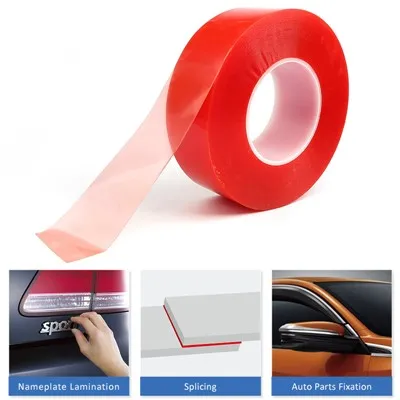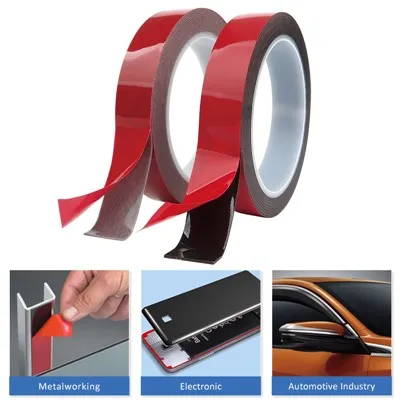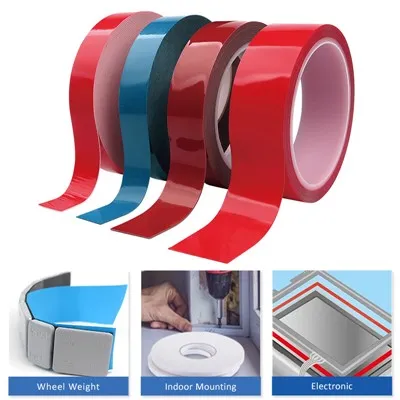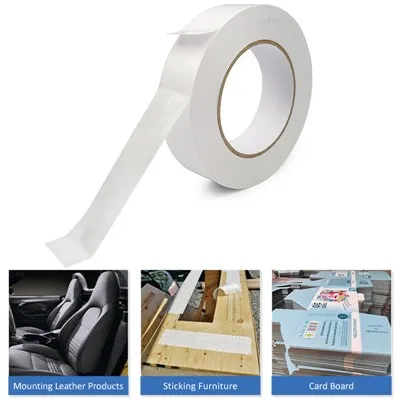
Because of its exceptional cushioning and sealing qualities, polyethylene (PE) foam tape is widely used in industrial bonding, building sealing, and electronic assembly. However, two fundamental questions frequently plague many engineers and purchasing managers when confronted with the vast array of specifications available on the market: How can the proper thickness be selected? What distinguishes open-cell structures from closed-cell structures?
Common Thicknesses of PE Foam Tape and Their Application Scenarios
The thickness of PE foam tape directly affects its sealing ability, shock absorption effect, and adhesive strength. Typically, the thickness range on the market is between 0.5mm and 10mm.
| Thickness Range | Typical Specifications | Core Application Scenarios |
| Ultra-thin (0.5mm - 1.0mm) | 0.5mm, 0.8mm | Mobile phone/tablet screen bonding, nameplate fixing, and cushioning of ultra-thin electronic components. |
| General Purpose (1.0mm - 3.0mm) | 1mm, 1.5mm, 2mm | Used for automotive exterior trim (e.g., scuff plates), interior decorative hooks, and glass curtain wall pads. |
| Thickened Purpose (3.0mm - 10mm+) | 5mm, 8mm, 10mm | Used for building expansion joint filling, large machinery vibration damping, heavy equipment transportation protection, and irregular surface sealing. |
Selection Recommendation: The rougher the surface, the thicker the tape should be to ensure the adhesive can fully contact and penetrate the tiny pores.
Core Technology Comparison: Closed-cell vs. Open-cell
This is a key indicator determining the physical sealing performance of the tape. Despite having a similar appearance, their microstructure and functions are very different.
Closed-cell PE Foam:
Like innumerable tiny balloons compressed together, the internal cells of a closed-cell structure are separate and sealed.
Excellent moisture and water resistance. It is the best option for exterior waterproof sealing because liquids and gases cannot enter through the closed pores.
High compressive strength. It is difficult to flatten and has high support and resilience.
Thermal Insulation: Often used for thermal insulation, its low thermal conductivity is caused by the air being trapped inside the pores.
Common uses include building waterproofing fillers, automotive sealing strips, and waterproof gaskets for outdoor lighting fixtures.
Open-cell PE Foam:
The linked cells' open-cell structure permits the passage of liquid and air.
Breathability/Absorption: It is highly breathable and readily absorbs liquids.
Softness/Compressibility: It is incredibly soft, easily compressed to incredibly thin thicknesses, and precisely conforms to exceedingly uneven surfaces.
Sound Absorption/Noise Reduction: It is a great acoustic material because of the linked pores' ability to absorb sound wave energy.
Common uses include air filtering, indoor sound absorption, and low-pressure cushioning.
Which One Should I Choose?
For your convenience, please refer to the table below:
| Characteristics | Closed-cell PE foam tape (Recommended) | Open-cell PE foam tape |
| Liquid sealing | Excellent (Impervious) | Poor (Absorbs water) |
| Gas sealing | Excellent | Average |
| Resilience | Strong (Not easily deformed under long-term pressure) | Average (May permanently deform under long-term pressure) |
| Weather resistance | Excellent (Suitable for outdoor) | Average |
| Main functions | Waterproof, dustproof, structural fixation | Shock absorption, sound insulation, and dustproofing |
Industry-leading selection advice
As professional adhesive solutions experts, we recommend considering not only thickness and structure when purchasing, but also the following "hidden" parameters:
Density:
While low-density foam is more economical, high-density PE foam (such as 100 kg/m³) has a greater load-bearing capacity.
Type of adhesive:
Always use oil-based acrylic adhesives for outdoor applications because they are more resistant to UV rays and high temperatures than rubber-based adhesives.
Compression Ratio:
For the best waterproofing in sealing applications, it is typically advised to compress the foam by 20% to 30%.
The first step in guaranteeing the long-term durability of your project is selecting the proper PE foam tape thickness and structure. Please get in touch with our technical team if you have any issues with bonding to particular surfaces (such as low-surface-energy plastics or high-dust situations).