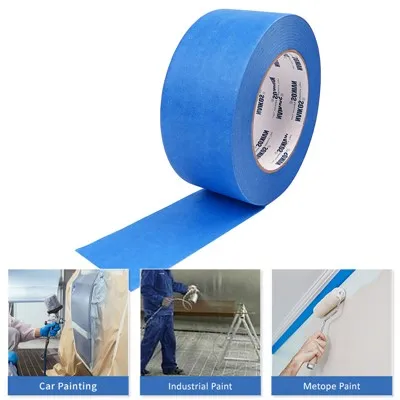
Colored masking tape has become an essential and magical instrument in the domains of do-it-yourself crafts, home renovation, and artistic creativity. It's more than simply tape; it's the ideal fusion of creativity, color, and utility.
Masking paper serves as the foundation for colored masking tape, which is then covered with pressure-sensitive adhesive and dyed in a variety of vivid hues. Its most notable characteristic is how simple it is to tear, apply, and remove; it leaves no residue behind, earning it the moniker "tape that doesn't damage surfaces."
The main difference between it and ordinary transparent tape lies in the base material and the adhesive. Ordinary tapes are mostly made of plastic (such as BOPP) base material, with strong adhesive strength, but prone to leaving residue; while the paper base material and special adhesive of colored masking tape make it ideal for applications requiring temporary fixation and protection.
Washing tape's wide range of applications:
The uses of colored masking tape far exceed your imagination:
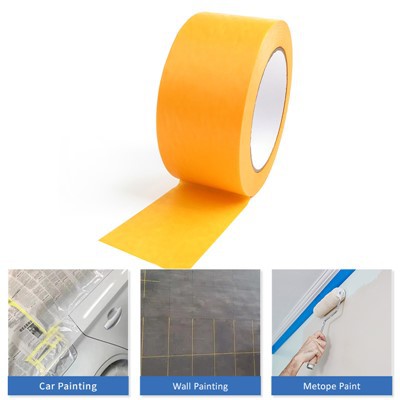
Decoration and paint protection: This is its most classic application. When painting or spraying walls, use it to mask areas that don't need to be painted, such as window frames, door frames, and light switches/sockets. The color separation lines are clear and straight, and the edges are perfect after peeling.
DIY Crafts & Creative Decoration: It's a great tool for home décor and a blessing for journal fans. It can be used to make cards, decorate furniture, produce wall art, and wrap presents. It yields excellent results and is simple to use.
Office and Study Marking: Different colored tapes can be used for document sorting, bookmarking, and schedule management, keeping work and study organized.
Industrial Applications: It is also crucial for color-coding product packaging, masking PCB board soldering, and repairing electronic components.
How Do I Pick Superior Colored Masking Tape?
When confronted with an overwhelming variety of products on the market, keep the following in mind:
Smell: There is hardly any strong smell to premium, eco-friendly, colored masking tape. Strong-smelling products can have been made with subpar adhesive and are not eco-friendly.
To test viscosity, place a little amount on a level surface, press it hard with your finger, and then peel it off to feel its initial tack. Once the tape has been in place for a while, remove it and look for any residue. A good tape should stick tightly and detach with no residue.
Use both hands to stretch the tape to test its durability. High-quality masking tape has good tenacity and is difficult to break.
Look at the color: It should be vibrant and homogeneous, with no discernible spots or color variations.
Make the goal clear: Depending on your specific requirements, select a type appropriate for room temperature, high temperature, high adhesion, or low adhesion. For journaling, for instance, pick a type with rich colors and low stickiness; for ornamentation, pick a type with intermediate adhesion and good hiding qualities.
Creative inspiration: Unleash the infinite possibilities of colored masking tape
In addition to its utilitarian uses, it fosters creativity:
Wall art: You may easily and inexpensively create geometric patterns, animals, or landscapes on the wall.
Personalized home décor: You can quickly improve your home's look by decorating boring lampshades, vases, and picture frames.
Parent-child activities: Use tape to create safe and entertaining road tracks on the floor with your kids.
With its vibrant, user-friendly, and residue-free qualities, colored masking tape has made a smooth transition from an industrial tool into daily life. Using high-quality colored masking tape will make your job and creative pursuits much more convenient and enjoyable, regardless of whether you are a professional decorator or a do-it-yourself enthusiast.