In everyday home renovations, industrial manufacturing, or artistic creation, you may often encounter a type of blue tape. Unlike ordinary transparent tape or heavy industrial tape, it's blue masking tape. So, what exactly is blue masking tape? What are its irreplaceable uses?
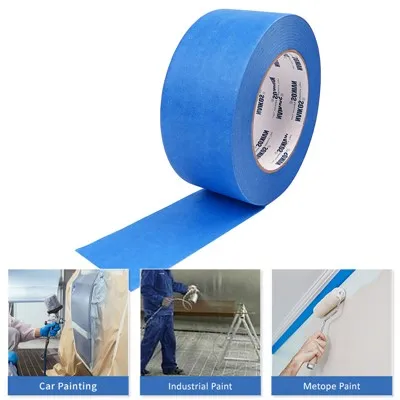
Blue masking tape is a masking tape made with crepe paper as the base material and coated with pressure-sensitive adhesive. Its distinctive blue color is not arbitrary but a common industry identifier, typically representing medium adhesion and good residue-free performance.
Blue masking tape differs from regular tape or traditional kraft paper tape in the following important ways:
* Easy to tear: It may be cleanly shredded by hand without the need for tools. * Good flexibility: It sticks to a variety of uneven surfaces with ease.
* Heat resistance: Capable of withstanding a specific amount of heat during spray painting and baking procedures. * Moderate adhesion: Offers strong adhesive but is readily peeled off after application, leaving no residue.
What is blue masking tape actually used for?
The core function of blue masking tape is "masking and protection." Like a loyal guardian, it protects areas that don't need to be touched during operations involving spraying, sanding, or risk of contamination. Its main uses can be categorized as follows:
1. "Boundary Master" in Decoration and Painting
This is the most classic application of blue masking tape.
Wall Color Separation: When painting walls, use it to make clean lines and geometric patterns or to shield baseboards, door and window frames, and electrical switches. It guarantees that paint won't leak through, producing crisp, clean edges.
Wood Painting: Use it to cover glass areas and hardware (such as hinges and door handles) on furniture and wooden doors.
Automotive Repair: Blue masking tape is frequently used in auto repair shops for touch-up painting small areas, preserving chrome trim, headlamps, and other non-painting elements.
2. "Guardian Angel" in the Electronics Industry and Precision Manufacturing
In the electronics industry, the use of blue masking tape is equally crucial. When soldering circuit boards, solder masking is used to conceal precision parts or gold fingers that don't need solder.
Security and Protection: During transit or assembly, temporarily fasten cables and shield product surfaces (such as acrylic and glass screens) from scratches. Its gentle adhesion prevents damage to sensitive surfaces upon removal.
Wave Soldering: It is frequently employed in wave soldering procedures to safeguard specific areas because of its temperature resilience.
3. A Creative Partner for DIY Crafts and Artistic Creation: Blue masking tape is also widely used by artists and craft lovers.
Canvas Creation: Similar to spray painting, it can be used to produce strong color edges or mask canvases for abstract art.
Journaling and Decoration: Because of its vivid colors and simplicity of removal, it is frequently used as a temporary mending and beautifying tool for journals, wall decorations, and present wrapping.
Temporary Marking: Used for temporary area marking, color coding, or note prompts on building sites or workbenches; it disappears completely after removal.
4. Everyday "All-Purpose Helper": Place drip-proof, secure paint cloths on the ground.
When tightening screws, wrap the screwdriver bits to avoid scratching the surfaces of the workpiece.
When sanding things, cover sections that don't require sanding.
How Should Blue Masking Tape Be Selected and Used?
Techniques for application and selection are essential for optimal outcomes:
* Based on the surface, select the adhesive strength: Select a lower-adhesion blue masking tape for recently painted surfaces or delicate walls (such as those painted with latex or old paint) to prevent paint from coming off.
* Make sure the surface is dry and clean: Dust, oil, and water stains should be removed from the surface before applying to prevent adhesion and paint seepage.
* The timely removal principle: Remove the tape when the paint is still somewhat damp (but the surface has set) after brushing or spraying. This guarantees the best edges and prevents tearing from the paint film adhering too tightly to the tape once it has dried.
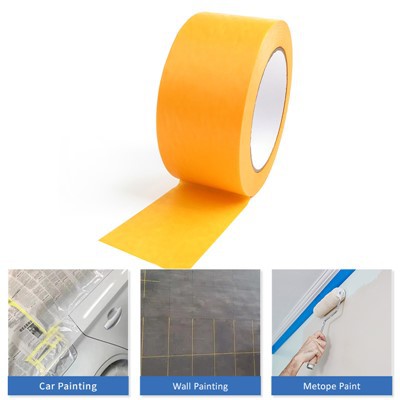
Recognize the many colors: Masking tape is available in green, yellow, white, and other hues in addition to blue. You can make better-informed decisions if you are aware of color codes.
There is much more to blue masking tape than just a roll of tape. It serves as a link between ideal application and efficient defense. Blue masking tape may increase productivity and produce more polished and expert outcomes, whether you're a professional engineer, painter, or do-it-yourself enthusiast.