Blue masking tape, a seemingly simple product, plays a significant role in various industries, ranging from automotive to painting. This article delves into the industry insights surrounding blue masking tape, exploring its composition, applications, market trends, and prospects.
Blue masking tape typically consists of a thin paper backing coated with a pressure-sensitive adhesive. The distinctive blue color is not merely aesthetic; it serves a practical purpose in distinguishing it from other types of tape, making it easily identifiable on surfaces. The adhesive used in blue masking tape is formulated to provide good adhesion to a variety of surfaces while allowing for clean removal without leaving residue or damaging the underlying material.
Manufacturing processes for blue masking tape involve precision coating techniques to ensure consistent adhesive coverage on the backing material. Quality control measures are paramount to maintain the tape's adhesive properties and color consistency throughout production.
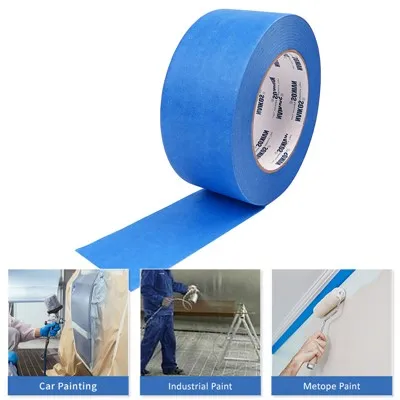
The versatility of blue masking tape makes it indispensable across several industries. In automotive painting and detailing, it is commonly used to mask off areas not intended for paint, such as trim, windows, and emblems, during the painting process. Its ability to adhere to curved surfaces and withstand the heat of curing processes makes it a preferred choice in automotive workshops.
In the construction sector, blue masking tape finds application in painting and renovation projects. Contractors use it to achieve crisp paint lines, protect surfaces from splatters, and secure temporary fixtures such as plastic sheeting and drop cloths.
In the manufacturing realm, blue masking tape is employed in assembly processes to temporarily hold components in place or protect delicate surfaces from scratches or abrasions during handling and transportation.
The market for blue masking tape continues to expand, driven by factors such as growth in construction activities, automotive production, and the DIY (do-it-yourself) segment. Manufacturers are innovating to meet evolving customer needs, introducing features such as improved conformability, UV resistance, and eco-friendly adhesive formulations.
Furthermore, advancements in adhesive technology are enhancing the performance of blue masking tape, allowing it to adhere effectively to a wider range of surfaces, including low-energy substrates like plastics and powder-coated surfaces.
The rise of e-commerce platforms has also contributed to the accessibility of blue masking tape to consumers worldwide, enabling easy procurement and delivery of the product.
Looking ahead, the future of the blue masking tape industry appears promising. With ongoing developments in materials science and manufacturing processes, we can expect continued enhancements in product performance, durability, and sustainability.
Moreover, as industries such as automotive and construction adopt automation and digitalization, there may be opportunities to integrate smart features into blue masking tape, such as RFID (radio-frequency identification) tagging for inventory management or QR codes for product traceability.
Blue masking tape remains a staple product in numerous industries, valued for its versatility, reliability, and ease of use. By staying abreast of market trends and technological advancements, stakeholders in the industry can capitalize on emerging opportunities and drive innovation in this essential product category.