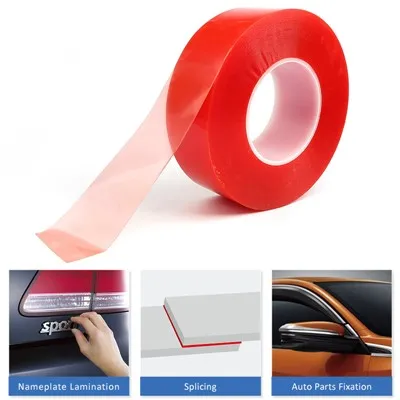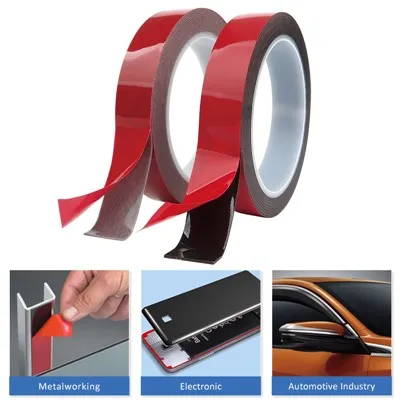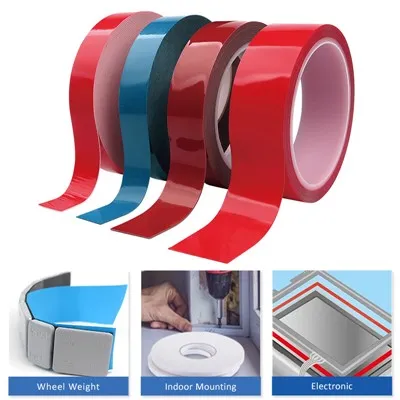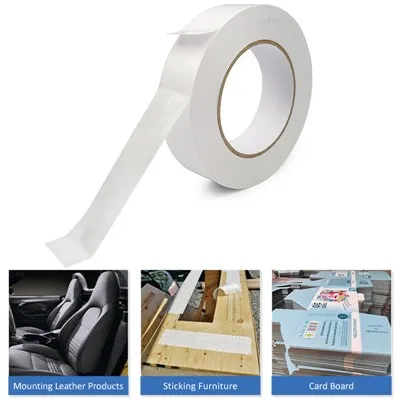
Double-sided tissue tape is undoubtedly the most popular type-and possibly the most difficult to select from-in the context of international trade and industrial procurement requiring double-sided tapes.
Many buyers often come across the terms "water-based adhesive" and "solvent-based adhesive" when speaking with providers. Even though they might look almost the same, choosing the incorrect kind can have severe consequences, such as the tape losing all of its tackiness after only three months in storage or the adhesive practically "oozing" and flowing when exposed to high temperatures.
We'll help you sort through the confusion today by looking at materials, performance traits, and real-world applications to ascertain: What kind of double-sided tissue tape is most suited to your particular project?
"Water-Based" and "Solvent-Based" Adhesives: What Are They?
The tissue paper is only used as the "skeleton" in the creation of double-sided tissue tape; the pressure-sensitive adhesive that is applied to it is the actual core.
Water-Based Acrylic Adhesive:
This adhesive coats tissue paper substrates after emulsifying acrylic resins using water as a solvent. Its main qualities are affordability, low odor, and environmental friendliness.
Solvent-Based Acrylic Adhesive:
This type of glue uses organic solvents as its medium, such as ethyl acetate or toluene. Strong initial tack, outstanding aging resistance, and high weather resistance are some of its salient characteristics.
Which One Is the "Pinnacle" of Adhesion?
As a provider of double-sided tissue tape, we usually help our customers make their selections by emphasizing the following three crucial factors:
Adhesion Power
Water-Based: The initial tack works rather well, but its holding power tends to be lower when applied to materials with low surface energy, like some plastics or textured surfaces.
Solvent-Based: This kind has outstanding cohesive strength and peel adherence. This indicates that even when exposed to continuous tensile forces over time, the adhesive film not only bonds rapidly upon application but also maintains a high degree of resistance to structural failure or separation.
Environmental Durability
Temperature Resistance: When ambient temperatures rise over 40°C or fall below 0°C, water-based adhesives' performance might change dramatically due to their relative sensitivity to temperature changes. Solvent-based adhesives, on the other hand, can usually survive brief surges in temperature between 80°C and 120°C. Moisture Resistance: Because oil-based adhesive is solvent-based, it works far better in humid conditions than water-based glue; moisture penetration does not cause it to separate.
Shelf Life and Aging Resistance
Many buyers worry that after purchasing in bulk, the tape will "dry out" if stored in a warehouse for an extended period. Oil-based tissue tape typically possesses a longer effective bonding lifespan. If the formulation of water-based tape is imprecise, the adhesive layer may easily become brittle and lose its bonding efficacy after sitting for just six months.
How to Select Double-Sided Tissue Tape?
We recommend evaluating the following three dimensions before making a bulk purchase:
Weight and Thickness
The thickness of tissue tape typically ranges from 80μm to 160μm.
Thin/Lightweight Types: Suitable for electronic product backlight modules and paper splicing.
Thick/Heavy-duty Types: Suitable for bonding leather and affixing nameplates. The greater the thickness, the better the tape's ability to fill gaps and irregularities on uneven surfaces.
Odor Identification Method
This is the most intuitive method for distinguishing between types.
1. Focus on Weight and Thickness: Common tissue tape thicknesses range from 80μm to 150μm.
Thin Versions (approx. 90μm): Suitable for ultra-thin electronic backlight assembly and paper splicing.
Thick Versions (140μm and up): Ideal for attaching nameplates or bonding leather or rough wood. The "filling capacity" of the adhesive, which enables it to more successfully fill in surface spaces and gaps, is indicated by thickness.
2. "Identifying Adhesive by Scent."
This is the most intuitive method of differentiation.
Tear open a sample roll; if there is almost any smell, the glue is usually water-based.
It's an oil-based glue if it smells strongly of a chemical solvent, like gasoline or nail polish. It is crucial to confirm that the oil-based glue satisfies low-VOC emission standards for projects requiring exports to North America or Europe, where stringent environmental restrictions are in place.
Aligning with Application Situations
Select a water-based adhesive for projects that are cost-sensitive, office supplies, gift box wrapping, and temporary fixing. Solvent-based adhesives are recommended for use in automotive interiors, electrical and electronic assembly, signage production, and export goods that need to be weatherproof for extended periods.

Which is superior?
Absolute "good" and "bad" do not exist; just "situational suitability."
Water-based cotton paper double-sided tape can help you save a substantial amount of money if cost-effectiveness is your top priority and your working environment is moderate. However, the extra "safety margin" that solvent-based cotton paper double-sided tape offers is well worth the little price difference if you are overseeing industrial integration projects that need to survive high temperatures, high humidity, or prolonged mechanical stress.
Does your specific project require a Technical Data Sheet (TDS)? As a leading supplier of tissue tape double-sided, Naikos can provide you with comprehensive laboratory test reports as well as customized OEM solutions. We invite you to contact our technical team to receive a complimentary bonding solution proposal and sample kit tailored to your specific materials.