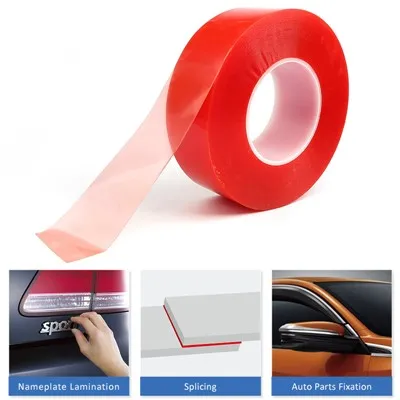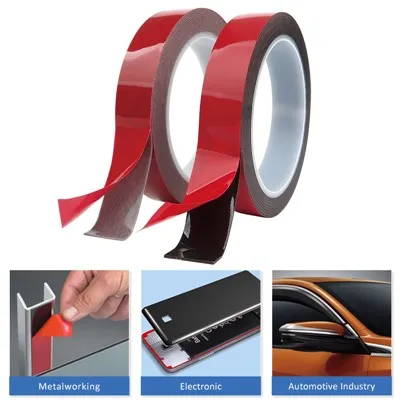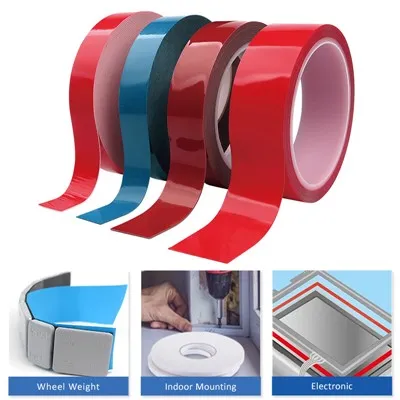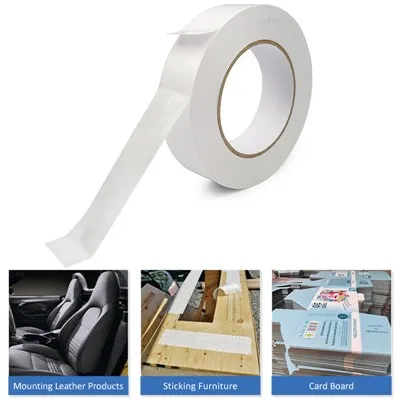
In the industrial bonding field, double-sided tissue tape is known as the "universal adhesive of the industrial world" due to its ultra-thin substrate, excellent conformability, and high cost-effectiveness. As a professional adhesive solutions provider, we deeply analyze the practical applications of this tape in different industrial scenarios to help you optimize your production processes.
What is Double-Sided Tissue Tape?
Double-sided tissue tape uses lightweight tissue paper as the base material, coated on both sides with high-performance pressure-sensitive adhesive, and covered with a release liner.
Core Physical Characteristics:
High Conformability: Can tightly adhere to rough or irregular surfaces.
Easy Tear: Can be manually torn without tools, greatly improving manual assembly efficiency.
Wide Viscosity Range: Water-based adhesive (good initial tack), oil-based adhesive (strong weather resistance), or hot-melt adhesive (low cost) can be selected according to needs.
Industrial Applications of Double-Sided Tissue Tape
Electronics Assembly
In smartphones, tablets, and laptops, space is extremely limited. Tissue tape, with a thickness typically between 0.08mm and 0.16mm, is widely used for:
Battery Bonding: Securing lithium battery packs.
Foam Gasket Fixing: Bonding shock-absorbing foam to plastic housings.
Graphite Sheet Heat Dissipation Fixing: Assisting in the initial positioning of heat dissipation modules.
Paper Packaging and Printing Industry
This is the most traditional and highest-demand field for tissue tape:
High-Speed Splicing: Used for high-speed splicing of paper rolls in paper mills or printing plants.
Envelope and Courier Bag Sealing: Provides a durable and tamper-evident seal.
POS Display Stands: Rapid assembly of corrugated cardboard display stands.
Automotive Interior Parts Fixing
The automotive industry has strict requirements for VOC (volatile organic compound) emissions. Low-odor modified tissue tape is used for:
Headliner and Carpet Bonding: Assisting in the positioning of sound insulation cotton, and decorative fabrics.
Sun Visor and Door Panel Decoration: Bonding fabrics, leather, and plastic frames.
Leather Goods and Footwear Manufacturing
In the manufacturing of luxury leather bags and high-end shoes:
Bonding and Positioning: Secures leather edges before sewing, preventing displacement, replacing traditional gluing methods, and being more environmentally friendly and clean.
Reinforcement Fixing: Increases the rigidity of leather products.
Home Appliance Manufacturing
Nameplates and Control Panels: Used for attaching aluminum nameplates to refrigerators and washing machines.
Evaporator Tube Fixing: Temporarily fixes the tubes to the casing before the foaming process.
Die-cutting Base Materials
Tissue tape is an excellent die-cutting auxiliary material. It can be compounded with materials such as foam, rubber, and felt, and then processed into various precise shapes for gaskets and spacers.
Signage and Nameplates
For lightweight indoor signage and membrane switches, tissue tape provides extremely high initial tack, ensuring immediate and secure installation.
How to Choose the Right Double-Sided Tissue Tape?
During the decision-making stage, you shouldn't only consider the unit price, but also refer to the following technical parameters:
| Adhesive Type | Ambient Temperature/Humidity | For long-term temperature resistance, solvent-based (oil-based) adhesives are recommended. |
| Peel Strength | Polarity of the Adhered Material | High-performance modified pressure-sensitive adhesives are required for low surface energy materials such as PP/PE. |
| Release Liner | Automatic/Manual Processing | High-grammage glassine release paper is recommended for automated production lines. |
The applications of double-sided tissue tape extend far beyond simple bonding; it involves a comprehensive balance of chemical properties, material science, and production efficiency.