In industrial sealing, damping, and bonding applications, EVA foam tape is highly favored for its excellent flexibility and weather resistance. However, many engineers find that the same tape performs perfectly on metal surfaces but easily peels off on certain plastic or coated surfaces.
Why do some surfaces "not stick"?
In the field of adhesives, surface energy is a core indicator that determines the bonding effect.
High Surface Energy Surfaces (HSE): Such as stainless steel, aluminum, copper, and glass. These surfaces are very easy to wet, and almost all EVA tapes can adhere firmly.
Low Surface Energy Surfaces (LSE): Such as polypropylene (PP), polyethylene (PE), polytetrafluoroethylene (Teflon), and powder coatings. These surfaces are like "non-stick pans," and ordinary EVA tapes are prone to edge lifting.
Uses of EVA Foam Tape
Due to its unique closed-cell structure, excellent cushioning properties, and strong weather resistance, it is widely used in industrial manufacturing, construction engineering, and daily life.
Industry and Electronics: Shock Absorption, Sealing, and Protection
This is the core application area of EVA tape. Its foam structure effectively absorbs mechanical vibrations and prevents component displacement.
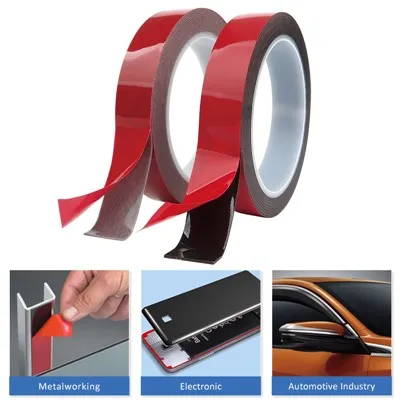
Electronic device gaskets: Used inside mobile phones and computer screens to provide shock absorption, dust protection, and gap filling.
Battery pack sealing: Used for cushioning and sealing between cells in new energy battery packs.
Mechanical vibration damping: Applied to machine bases or contact surfaces of moving parts to reduce noise and physical wear.
Construction and HVAC: Insulation, Waterproofing, and Filling
The closed-cell structure of EVA gives it a natural "non-absorbent" property, making it an ideal sealing material.
Air conditioning system sealing: Used at duct joints to prevent cold/hot air leakage and provide insulation.
Door and window sealing strips: Applied to window frame gaps to prevent wind, dust, and rainwater penetration, and also provide some sound insulation.
Curtain wall filling: Used as a spacer in glass curtain wall installation to provide stable support.
Automotive Industry: Lightweight Fixing and Noise, Vibration, and Harshness (NVH) Reduction
EVA tape is a key "invisible" material for improving driving comfort in automobiles.
Interior Anti-Rattle: Applied to contact points of plastic parts such as dashboards and door panels to eliminate friction noise (squeak and rattle) during driving.
Headlight Sealing: Provides waterproof sealing for headlight components, preventing fogging.
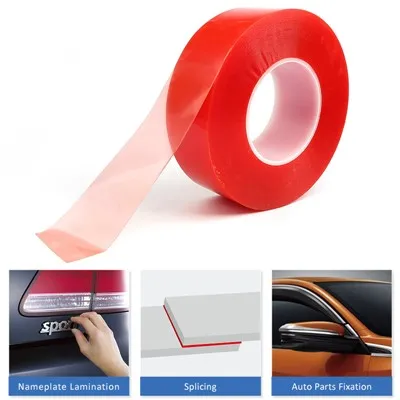
Nameplates and Trim: Used to fix external vehicle emblems, spoilers, or protective strips (usually using high-tack double-sided EVA tape).
Home and Office: Practical Tools
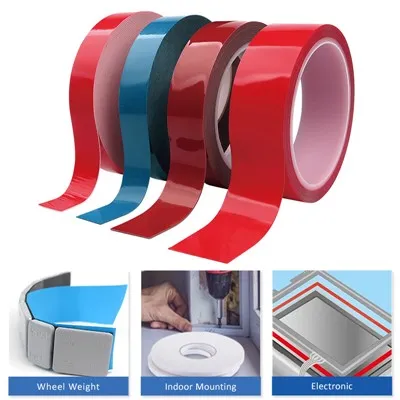
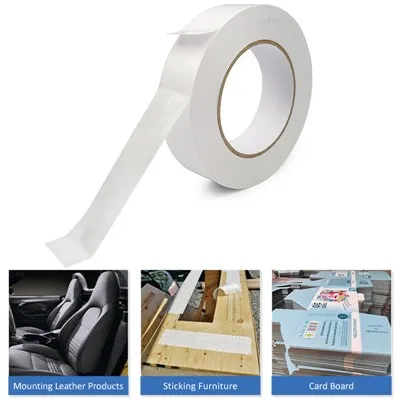
Hooks and Decorations: Double-sided EVA tape is commonly used to fix hooks, photo walls, or small shelves.
Furniture Protection: Applied to table corners or chair legs to prevent scratching floors and provide leveling.
Selection Decisions for Specific Surfaces
Metal and Glass Surfaces
Challenge: Primarily preventing shear forces caused by thermal expansion and contraction.
Selection: Medium-density EVA foam + solvent-based double-sided adhesive is recommended to absorb the stress generated by metal expansion and contraction.
Rough or Uneven Surfaces (e.g., wood, foam)
Challenge: Small contact area.
Selection: Choose low-hardness (softer) EVA foam. Softer foam can better fill gaps and increase the actual bonding area.
Automotive and Outdoor Surfaces
Challenge: UV rays, moisture, oil stains.
Selection: Closed-cell EVA must be used to ensure that moisture cannot penetrate the foam, and it should be paired with UV-resistant adhesive.
Professional Techniques to Improve Bonding Strength
To ensure your EVA tape performs at 100%, please follow these industry-standard procedures:
Surface Cleaning:
Wipe the surface with a mixture of 50% isopropyl alcohol and water to remove fingerprints and oil stains.
Apply Pressure:
EVA tape typically features pressure-sensitive adhesive (PSA), and approximately 15-20 psi of pressure should be applied after application to allow the adhesive to adhere to the surface fully.
Curing time:
Acrylic adhesives typically require 72 hours to reach their ultimate bond strength. Avoid performing tensile strength tests immediately after bonding.