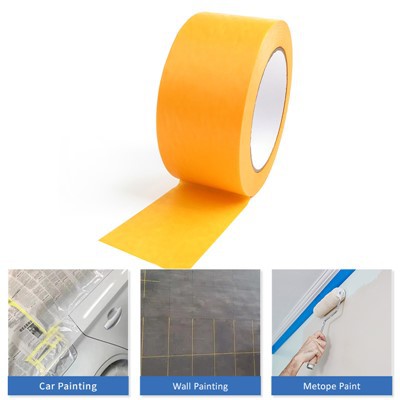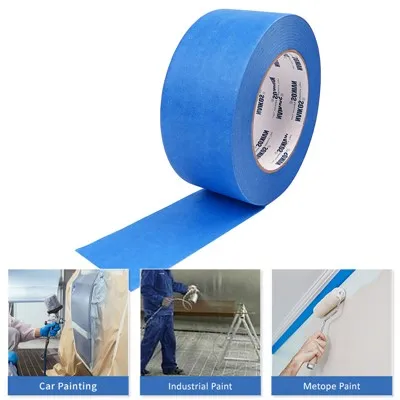
In the realms of painting and renovation, DIY crafting, or industrial coating, Blue Masking Tape is practically a standard fixture in every toolbox. Many people assume it differs from ordinary beige masking tape only in color; however, in reality, this blue "little roll of tape" represents a qualitative leap forward in performance.
What are the core applications of Blue Masking Tape?
Interior Painting: The "Gold Standard" for Leak Prevention
This is the most classic application scenario for Blue Masking Tape. It delivers exceptional edge sharpness when you need to paint along baseboards and window frames or create color breaks on walls.
Crisp Paint Lines: Its paper fibers are subjected to a unique treatment that effectively removes latex paint from the tape, revealing lines that are as sharp and clean as when they were cut with a knife.
Low-Tack Protection: Because its adhesive strength is precisely calibrated when applied to walls that have already received primer coats, it can be removed without removing the underlying paint layer.
Outdoor Construction: Robust "UV-Resistance" Capabilities
Why is blue a necessary color? The answer lies in how resistant it is to UV (ultraviolet) light.
When a typical beige masking tape is left exposed to sunlight for just a few hours, the adhesive undergoes a chemical reaction that causes it to become dry and brittle. It eventually "bakes "onto materials like glass or aluminum, making it nearly impossible to get rid of.
Extended Application: Blue Masking Tape typically uses a pressure-sensitive acrylic adhesive that is waterproof in direct sunlight. Even after two weeks of outdoor exposure to wind and sun, blue masking tape is frequently marked with a "14-Day Clean Removal" guarantee, indicating that the tape can be peeled away smoothly without leaving any sticky residue.
3D Printing: Excellent Build Plate Adhesion
In the tech enthusiast community, Blue Masking Tape is considered the "golden partner" for 3D printers.
Many 3D printing hobbyists apply it to the heated build plates of their printers.
The printed object won't curl or warp at the edges during the printing process because of its microporous paper surface, which significantly increases the adhesion of filaments like PLA. Peeling away the tape after the print is finished makes it much easier to take the finished object, protecting the pricey build plate from damage.
Walls with metal and glass: Masking and Sealing
In construction projects, blue painter's tape is an indispensable tool when installing glass curtain walls or applying sealant (caulking).
Owing to its exceptional moisture resistance and sturdy backing materials, workers apply it to both sides of the bones. When the sealer has been applied and smoothed, the audio is soon peeled away, leaving a uniform, visually pleasing sealer bead that substantially boosts construction efficiency.
How to Choose Blue Painter's Tape?
If you are buying blue painter's tape in a store, be sure to check its weight( thickness) and its clean removal period.
Small-scale Home Painting Projects: A standard "14-day clean treatment" type is sufficient.
Precision Model Spray Painting: For this program, we recommend choosing a high-end design featuring thinner papers and finer ends.
Regular masking tape is suitable for momentary packaging, protecting objects, or short-term indoor masking tasks. Nevertheless, for any job involving exposure to sunlight, painting, or uses requiring long-term adherence, do certainly hesitate-always choose the azure variety.