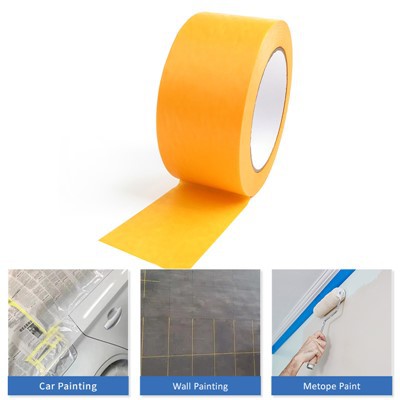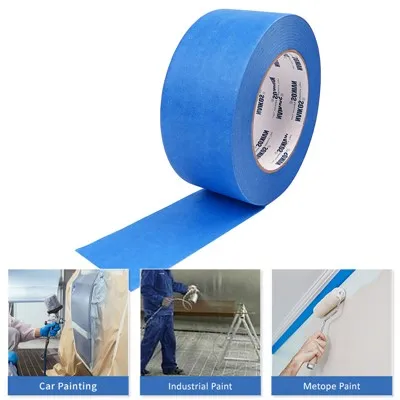
In industries such as paint protection, color separation in décor, electrical masking, and craft making, blue masking tape has become an essential tool for experts and DIY enthusiasts. It's more than just tape; it's a functional solution built based on unique needs.
The "blue "in blue masking tape isn't random; it's a key sign of its effectiveness. Generally, masking tape employs colour to show its tack, temperature resistance, and acceptable surfaces. Blue medium-temperature masking tape is one of the most commonly used types, and it contains the following key features:
Medium-temperature opposition: Blue masking tape is usually designed for medium-temperature problems as opposed to regular low-temperature and high-temperature masking tapes. Because it can withstand particular baking temperatures( often between 80°C and 120°C) and leaves no residue after removal, it effectively protects masked areas during car painting, furniture baking, and other procedures.
Medium Adhesion: Its epoxy characteristics are specifically engineered to strongly connect to different surfaces( such as copper, glass, plastic, and colored walls), ensuring sharp and clear concealing lines, while also allowing for easy removal after application without damaging the substrate or leaving stains.
Flexible and Easy to Tear: Its exceptional flexibility and ease of tearing are derived from masking paper. It conforms to irregularly shaped surfaces and is easily torn by hand, making on-site procedures easier.
Anti-Penetration Edges: Clean and distinct masking borders are ensured by the tight seal at the edges of premium blue masking tape, which successfully prevents paint, varnish, or liquid penetration.
Where is the necessity for blue masking tape?
Blue masking tape serves an indispensable function in numerous industries due to its balanced performance:
Automotive Repair and Spraying: Painting and Spraying Industry. Used to cover parts that do not require painting, such as windows, headlights, and chrome trim, it is a core material for obtaining exact color blocking and protection.
Industrial Equipment Coating: Preserves precision parts, nameplates, and screws while painting steel structures and machinery.
Furniture & Wood Spray Painting: Used to protect particular sections of furniture or to create geometric patterns or straight lines.
Architectural Decoration and Finishing:
Wall Color Separation and Artistic Painting: Used to obtain straight dividing lines when painting different colors of wall paint or creating wall lines or patterns.
Protection for Doors, Windows, and Baseboards: Attaches protective film to baseboards and door and window frames to avoid contamination when painting walls or ceilings.
Electronics & Electrical Industry:
PCB Wave Soldering: Used to mask gold fingers, special pins, and other regions that do not require soldering; its temperature resistance can endure the heat of the soldering process.
Component Protection and Fixing: During manufacturing and assembly, precise components are temporarily fixed or protected.
DIY and Craft Making:
Model painting, card making, canvas framing, and any creative task that requires temporary covering or setting boundaries.
How Can I Pick Blue Masking Tape of the Highest Quality?
Selecting the best blue masking tape is essential because there are many options available. Please be mindful of the following:
Ascertain your requirements for temperature resistance: Check the highest temperature you plan to operate at. If baking is involved, be sure to choose a product with a temperature resistance rating higher than the actual temperature (leaving a margin). For example, standard medium-temperature blue tape might be able to withstand 100°C, but if the baking temperature goes to 120°C, you'll need to look for a higher-specification solution.
Before using it in large quantities, test adherence and residue on a small area or similar material. Peel it off after a few hours to see if it comes off easily and check for any residue. A high-quality tape should remove easily and leave no residue.
Check the substrate and adhesive: Good masking tape has consistent fibers and clear tear edges. There is no overt smell, and the adhesive coating is applied uniformly. This pertains to the waterproofing effect and the feel of the tape.
Observe waterproofing performance: Conduct a basic liquid test. Check to see if a drop of paint or water penetrates quickly by dropping it against the edge of the tape that is fastened to a level surface.
Select a reputable brand: Well-known brands typically offer better quality control and performance stability. Check that the specifications (such as thickness, adhesion, and temperature resistance) on the product packaging are clear and complete.
Tips for using blue masking tape:
Make sure the surface being covered is dry, clean, and free of dust and oil before applying it to ensure optimal adherence.
Use your fingers or a scraper to gently press the paint over the edges, especially at corners, to stop it from soaking in.
Remove promptly: Remove the tape as soon as the paint or coating has surface-dried but not yet fully hardened. Refer to the product instructions. This keeps the tape from being "locked in "by the cured coating and maintains clean edges.
Storage methods: To maintain its performance stability, keep it in a cool, dry location away from direct sunlight, extreme temperatures, and humidity.
Blue masking tape is a versatile, multipurpose masking material because it provides precise, reliable protection in challenging working conditions. For professional industrial spraying or home beautification, selecting the right blue masking tape is essential to get the best results.