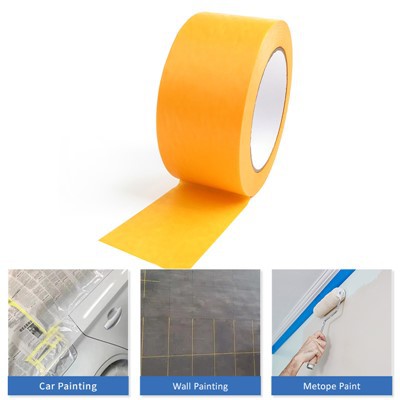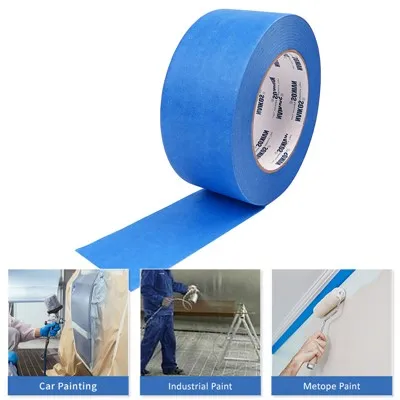
A small detail can make all the difference when painting, restoring, or altering an automobile. Have you ever questioned how skilled technicians can produce two-tone automotive paint jobs or decals that are clear and perfect? Automotive masking tape is a seemingly commonplace yet essential tool that holds the key to the solution. It serves as an "artistic dividing line" that guarantees paint quality and accuracy, so it's more than just a piece of tape.
High-temperature masking tape made especially for the automobile sector is known as automotive masking tape. It is constructed from a backing of crepe paper that has been covered with a unique pressure-sensitive glue. It provides the following essential characteristics in contrast to regular tape:
Resistance to high temperatures: It doesn't melt or leave residue when exposed to the high temperatures seen in automobile paint booths, which are normally between 60°C and 120°C or more.
Easy to tear and leave no residue: The original finish is preserved when the job is over because it can be readily removed without leaving any adhesive stains on the paint, glass, or plastic. Outstanding adaptability: Accurate masking is achieved by perfectly fitting the many curves and angles of an automobile body.
Excellent edge sealing: Prevents paint penetration and produces distinct color separations by adhering firmly to painted surfaces or masking film.
The primary uses for automotive masking tape are:
Painting and Repairing Automobile Bodies:
Paint Touch-Up: Covers a wound by masking the remaining paint surface.
Complete Car Painting: Covers areas like windows, door handles, lights, and grilles that don't need painting.
Color separation: Used to create stripes, decals, two-tone automobile bodywork, and other customized finishes.
Car Modification and Decoration:
Modified Film: Temporarily positions and marks the film when cutting.
Painted Pattern: Helps create intricate racing stripes or custom patterns.
Detail Protection: Prevents product contamination while polishing and waxing rubber seals and plastic moldings.
How Can I Pick the Best Professional Masking Tape for My Car?
A poorly chosen tape can harm the paint, make removal challenging, and cause paint leaks. Please take note of the following crucial parameters:
1. Resistance to Temperature:
Standard spray: Select a model that can withstand temperatures between 80°C and 120°C.
Select a model that can withstand temperatures of 150°C or above for high-temperature baking. Make sure the tape you choose is appropriate for your clearcoat's baking temperature.
2. Tack (Maintenance and Initial Tack):
Low Tack: Provides complete safety and is appropriate for delicate surfaces or freshly painted cars.
The most popular tack is medium, which works well for most automobile body painting and masking applications.
High Tack: Use with caution, but ideal for rough surfaces or situations requiring a lot of gripping force.
3. Thickness and Backing Material: The backing material's ability to withstand tears and seal edges depends on how robust it is. When bent, high-quality tape won't break easily.
Moderately thick tapes are simpler to work with and take off.
4. Width:
Narrow (such as 3 or 6 mm): Ideal for delicate curves and complex designs.
Medium (e.g., 18mm, 24mm): All-purpose, good for covering the majority of curved and straight lines. Broad sizes (like 36 and 48 mm): To cover vast areas fast.
Car masking tape is an important aspect in defining a good car paint job, despite its small size. The quality of the finished product and job productivity can be significantly increased by selecting the appropriate size and using it appropriately. Having a solid grasp of this equipment will enhance the efficiency of your car detailing and restoration process, whether you operate a professional auto repair company or are an experienced DIY enthusiast.