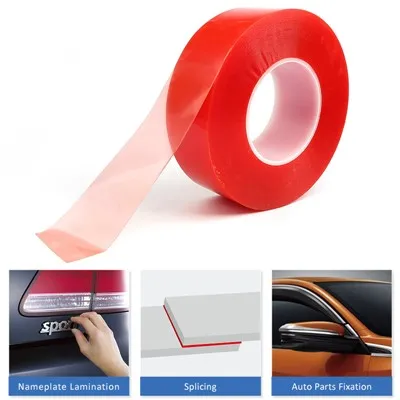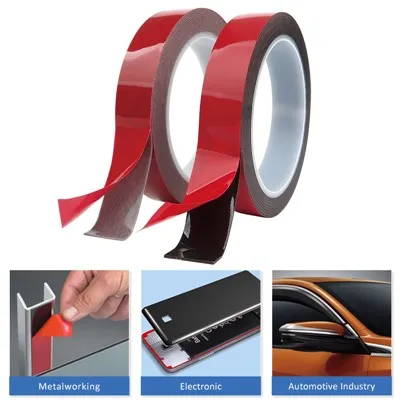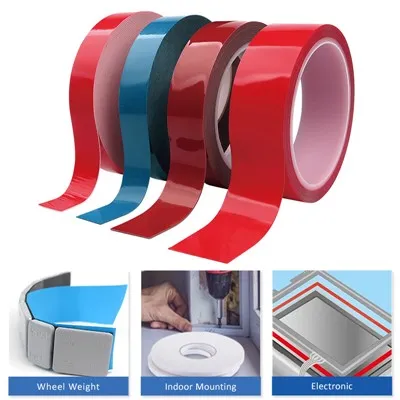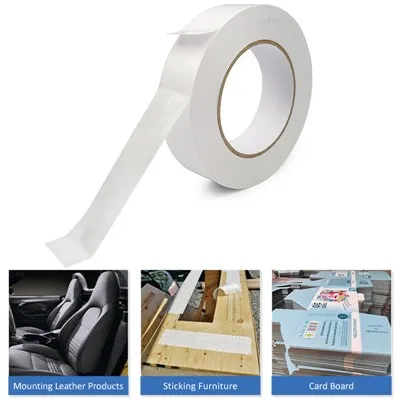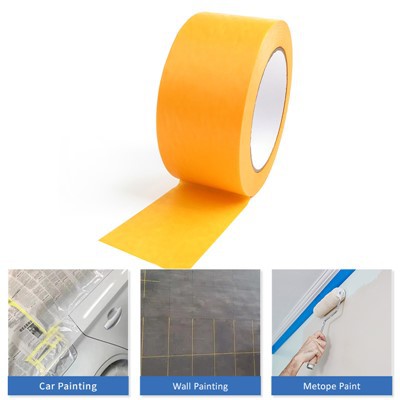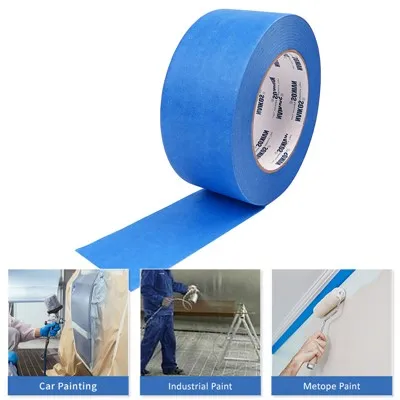
With its superior heat resistance and masking capabilities, high-temperature green polyester tape has become a crucial production auxiliary material in sectors such as paint masking, automobile wiring harnesses, and electronics manufacturing.
High-temperature green tape is not an "upgraded" version of ordinary tape; rather, it is a functional tape developed specifically for high-temperature environments. Its core characteristics directly determine its application value:
The range of temperature resistance meets crucial industrial needs: High-quality high-temperature green tape typically has a long-term temperature resistance of 120°C to 180°C, but it can withstand temperatures as high as 220°C in the short term. It can reliably withstand high-temperature processes such as vulcanization, paint baking, and reflow soldering, preventing product contamination or masking failure caused by debonding and melting tape.
Strong adherence and resistance to adhesive residue: Even under hot temperatures, it adheres strongly to PCBs, plastic, and metal substrates using an acrylic or silicone adhesive system. It also pulls off without leaving any adhesive residue, reducing the need for extra cleaning steps and increasing production efficiency.
Excellent Physical and Chemical Resistance: It guards against solvents, aging, and UV rays. By avoiding contact with substances that would dissolve or fade the adhesive layer, such as paint, flux, and cleaning solutions, it guarantees stable masking.
Functional Design of Color and Thickness: Green is a common color that helps with visual identification and positioning. However, some products also contain antistatic and flame retardants, making high-temperature green tapes that are both antistatic and flame retardant for more complicated industrial applications.
Core Applications of High-Temperature Polyester Tape: Comprehensive Coverage from Electronics to Automotive
The demand for high-temperature green tape varies significantly across industries, and precisely matching its application is key to maximizing its value:
Electronics Manufacturing: To avoid contamination or damage from high-temperature solder, sensitive regions like solder joints and gold fingers are covered during PCB soldering and component packing. To make sure it doesn't impact circuit performance, a thin (0.05mm–0.1mm thick) high-insulation, high-temperature green tape is advised for this use.
Automotive Industry: Primarily used for wiring harness wrapping and body paint masking. Wiring harness wrapping requires tape with high and low temperature resistance and vibration resistance to prevent cracking after long-term use. Paint masking requires moderate adhesion to the paint, ensuring no damage to the paint surface and no adhesive residue when peeled off.
New Energy Industry: In lithium battery cell packaging and photovoltaic module welding, high-temperature green adhesive tape is used to secure tabs and mask welding areas. Due to the electrochemical environment involved, products with electrolyte corrosion resistance and a UL94 V-0 flame retardancy rating are required to ensure battery safety.
Hardware Processing: In metal sandblasting and electroplating processes, it is used to mask areas that do not require treatment, such as threaded holes and logos. In this scenario, the tape requires strong abrasion resistance and acid and alkali resistance to prevent sandblasting or electroplating fluid penetration, which could lead to masking failure.
High-Temperature Green Adhesive Tape Selection:
Many companies often overlook key specifications when purchasing high-temperature green adhesive tape, leading to incorrect selection and increased production costs. The following are key points to consider when selecting a product:
Common Selection Mistakes
Only Focusing on Temperature Resistance Values, Ignoring Actual Operating Conditions: Some companies blindly pursue "high temperature resistance" while ignoring the relationship between temperature resistance and ambient humidity and pressure. For example, a tape labeled as 200°C resistant may only withstand short-term high temperatures for 10 minutes. If used in a reflow soldering process that lasts for an hour, it will inevitably fail.
Confusion between "adhesion" and "suitability": in reality, different substrates require varied adhesion strengths, despite the notion that a stronger adhesion is preferred. For example, excessive adherence can cause damage to plastic substrates when they peel, but metal substrates require appropriate adherence to prevent peeling at high temperatures.
Ignoring Environmental Protection and Certification Requirements: High-temperature green adhesive tapes with high concentrations of hazardous materials and heavy metals are not able to reach the global market because environmental certifications (such as RoHS and REACH) are not taken into consideration when producing export goods.