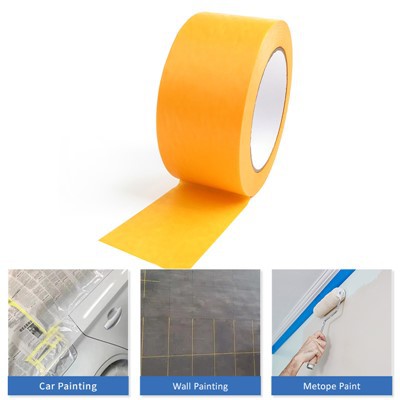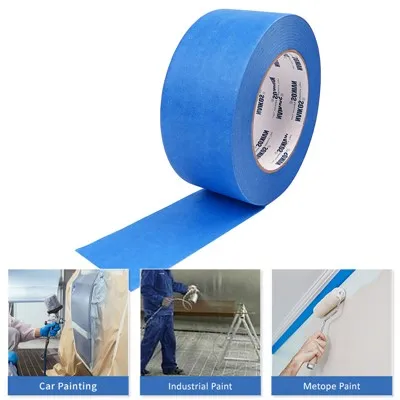
In the realms of stationery DIY, interior decoration, and industrial color-separation painting, Colored Masking Tape and Washi Tape are frequently confused. The question users are most concerned with is undoubtedly: "Which one sticks more firmly?"
Core Difference: The Backing Material Determines the "Fundamental Nature" of the Adhesion
To understand adhesion, one must first examine its "skin"-the backing material.
Colored Masking Tape:
The Industrial "Powerhouse." Colored masking tape utilizes impregnated crepe paper as its backing material. Its surface has a microstructure of microscopic wrinkles that give it some elongation and thickness.
Adhesive Type: Usually applied using water-based pressure-sensitive adhesives or natural rubber.
High initial tack (immediate grasp) and the ability to stick to uneven surfaces fast are adhesion characteristics.
Washi Tape:
The Elegant "Gentle Touch." Washi tape is constructed from long fibers (such as hemp or mulberry bark) and is a product of ancient Japanese craftsmanship.
The backing material has densely woven fibers and is quite thin.
Adhesive Type: Pressure-sensitive acrylic adhesives are used most frequently.
Adhesion Characteristics: Designed to prioritize "low tack and easy tearing" as well as "repositionability"; its peel strength is strictly controlled to prevent damage to the underlying paper surface.
Adhesion Comparison: Data and Dimensions
In the adhesive industry, we typically evaluate performance across three key dimensions: initial tack, holding power (cohesion), and peel strength.
| Dimension | Colored Masking Tape | Washi Tape | Winner |
| Initial Adhesion (Tack) | Higher; bonds instantly upon application | Lower allows for repeated repositioning and fine-tuning | Colored Masking Tape |
| Peel Strength | Typically 6–10 N/25mm | Typically 1.5–4 N/25mm | Colored Masking Tape |
| Penetration Resistance | Moderate; paint may seep along the crepe texture | Excellent; features extremely thin edges that prevent leakage | Washi Tape |
| Residue-Free Removal | Must be removed within a specified timeframe (e.g., 7 days) | Extremely low residue; can be removed cleanly even after long-term application | Washi Tape |
Which Should I Select?
When Colored Masking Tape Is the Best Option:
Heavy-duty labeling and categorization include temporary zone divisions on production floors and marking moving cartons.
Adhesion to Rough Surfaces: Masking tape's thickness makes it more effective in filling in surface gaps on wood, drywall, or textured walls.
Bundling and Securing: When bundling lightweight pipes or components requires a specific level of tensile strength.
Situations Where Washi Tape is the Best Choice:
Precise Color Separation (Fine Arts): For bullet journaling, model painting, or intricate interior finishing projects, washi tape provides exceptionally sharp and crisp paint lines.
Delicate Surfaces: For application on old book pages, wallpaper, or expensive art paper; ensures that the surface layer remains intact when the tape is removed.
Long-Term Decoration: For creating wall patterns or designs in interior spaces, Washi tape offers superior weather resistance and is less prone to adhesive bleed over time.
Avoiding Common Pitfalls
The following three industry standards will have a big influence on your user experience, regardless of the kind of tape you select:
Environmental Temperature:
High temperatures might cause "adhesive bleed" (softening and seeping) in masking tapes with a natural rubber-based adhesive. If you plan to use the tape in an oven or paint curing booth, make sure you get a model that is clearly marked "High Temperature Resistant."
UV Light Alert:
Masking tape with standard colors is not UV-resistant. When outdoor glass surfaces are exposed to sunlight for longer than a day, the glue may solidify and leave behind a very challenging residue. You should use special blue "UV-resistant" masking tape in these situations.
Pressure Activation:
Both varieties of tape are pressure-sensitive adhesives (PSA). To activate the bond between the adhesive and the substrate, apply pressure with a squeegee or your hands. Which one adheres better? The colorful masking tape is the solution.
But "Which one is better to use?" depends on what you're using it for. If you require strong holding power and quick identification, choose the masking tape; if you prioritize application precision and damage-free removal, Washi tape is the only choice.